Category:
 Author:
 Date:May 17, 2026
How to Trade Market Corrections Against the Trend

Every sustained market move contains a story of resistance built into it. Price pushes, velocity builds, and then something shifts. The tape that looked decisive moments ago suddenly stalls. Volatility spikes. The window for meaningful countermoves appears in these moments of compressed air, when the dominant direction has temporarily stretched itself thin. Traders who can identify and execute against this overextension find opportunity in the noise where momentum-following approaches see only risk.
What does counter-trend trading mean in practice?
Counter-trend trading is the deliberate act of taking positions that oppose recent market momentum. It's not about fighting the broader trend as a default stance. Instead, it's about recognizing when the current push has moved far enough to become vulnerable to pullback or reversal. A trader might enter long trades while recent selling momentum was strong, or short trades while recent buying dominated the price action. The edge comes from identifying the specific moment when that momentum loses its grip, even temporarily.
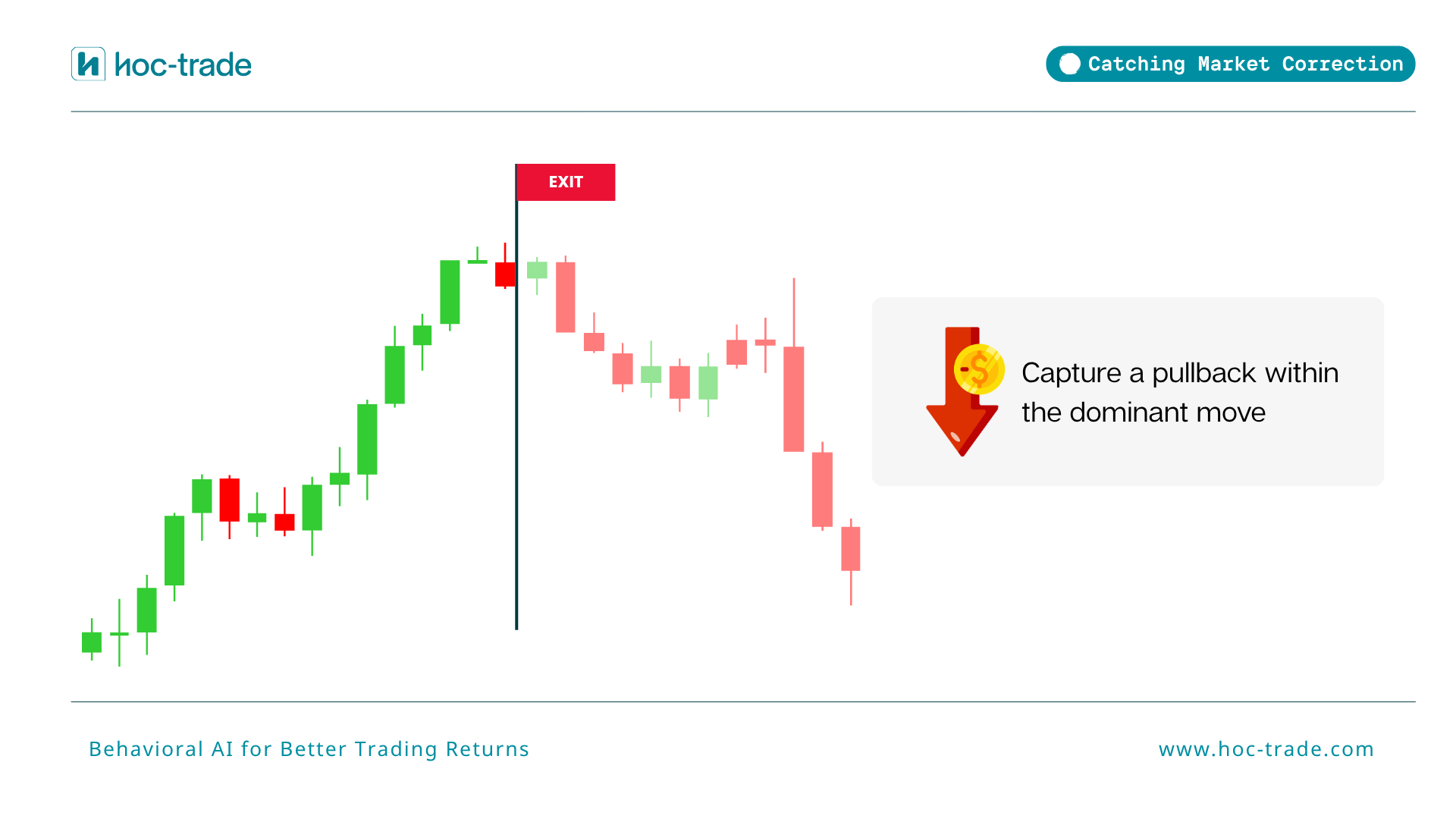
This approach works best in markets that are overbought or oversold. When price has moved hard and fast in one direction, the market creates conditions that reward traders who can time entries into the corrective phase. The goal isn't to predict the next major reversal, but to capture the pullback that happens before momentum reasserts itself. These windows are typically brief and the price moves are smaller than what trend-following traders can capture. Success depends less on the size of each win and more on converting the window into realized profit before the broader momentum returns.
How do traders identify when corrections are about to happen?
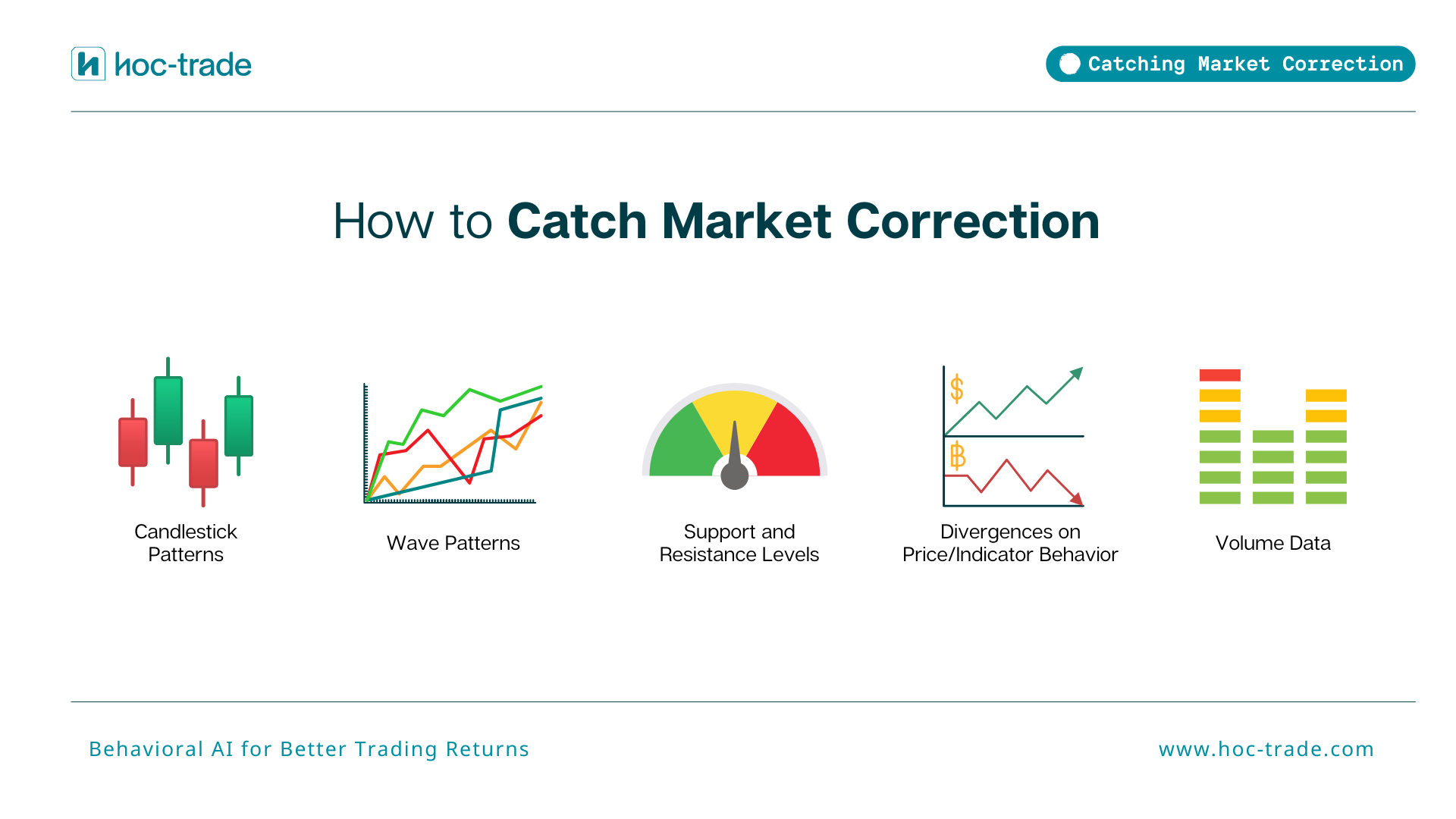
Traders who excel at counter-trend positioning rely on specific tools that help them time pullbacks and reversals. Candlestick patterns often signal exhaustion. Support and resistance levels show where price is likely to struggle or stall. Volume data reveals whether momentum is backed by conviction or is starting to thin. Wave patterns and divergences, where price makes a new extreme but an indicator doesn't confirm it, frequently warn that the move is becoming vulnerable.
What matters is consistency, not perfection. A trader doesn't need to catch every turning point. Instead, they develop a repeatable context for entering counter-trend positions. They see an overbought market and recognize the setup. They spot a divergence or pattern that suggests momentum is overextended. Over time, this consistent framework for entry decisions becomes their edge. The framework isn't a checklist but a way of framing what the market is telling them at that moment.
Why does precise exit timing matter more than entry timing?
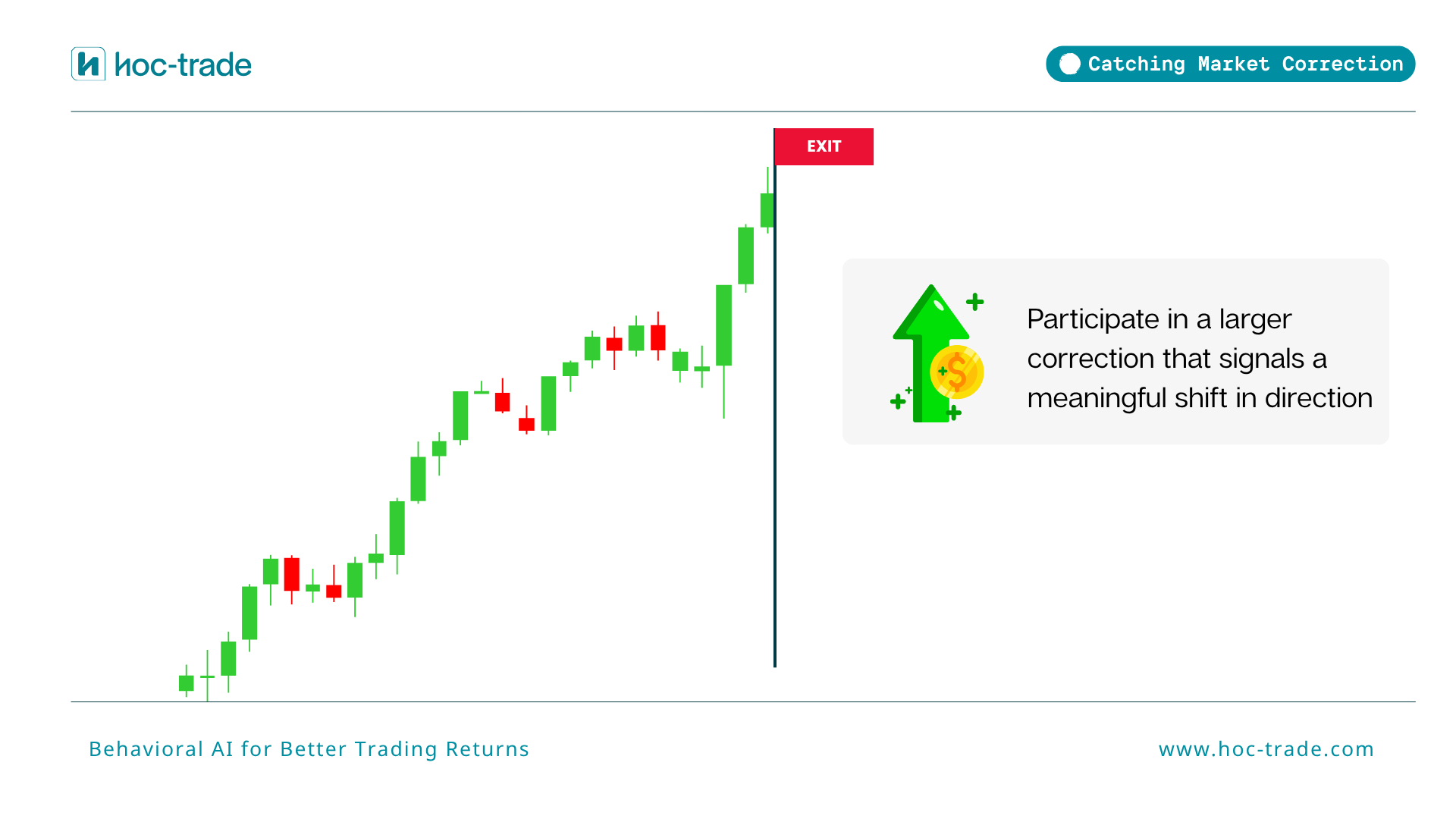
Corrections are short-lived by nature. The price movement they offer is typically modest. This reality shapes how the best counter-trend traders manage their trades. They enter with intention but exit with even greater precision. The goal is to close the position while the corrective move is still delivering gains, before the broader momentum reasserts itself and erodes the profit.
Think of it this way: a correction might offer a 50-point move. A trader who enters at the right time and exits halfway through realizes significant percentage gains. A trader who gets greedy and holds longer, hoping for the full move, often sees unrealized gains disappear when the dominant trend returns. The skill isn't predicting the exact endpoint of the correction. It's recognizing when the corrective window has delivered what it had to offer and acting on that recognition. Many traders can enter these setups. The ones with a durable edge are the ones who consistently convert the brief window into booked performance.
What risks come with counter-trend positioning?
Taking positions against the dominant momentum carries distinctive risk. The prevailing direction can resume abruptly, and when it does, it can move fast. This speed is the danger. A trader's stop loss, if too wide, can get hit violently. This isn't theoretical. In counter-trend positioning, quick and tight risk management isn't a nice-to-have. It's essential. The corrective window is measured in moments sometimes. If the broader momentum reasserts before the trader exits, the position can deteriorate quickly. Understanding this risk profile is what separates traders who can execute this strategy consistently from those who blow up trying.
What does the data reveal about counter-trend patterns?
TradeMedic identifies counter-trend trading behavior across a dataset of 500,000+ trader accounts. When traders consistently show stronger average returns on counter-momentum trades compared to momentum-aligned trades, the pattern becomes statistically visible. This indicates not random luck but a repeatable capability. The data shows that certain traders do have a clear edge in these corrective windows. Their entries align with market overextension, their exits happen before momentum reasserts, and their average wins in this subset exceed their wins on other trade types. This performance skew in the data is what signals a durable behavioral edge rather than an isolated series of fortunate outcomes.
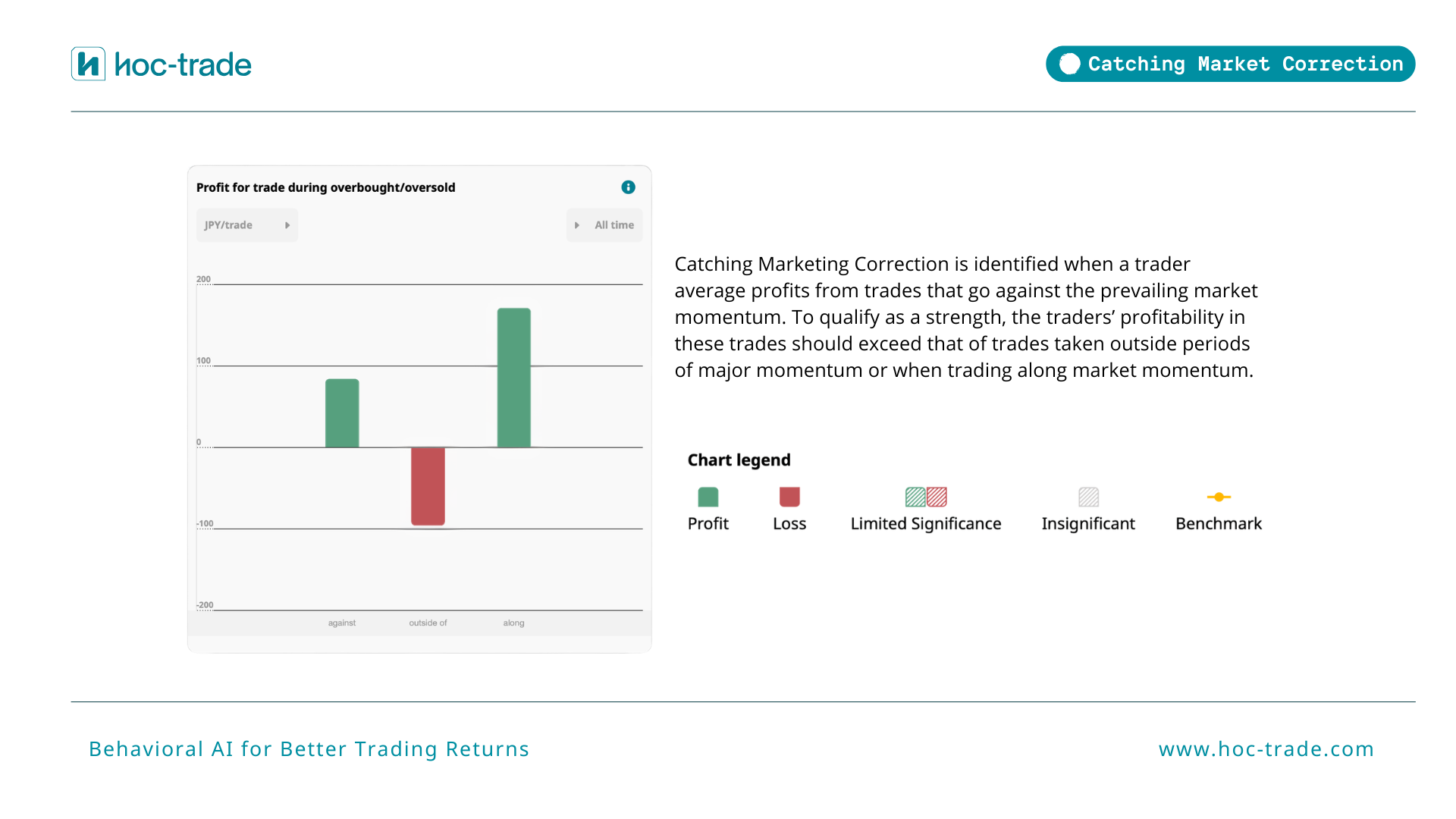
The signature of consistent counter-trend execution
Counter-trend trading reads as a signature of timing accuracy. The trader enters when momentum has clearly overextended. They exit when the corrective window has delivered its opportunity. Over a larger sample of trades, their success isn't driven by one massive win. It's built from repeated, smaller conversions of brief countermoves into realized performance. This repeatability is what matters. A trader can have one lucky counter-trend trade. A real edge shows up in the pattern, trade after trade. The tools shift with market conditions. Some traders use patterns, others rely on key levels, some watch volume and divergences, others combine multiple signals. What remains constant is the intent: to identify when momentum is stretched, position for the pullback, and convert that window into profit. When traders execute this with discipline and precision over time, the results separate them clearly from traders following other approaches.
TradeMedic's research shows that the habits which support long-term performance are often the quiet ones. Knowing your own edge is part of building on it. Visit TradeMedic to see how it works and get your own personal analysis.
Watch How to Trade Market Corrections