Category:
 Author:
 Date:May 20, 2026
Seize Volatility: Converting Market Shock Into Executable Opportunity
When prices move sharply, the trading environment shifts. Speed matters more. Liquidity feels sparse. Attention fragments across news and prices moving fast. In these moments, decisions lose their luxury of time. Entries and exits require immediate action. Waiting can be as damaging as overreacting. Volatility doesn't just raise what's at stake, it changes how execution works and what it takes to perform well.
How Can Traders Profit From Market Volatility?
Volatility creates instability, but it also concentrates movement. Sharp price swings offer larger trading opportunities in shorter timeframes. The question isn't whether volatility offers profit potential. It does. The real question is whether a trader can stay functional when conditions turn chaotic.
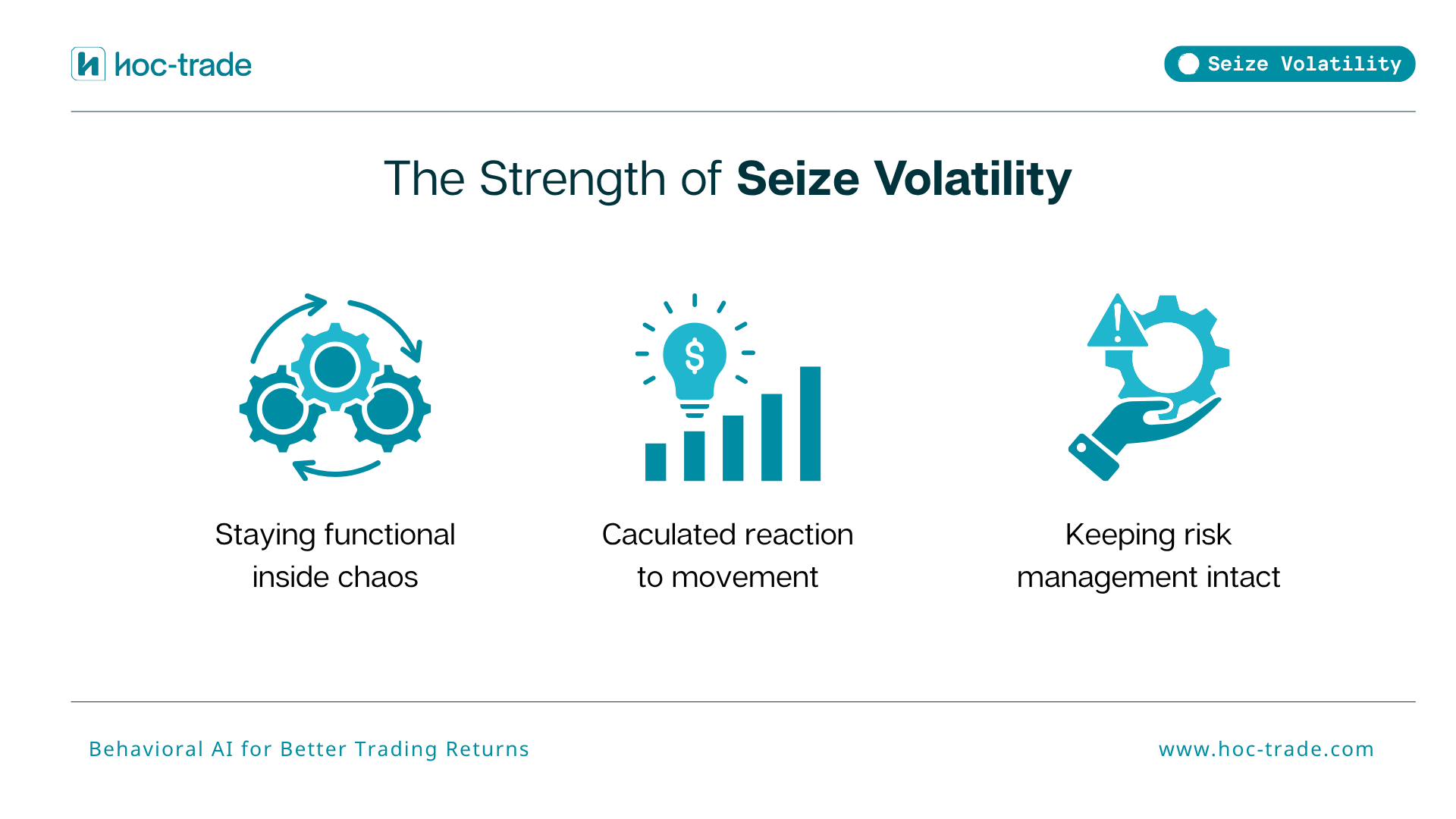
This is where Seize Volatility emerges as a distinct skill. It describes a trader's ability to consistently extract value from trades initiated during periods of high market turbulence. It's not excitement-seeking or risk-chasing. It's a measurable execution discipline: maintaining control and precision when the market becomes unpredictable, then translating volatile price movement into tradable outcomes without losing grip on position size or risk.
What Does Volatility Trading Look Like in Practice?
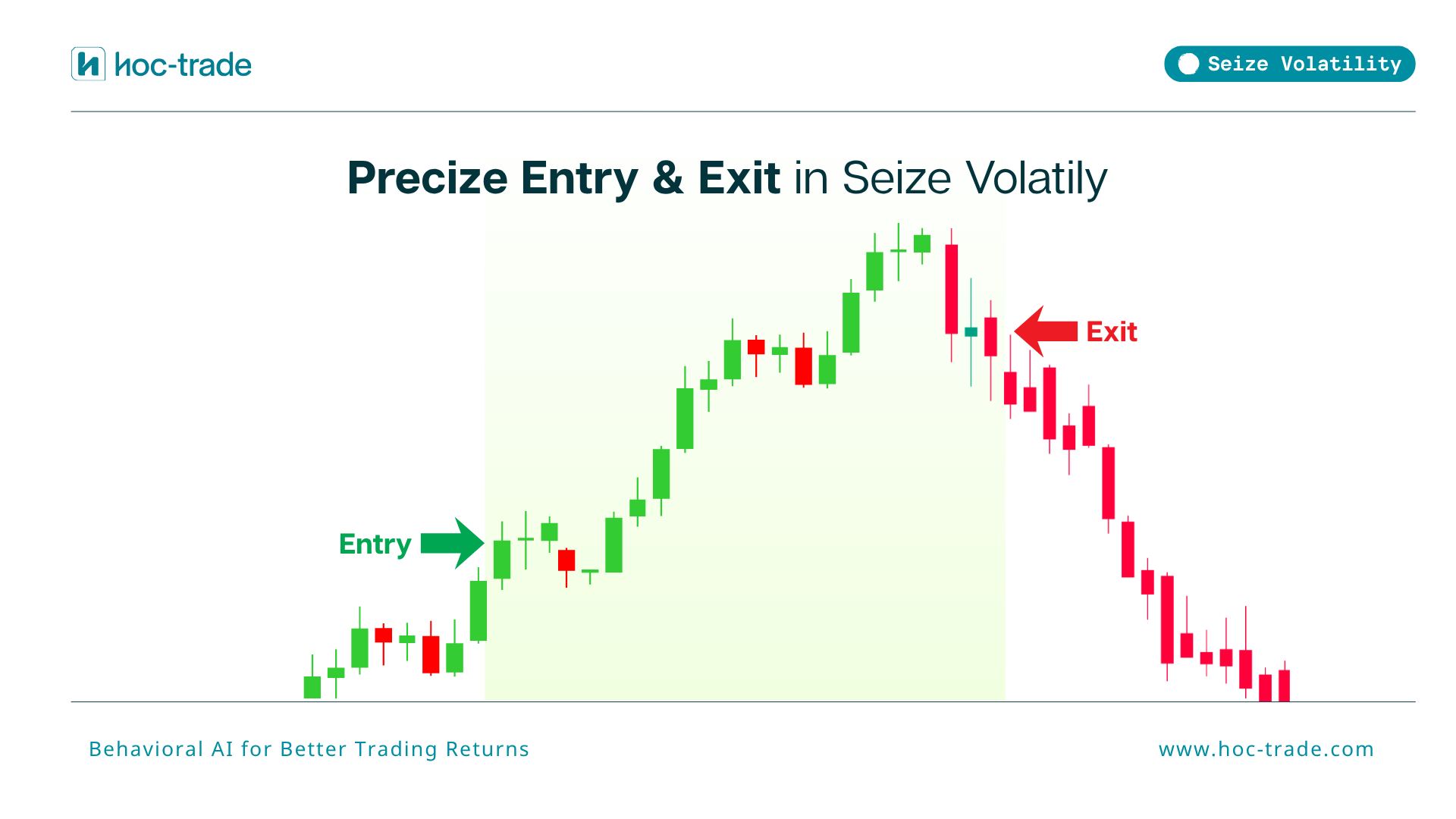
In actual trading, this edge shows up in how traders handle the tempo of fast markets. They initiate positions during periods when prices accelerate, often around news events where direction becomes clear but timing becomes unforgiving. What separates these traders is their ability to read the market in real time, then move with enough precision to capture the move rather than chase it afterward.
Position sizing becomes visible in this behavior. Rather than stepping away when volatility rises, these traders adjust their exposure to match the increased risk environment. They stay engaged without becoming dangerously overextended. This sizing discipline often pairs with decisive exit execution: acting quickly when conditions shift, taking profits when available, or cutting positions before the market reverses.
Composure under pressure forms a third element. Volatile conditions invite impulsive reactions, especially when price moves sharply against a position or when profits appear too easily. Traders who excel here maintain consistency by following their plan, resisting fear-driven or greed-driven decisions, and keeping emotional reactions in check while the tape moves fast.
Why Is Trading During Volatility a Competitive Advantage?
Volatility destabilizes many traders. When the environment becomes unstable, most performance deteriorates. This creates an asymmetry: for traders whose execution process holds up during stress, volatile periods become profitable. The advantage isn't about being right more often. It's about staying reliable in a specific environment where others fail.
From a performance perspective, this matters significantly. High-volatility windows compress movement into shorter periods. A trader who executes well during these compressed windows can contribute meaningfully to annual returns without needing every market day to cooperate. Over time, this consistency compounds. The competitive edge emerges from the match between a trader's capability and the specific regime where they excel. When markets move sharply, their process stays intact enough to capture available range.
How Can You Measure Your Volatility Trading Performance?
Hoc-trade detects Seize Volatility by examining whether trading performance improves as volatility increases. The system observes the correlation between high market volatility and the outcomes of trades opened during those periods. When data shows consistent profitability and stronger absolute returns during high-volatility entries, the pattern becomes clear.
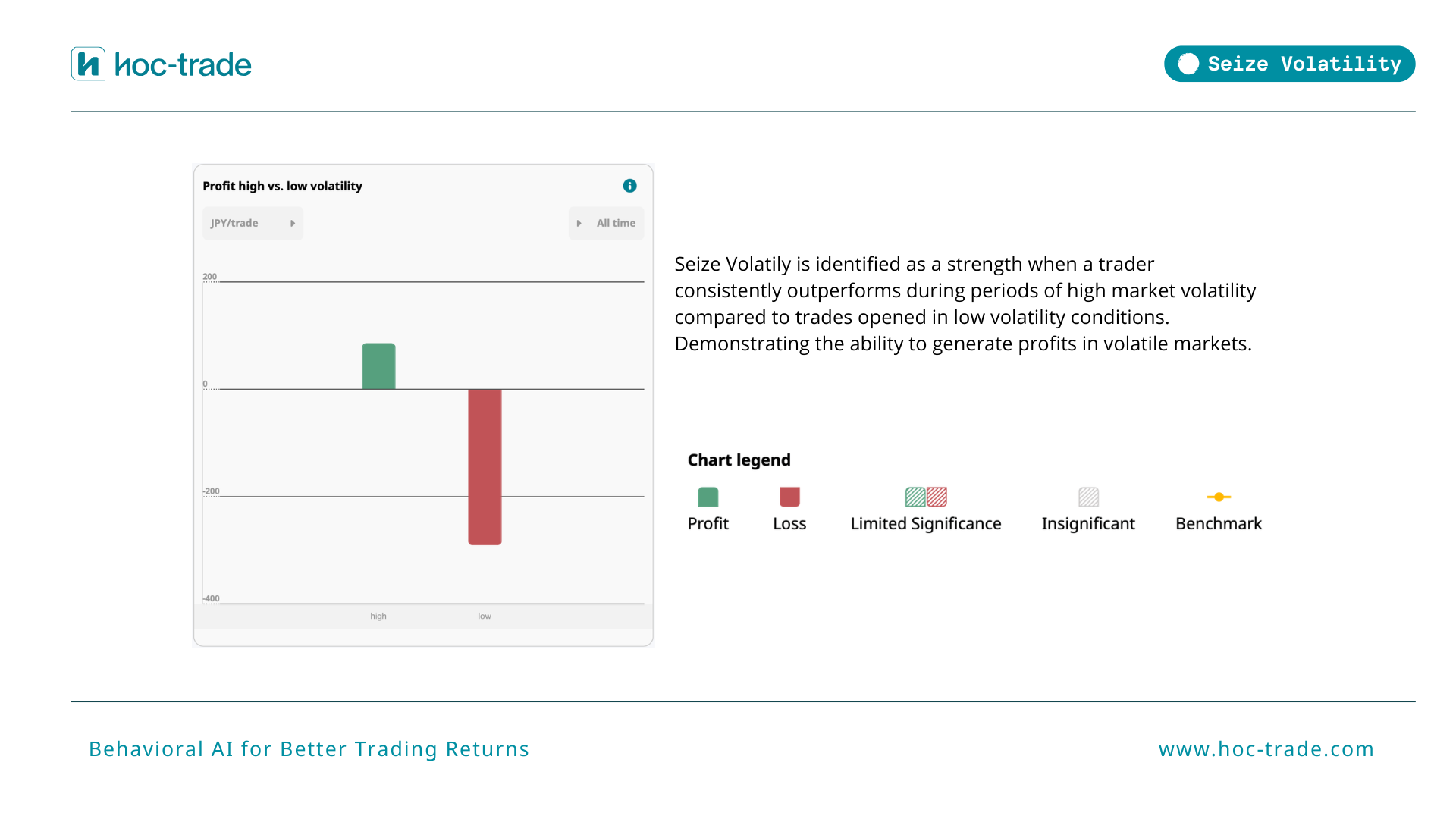
To validate this pattern reliably, trades are classified by their entry volatility using the Bollinger Bands indicator. This classification allows direct comparison of performance across different volatility conditions, revealing whether high-volatility periods consistently align with better outcomes. Rather than isolated wins during volatile periods, the system identifies whether the edge shows up repeatably across multiple volatility events.
What Does the Data Say About Volatility Trading?
TradeMedic detects Seize Volatility across a dataset of 500,000+ trader accounts, calculating each trader's personal performance pattern during different volatility regimes. The insight is clear: volatility handling separates consistent performers from inconsistent ones. Traders who can execute under stress show measurably different results than those who freeze when conditions accelerate.
This pattern ranks among the most impactful behavioral edges identified in our dataset. A detailed analysis with specific statistics about volatility trading performance is available in our Seize Volatility data analysis. Source: TradeMedic Research, 2026.
How Can You Develop Volatility Trading Skills?
Seize Volatility typically emerges as traders gain experience managing risk and executing under pressure. The pattern reflects more than quick reflexes. It reveals decision-making quality under compression, especially around news and rapid market shifts. Most traders improve here gradually, as patterns crystallize around when volatility becomes tradable for their specific approach and which execution behaviors remain stable across different market stress events.
As this capability develops, the strength becomes less about a single moment of boldness and more about a sustainable way of converting instability into repeatable performance. Better visibility into how your position sizing, real-time decision-making, and emotional control show up during fast markets transforms volatility from a threat into a tactical advantage.
TradeMedic AI analyses over 60 behavioural patterns, including blindly following momentum, across 500,000+ trader accounts. Visit TradeMedic to see how it works and get your own personal analysis.
Watch How to Seize Volatility