Category:
 Author:
 Date:May 25, 2026
Riding Momentum: How to Capture Fast Markets Before They Peak
Fast markets move with purpose. When price accelerates, candles stretch, direction clarifies, and the window for entry narrows quickly. The question isn't whether momentum exists, it's whether you can recognize it while it's building, not after it's already compressed the opportunity.
Most traders fall into one of two patterns. Some hesitate, paralyzed by doubt about whether the move is genuine. Others arrive late, pulled in by volatility after momentum has already drawn a crowd. A smaller group operates differently. They sense acceleration early, position with deliberation, and exit before the move exhausts. What looks like a reactive trade from outside is actually the result of precise timing, pattern recognition, and trained emotional stability.
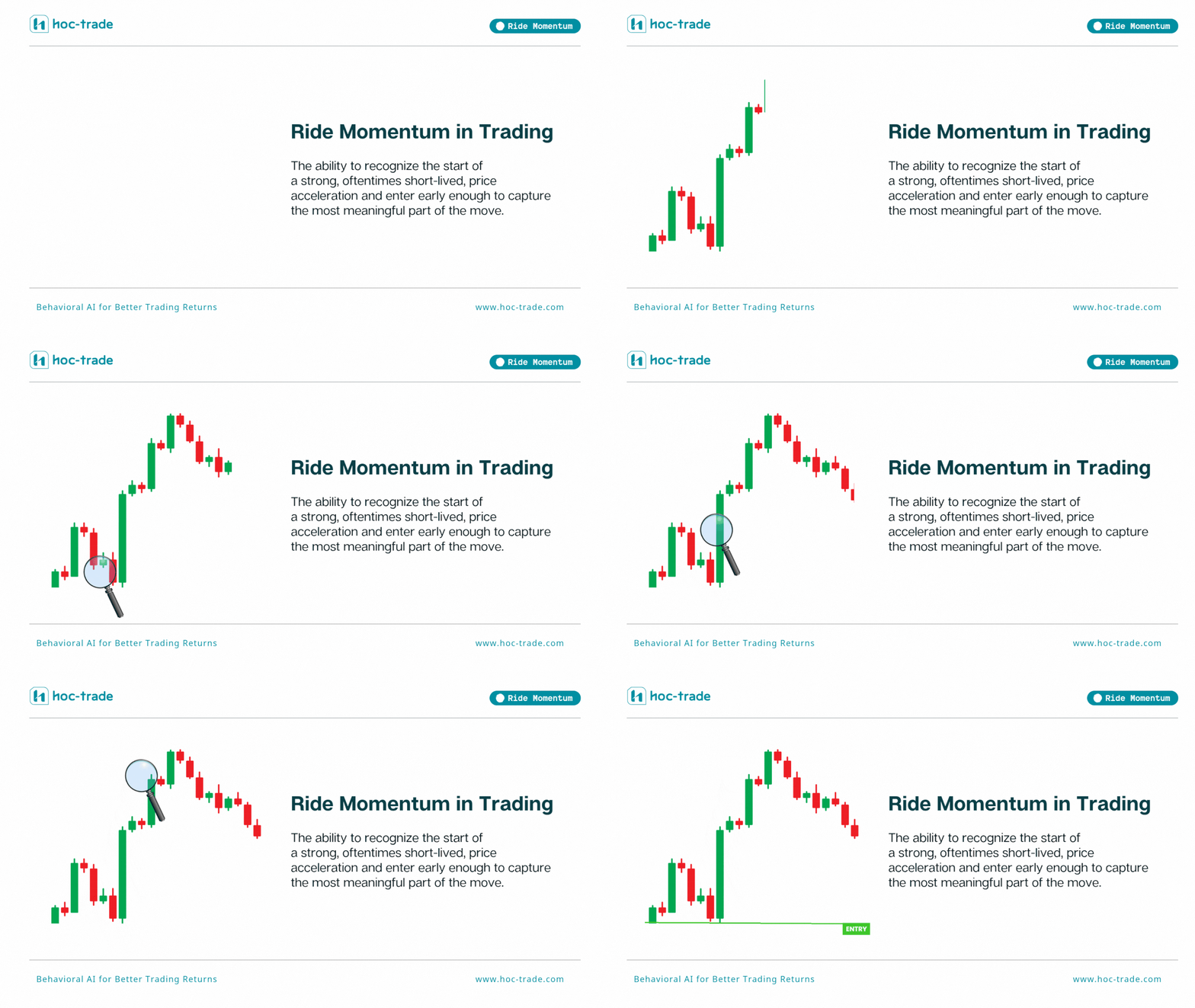
This isn't luck. Traders who consistently capture momentum have developed a specific skill: the ability to distinguish real acceleration from random price noise, assess whether momentum is building or already stretched, and move decisively before the opportunity closes.
What defines momentum trading as a trading edge?
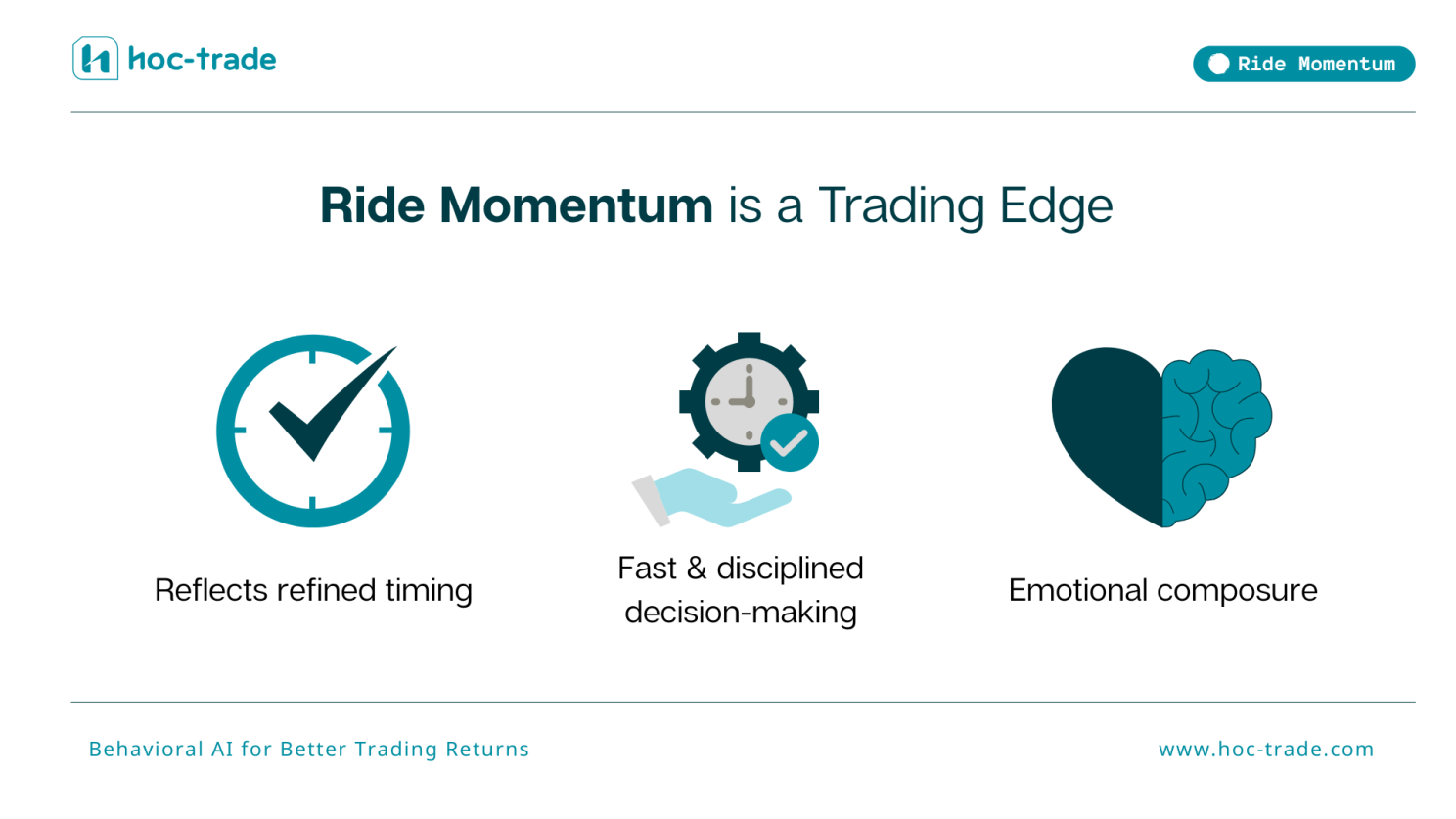
Momentum strength reveals three interconnected competencies: timing precision, emotional discipline, and fast decision-making under stress.
Timing matters because momentum rewards early entry. A trader who recognizes acceleration in its first phase, when participation is increasing but the move hasn't yet overextended, demonstrates both refined technical instinct and familiarity with how markets behave when momentum forms. This isn't forecasting; it's pattern recognition grounded in market structure.
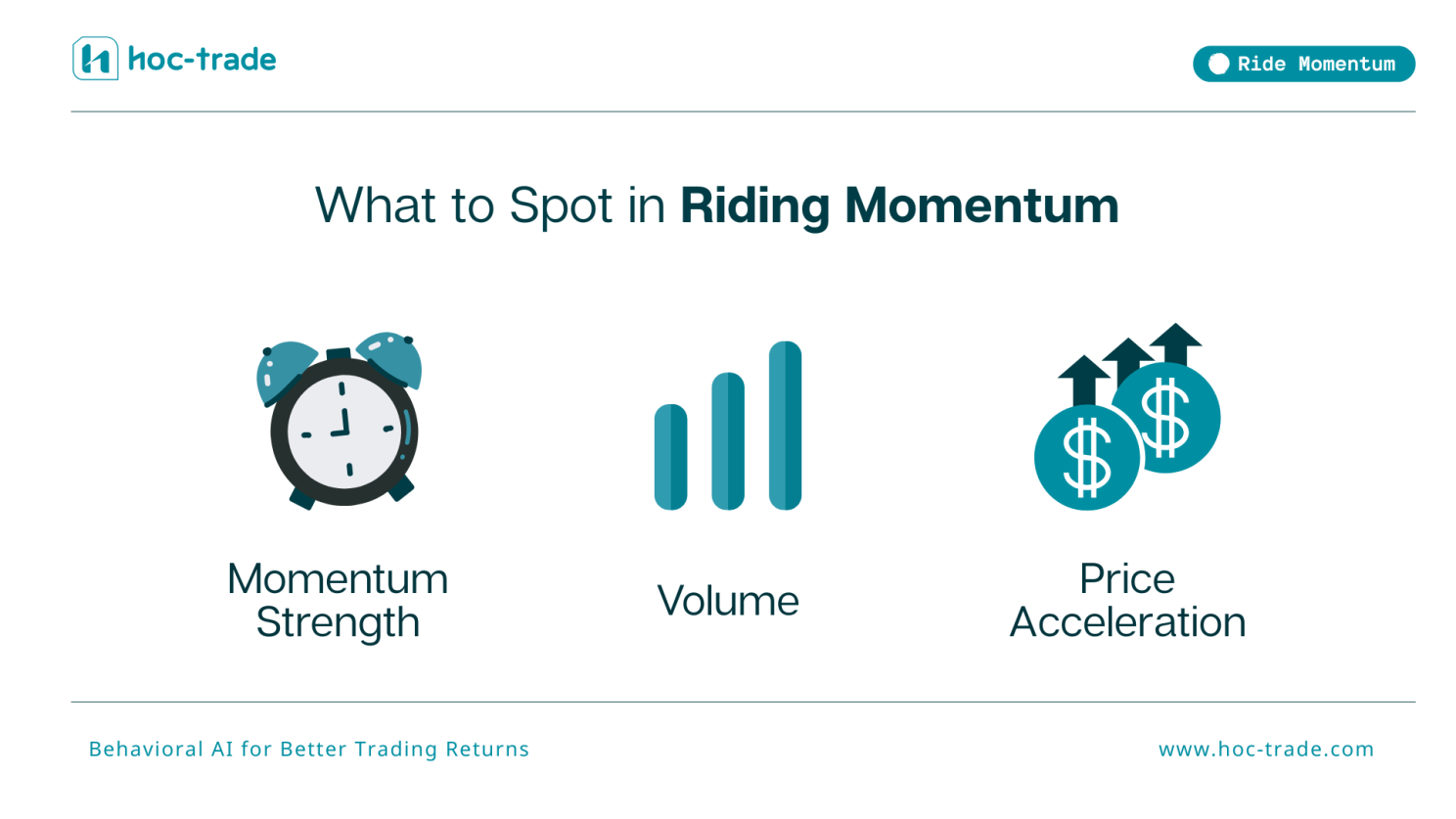
Speed matters because momentum disappears quickly. Traders who excel here show the capacity to act with conviction while preserving their decision-making structure. Their entries aren't impulsive; they're confident actions rooted in observation, not in fear of missing out. The distinction is subtle but decisive.
Exit discipline matters most. Strong momentum traders detect unfavorable trades early and cut them before the stop loss is hit. They spot signs of weakening momentum, price deceleration, indicator divergence, declining volume, and exit with trailing stops that filter noise while capturing real pullbacks. This combination of quick entry and controlled exit produces precision that reactive trading rarely achieves.
Finally, fast markets demand emotional composure. Rapid price changes overwhelm many traders, triggering either paralysis or panic. Traders who ride momentum consistently anchor themselves emotionally. They read movement objectively, remaining calm while others react to volatility. When timing, discipline, and emotional stability converge, momentum transforms from chaos into a repeatable edge.
How should you evaluate momentum trading in your own account?
Look for patterns in your best trades. When did they occur? Were you trading during periods of clear acceleration, or did you catch moves after they'd already matured? Are your entries clustered around specific momentum conditions?
The assessment involves examining entry timing relative to momentum conditions. Tools like RSI can reveal whether you entered during early momentum phases or waited for confirmation. Compare the profitability of trades entered during clear acceleration against trades entered during consolidation or choppy conditions. If your results consistently improve when you trade aligned with momentum, you've identified a genuine edge worth refining.
This analysis also exposes overstretched entries. Did you chase moves that had already run far, only to catch reversals? Or did you consistently enter early enough to benefit from the bulk of the acceleration? The gap between these patterns reveals whether your timing is real or still developing.
What does the data reveal about momentum trading patterns?
TradeMedic™ AI analyzes momentum entry and exit patterns across a dataset of 500,000+ trader accounts, identifying when traders recognize acceleration early versus when they chase exhausted moves. The data shows that traders who consistently outperform in fast markets share measurable behavioral markers: earlier entry relative to RSI momentum peaks, faster recognition of weakening conditions, and disciplined exits before reversals compound losses.
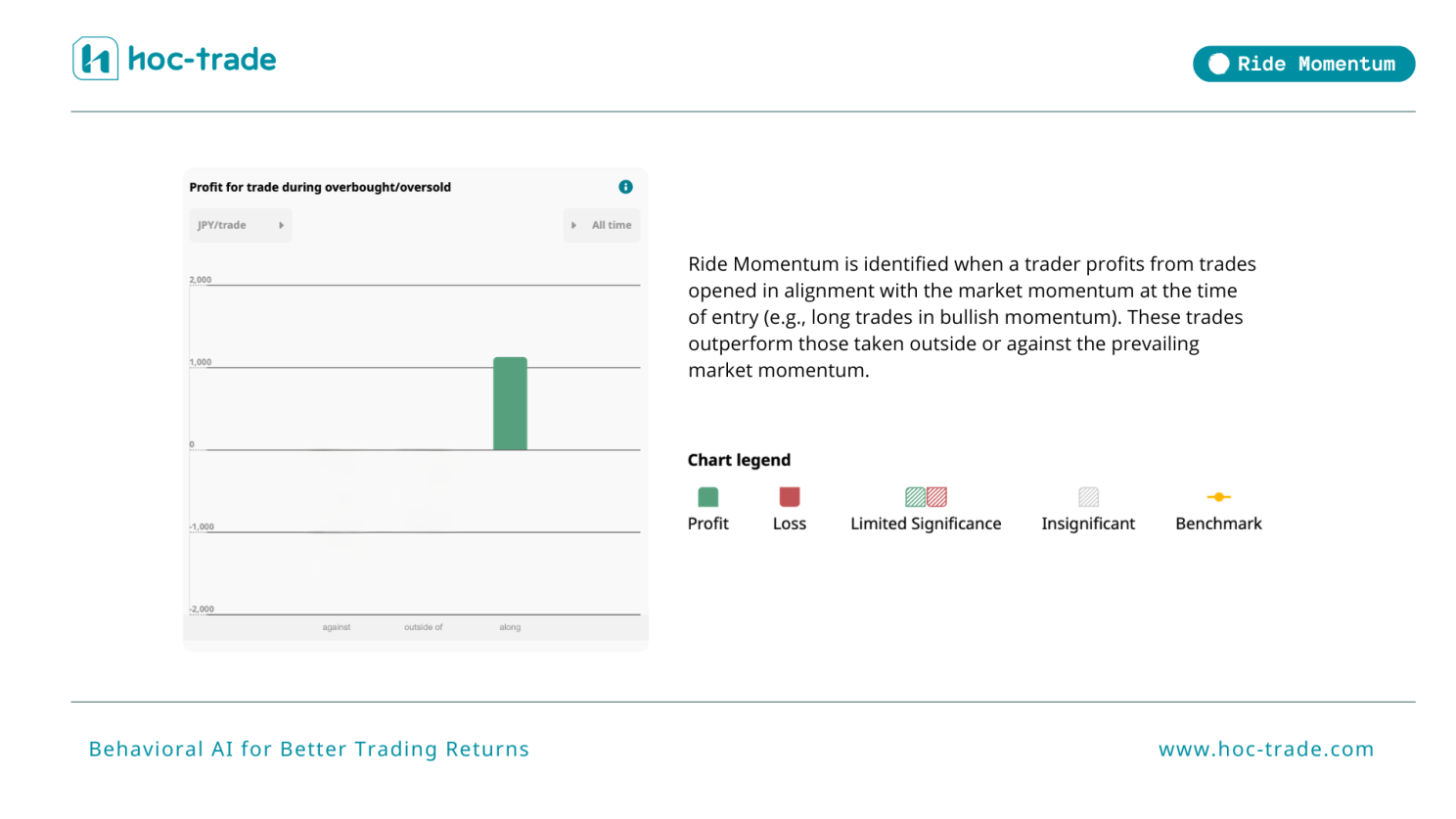
Momentum trading ranks among the most impactful edge opportunities in real trading data. A comprehensive breakdown with specific trader performance metrics and momentum detection benchmarks is available in our detailed momentum analysis.
TradeMedic AI analyses over 60 behavioural patterns, including riding momentum, across 500,000+ trader accounts. Visit TradeMedic to see how it works and get your own personal analysis.
Watch How Riding Momentum Capture Fast Markets Before They Peak
Frequently asked questions
What is momentum trading?
Momentum trading is the practice of recognizing and entering trades during periods of strong directional price acceleration, then exiting before the move exhausts. It requires sensitivity to early acceleration signals, quick decision-making, and disciplined exit management. Unlike trend-following, momentum trading focuses on the specific phase when momentum is building, not on longer-term directional conviction.
Why do traders struggle to catch momentum early?
Most traders hesitate during early momentum phases, waiting for confirmation that rarely comes until the opportunity is already crowded. Others react emotionally to volatility, entering late out of fear of missing out rather than through structured analysis. The skill of early momentum detection requires both pattern recognition training and emotional discipline under pressure.
How do you know when momentum is fading?
Momentum typically fades when price deceleration becomes visible—candles shrink, direction blurs, and RSI begins diverging from price action. Strong momentum traders exit on early signs of these changes rather than waiting for full reversals. This early recognition protects most of the gains before exhaustion turns the move against them.
Can momentum trading be a consistent edge?
Yes, for traders who develop timing precision and emotional stability in fast markets. Data from 500,000+ trader accounts shows that traders who consistently recognize acceleration early and exit with discipline outperform those who react emotionally to volatility. The edge comes from repeatability, not from individual momentum moves.
What's the difference between momentum trading and chasing breakouts?
Momentum trading focuses on the acceleration phase itself, while breakout chasing often occurs after the breakout has already matured. Momentum traders exit before the move exhausts; breakout chasers often arrive after momentum has already peaked, resulting in higher risk and lower reward.