Category:
 Author:
 Date:Apr 17, 2026
Catching Trend Reversal: A Trader's Real Edge

Every trend eventually runs out of momentum. Buyers or sellers who pushed price in one direction start losing conviction, and for a short window, the market shows real uncertainty about where it wants to go next. Most traders miss this window entirely. They keep trading the trend that just ended, or they wait for confirmation that only arrives once the easy part of the new move is already gone. A smaller group reads the shift while it's still forming. TradeMedic's behavioural data, drawn from 500,000+ trader accounts, shows this ability, catching trend reversal, is a real and measurable trading strength, not a lucky guess.
What does catching trend reversal mean in trading?
Catching trend reversal describes a trader's ability to spot the moment an existing trend is losing strength and act before the reversal becomes obvious to everyone else. It shows up when bullish momentum starts failing and sellers step in, or when bearish pressure runs dry and buyers regain control.
This isn't the same as randomly fading a trend or being early just to feel contrarian. Isolated wins that happen to land near a turning point don't count on their own. What matters is consistency: a trader who shows this strength catches reversals again and again, with results that hold up across many trades rather than a handful of lucky calls. The skill lies in telling a temporary pullback apart from a real change in market structure, and doing it before the shift is confirmed.
There's a second layer to this that makes it harder than it looks. A trader reading trend reversal well isn't only watching price. They're reading how other participants are likely to react as their positions stop making sense, as momentum drains out of the move, and as the structural case for the old trend quietly falls apart.
How does catching trend reversal show up in a trader's history?
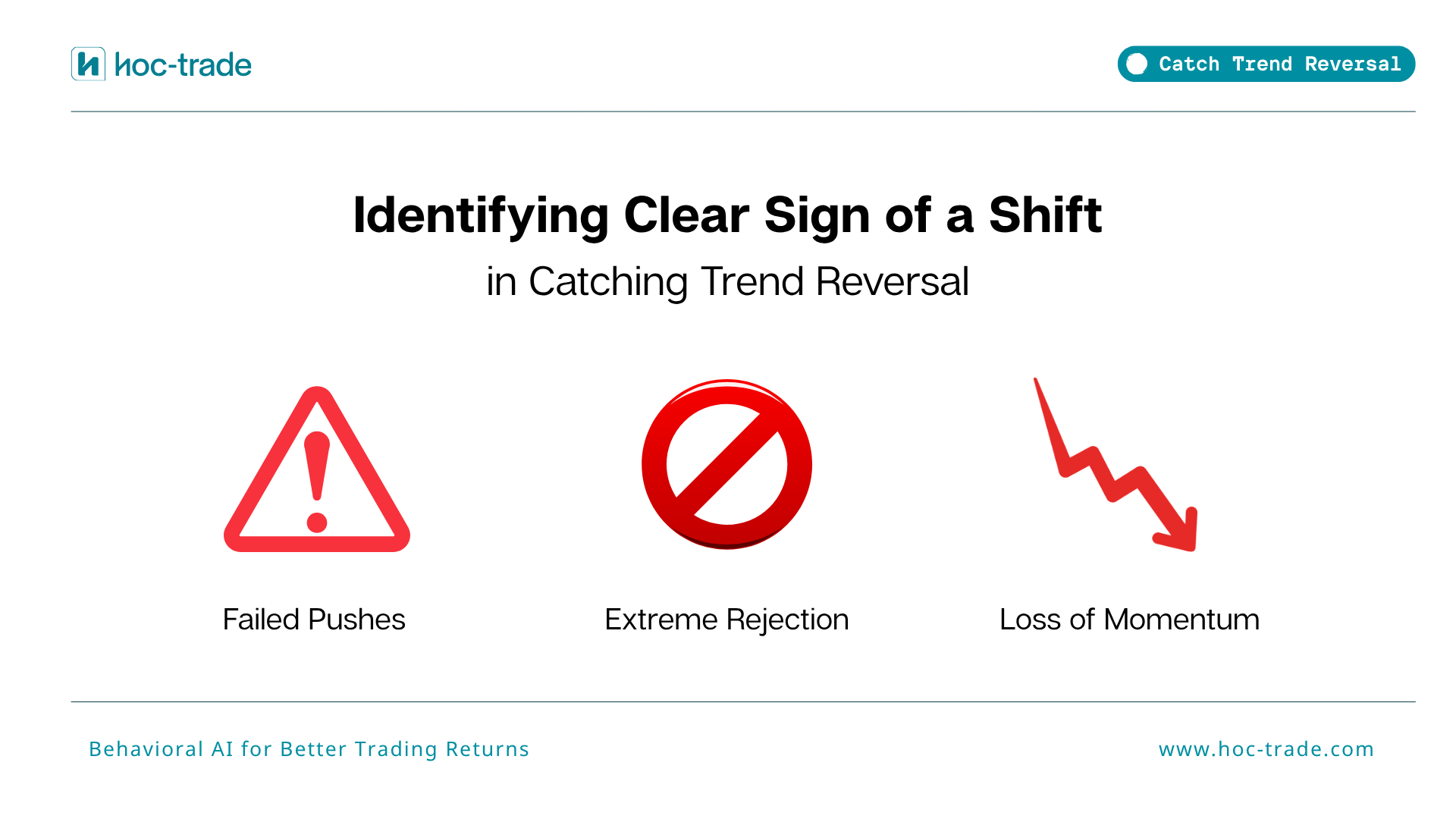
In a trader's history, this pattern tends to appear around specific conditions: repeated failed pushes in one direction, a rejection at a clear extreme, a break in market structure, or a visible drain in momentum that signals control is changing hands.
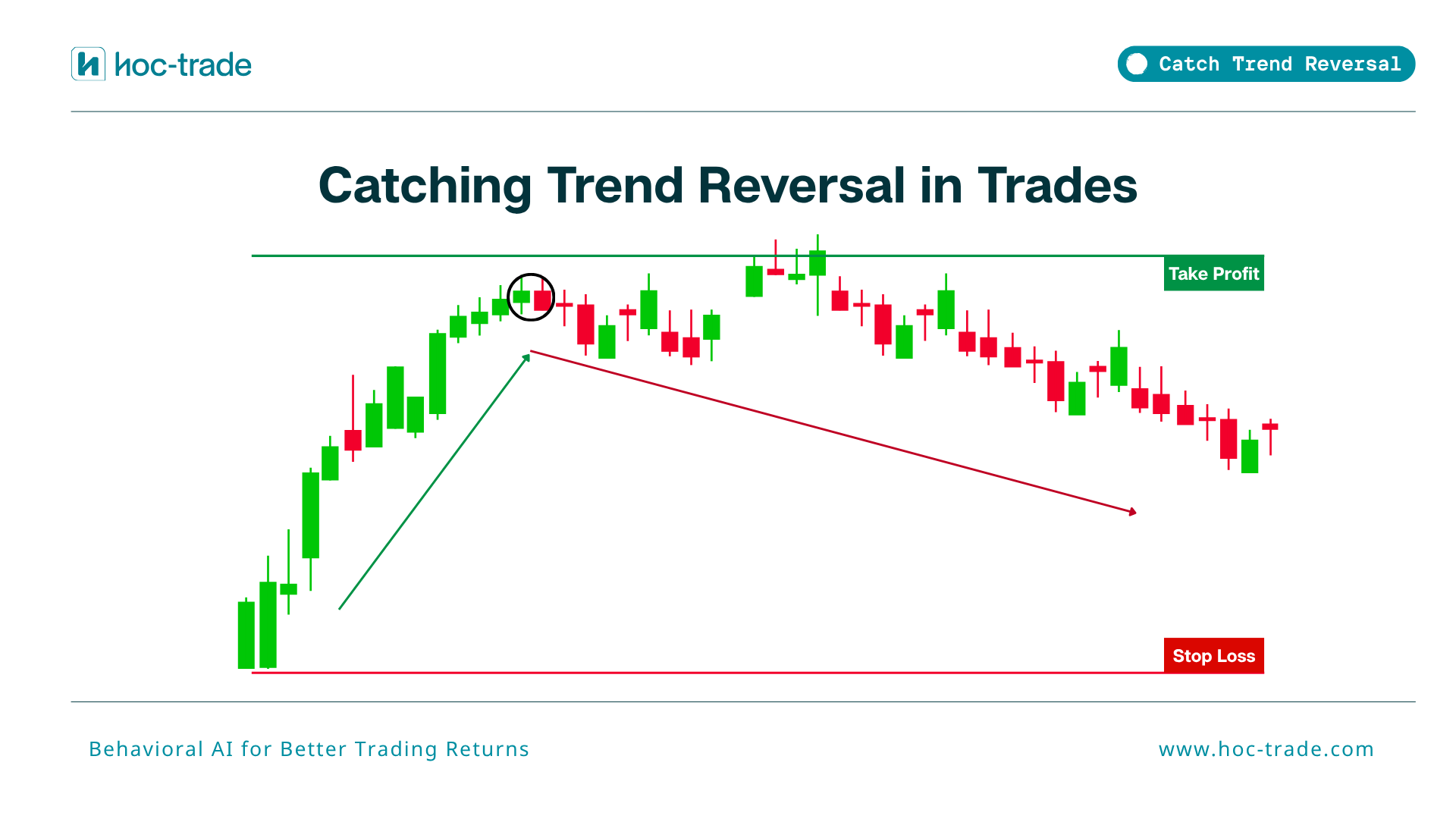
What sets these trades apart isn't just good timing. It's the willingness to act while the market still feels wrong. Reversal entries almost always happen while sentiment is still tied to the old move and while momentum traders are still adding to positions in the direction that's about to end. That takes a particular kind of patience: watching a move stretch further than feels comfortable, resisting the pull to fade it too soon, and waiting for the actual signs of a shift rather than a hunch.
Traders who show this strength tend to enter near inflection points, not after a large move has already played out. They aren't catching up to a new direction late. They're catching the transition itself.
Why is catching trend reversal a real trading edge?
The early stage of a reversal often creates real asymmetry. When a trader identifies the shift near the actual turning point, they can place a tight invalidation level just past the rejection zone or the failed push. The potential reward on the other side, an entire new trend forming, is often several multiples of that risk. Few setups in active trading offer this kind of skewed risk-to-reward, provided the read is right.
This strength also points to something beyond timing. It suggests the trader reads exhaustion, sentiment extremes, and structural breakdowns well. Instead of waiting for consensus or a confirmed signal, they respond to changing conditions before most of the market has caught up.
This ability also helps traders sidestep one of the more common traps in active trading: joining a move after it's already stretched thin. Rather than chasing the tail end of an old trend, traders with this strength are positioned to catch a new one as it's just starting to form.
When does catching trend reversal work best?
This edge doesn't express itself equally in every market condition. It tends to work best around clearly defined structural levels, after extended momentum runs where participation is visibly thinning, or during session transitions where positioning naturally shifts. In strongly trending, low-volatility conditions where a move grinds on without clear signs of exhaustion, the same approach becomes far less reliable.
Recognising where the edge holds and where it doesn't is part of what makes it usable. A trader who understands the specific conditions that favour reversal reads can apply the strength with more selectivity, rather than forcing it into every setup that comes along. Traders who lean the other way, riding momentum continuation instead of catching turns, often need a different playbook entirely. You can read more about how momentum trading shows up in trader data, and how it differs from counter-trend trading as a separate behavioral pattern.
What does the data say about catching trend reversal?
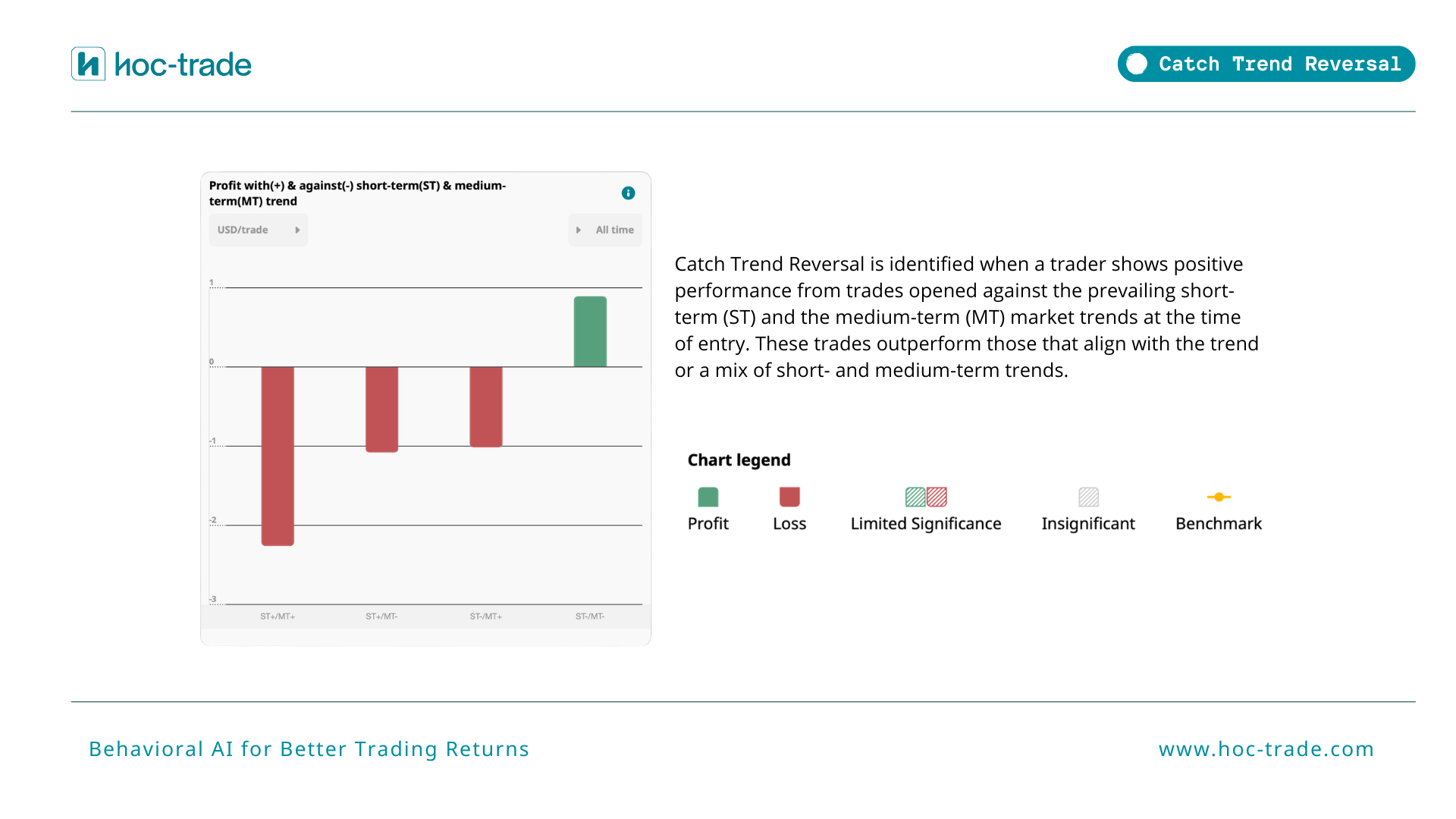
TradeMedic™ detects catching trend reversal by analysing whether a trader systematically performs better when entering against an existing move that's starting to lose strength. The AI looks at trade timing, entry positioning, and outcomes across our dataset of 500,000+ trader accounts to work out whether reversal-based decisions produce a repeatable edge rather than a run of lucky trades. A full breakdown of how this pattern compares to other timing-based strengths is available through TradeMedic's research.
How does TradeMedic identify this as your strength?
When catching trend reversal shows up in a TradeMedic report, it's a signal to build around something that's already working rather than change direction. Some traders perform best riding a trend once it's established. Others read the shift in control near the turning point and act on it. Knowing which one describes you changes how you should think about selectivity, timing, and which setups are worth the risk.
The goal isn't to force a different approach onto how you naturally read the market. It's to understand the pattern clearly enough to apply it with more consistency and more confidence, backed by evidence from your own trading history rather than a hunch about what you're good at. If you haven't already, TradeMedic's behavioural analysis can show whether this strength, or a different one, is where your edge lives.
Reversal reads won't work in every market. But for traders who show this strength consistently, the data suggests it isn't a coincidence. It's a real pattern of skill, one worth building selectivity and confidence around instead of overriding in favor of setups that don't match how you naturally trade.
TradeMedic AI analyses over 60 behavioral patterns, including Catching Trend Reversal as a trading strength, across 500,000+ trader accounts. Visit TradeMedic to see how it works.
Watch How to Catch A Trend Reversal
Frequently asked questions
What is catching trend reversal in trading?
Catching trend reversal is a trader's ability to spot when an existing trend is losing strength and to act before the reversal becomes obvious to the rest of the market. It reflects skill in reading exhaustion and structural breakdown rather than random contrarian bets.
How is catching trend reversal different from just fighting a trend?
Fighting a trend without a plan tends to produce occasional, inconsistent wins. Catching trend reversal describes a trader who repeatedly performs well entering against a fading trend, based on measurable signals like failed pushes, structure breaks, and fading momentum rather than isolated luck.
Why is catching trend reversal considered a trading edge?
The early stage of a reversal often allows for a tight invalidation level near the failed push or rejection zone, while the potential reward, an entirely new trend, can be several multiples of that risk. This risk-to-reward asymmetry is rare in active trading.
When does catching trend reversal work best?
This pattern tends to perform best around clear structural levels, after extended momentum runs where participation is thinning, or during session transitions. It's less reliable in strongly trending, low-volatility conditions where a move grinds on without visible exhaustion signals.
How does TradeMedic detect catching trend reversal?
TradeMedic™ analyses trade timing, entry positioning, and outcomes across a dataset of 500,000+ trader accounts to determine whether a trader's reversal-based entries produce a repeatable, measurable edge rather than random results.