Category:
 Author:
 Date:May 29, 2026
Smart Hedging: What Separates a Real Edge from a Risky Habit
Ask a room full of retail CFD traders about hedging and most will wince. The instinct isn't wrong. Opening a second position to offset a losing one, without a clear rationale, tends to muddy decision-making rather than protect capital, leaving traders stuck between exposures they can no longer manage cleanly. TradeMedic's account data tells a different story about a specific group of traders, though. When their hedged positions consistently outperform their unhedged ones, that pattern is worth understanding rather than dismissing.
What is Smart Hedging in trading?
Smart Hedging describes a trader's capacity to manage risk inside a live position. It isn't a specific technique or a fixed set of rules. It shows up as active trade management, shaping exposure through considered offsets instead of repeatedly closing and reopening positions every time price moves. Where poor hedging becomes a reactive loop driven by short-term noise, Smart Hedging stays coherent for as long as the position remains open.
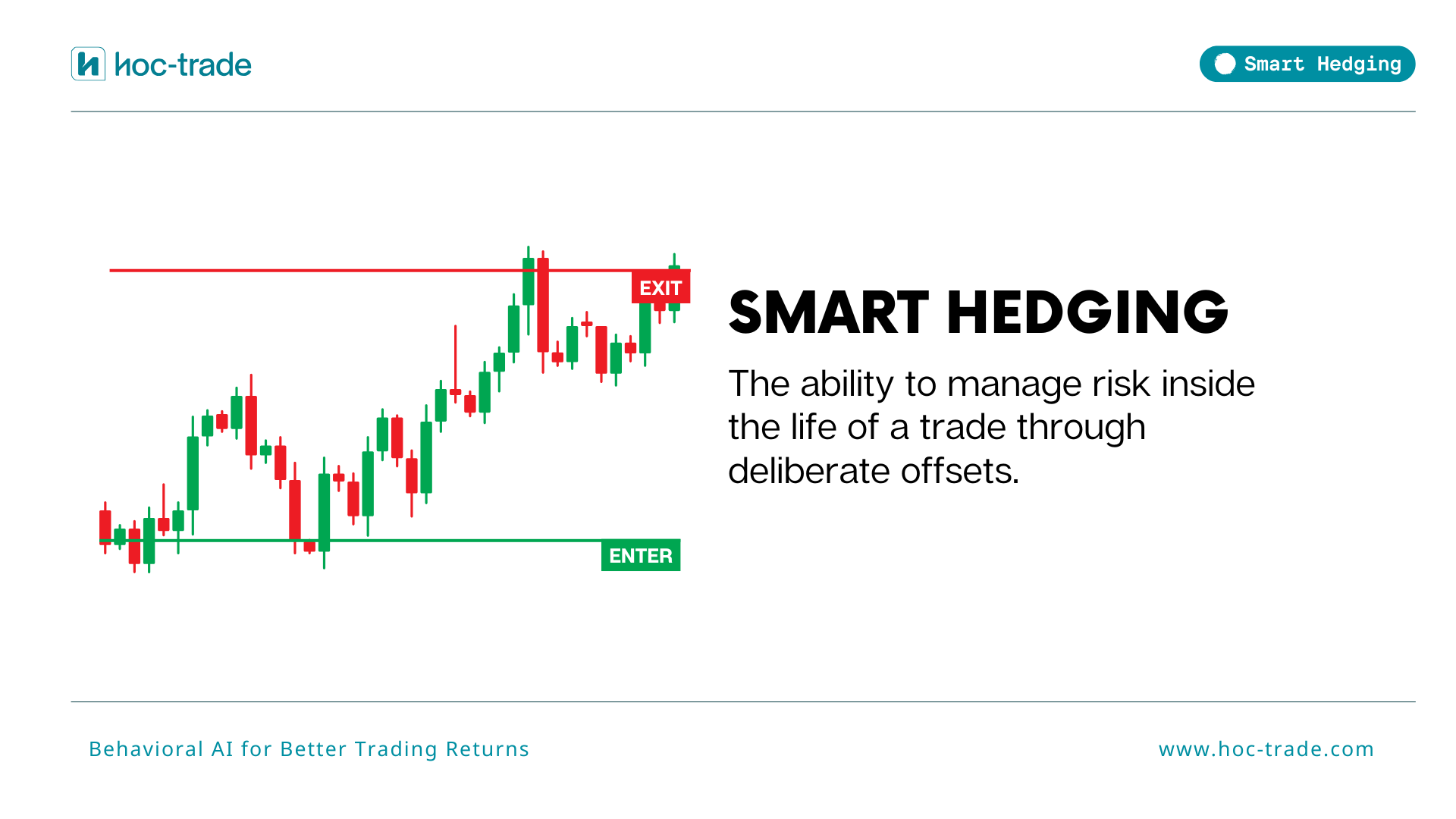
The behaviour isn't measured by how often a trader hedges. It's measured by what the hedge does. A well-placed hedge reduces the potential loss from other open trades while keeping the trader's overall market view intact. The purpose of the original position doesn't change, only its vulnerability does. This is less about eliminating risk and more about controlling how risk expresses itself while a trade is still live.
How does Smart Hedging show up in real trades?
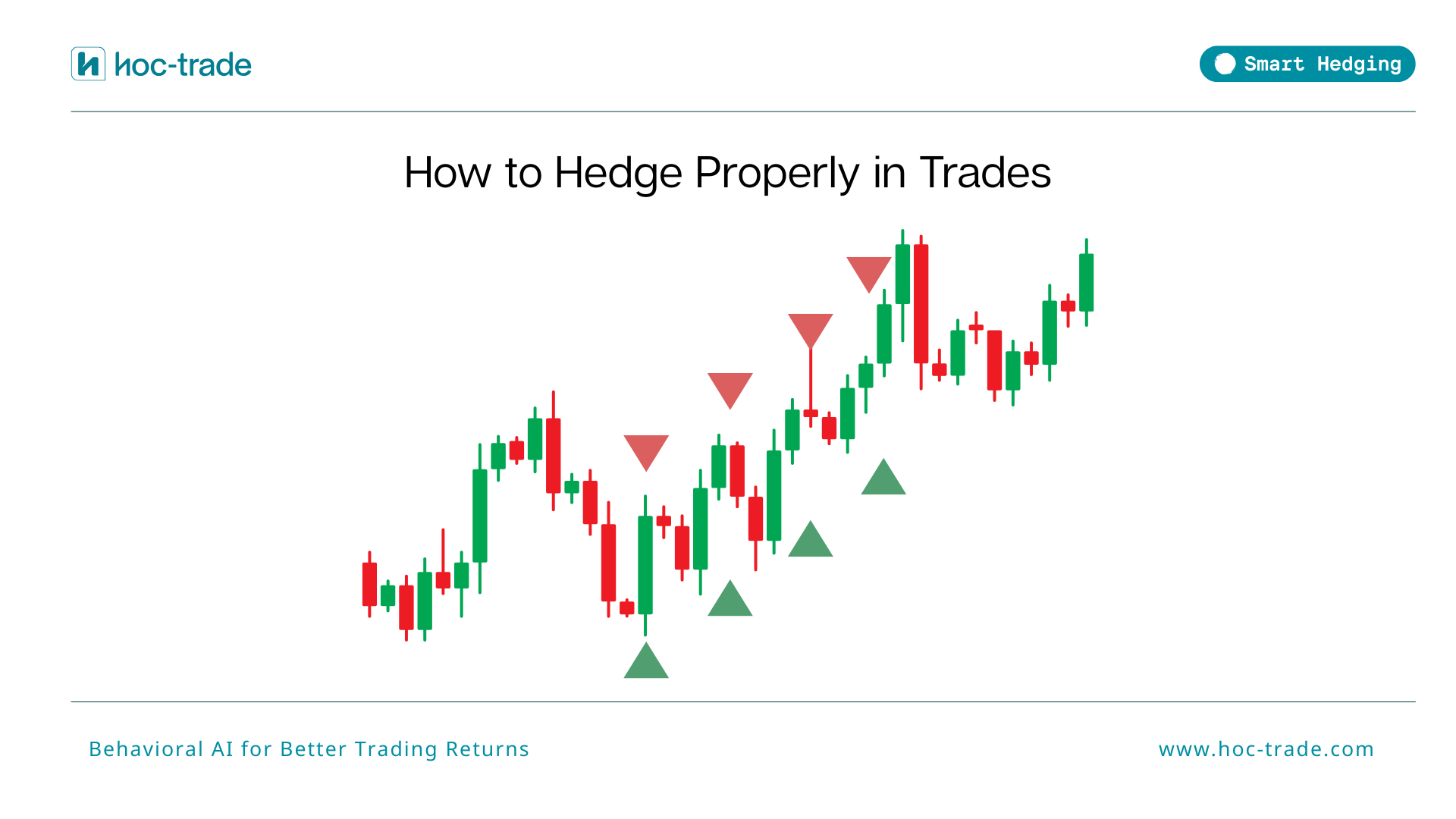
In practice, Smart Hedging looks like sustained engagement rather than constant fidgeting. A trader demonstrating this quality can read complex correlations and act on them, and it shows up in their order history rather than staying abstract. Instead of resetting a position every time conditions shift, they introduce offsets that are structurally tied to what is already open, spreading risk across instruments instead of letting it concentrate in one place.
This often plays out as a layered structure, where two or more positions or instruments work together to protect capital. It isn't one defensive move made in a panic. It's part of how the trader builds and maintains a book, particularly once markets turn volatile or unpredictable.
Correlation awareness sits at the centre of this in CFD trading specifically. Many instruments respond to the same underlying driver. Dollar strength, for instance, pushes EUR/USD, XAU/USD, and USD/JPY in related but not identical directions. A trader who notices that two open positions are really the same directional bet, and deliberately introduces an offset to reduce that overlap, is doing something worth naming: thinking about the book as a whole rather than a stack of unrelated trades.
That kind of multi-position awareness means holding complexity without losing clarity. The trader has to recognise when positions reinforce each other's risk or cancel it out, and act before the overlap becomes a problem. The offset reduces exposure to an adverse move while still leaving room to participate in price movement across several instruments at once.
Why does Smart Hedging function as a trading edge?
Smart He
dging holds up as an edge because it reflects deliberate control over exposure during the life of a trade. Adding an offset forces the trader to account for what's already open, how the positions relate, and exactly what vulnerability they're trying to reduce. That deliberateness tends to show up not just in the hedge itself, but in how coherently the whole position is managed.
It also changes how concentrated risk behaves. When net exposure is partly neutralised, the position depends less on a single directional move to hold steady, and trade management can stay consistent instead of collapsing into rapid reversals or repeated resets. The hedge becomes a structural piece of the trade rather than a panic response.
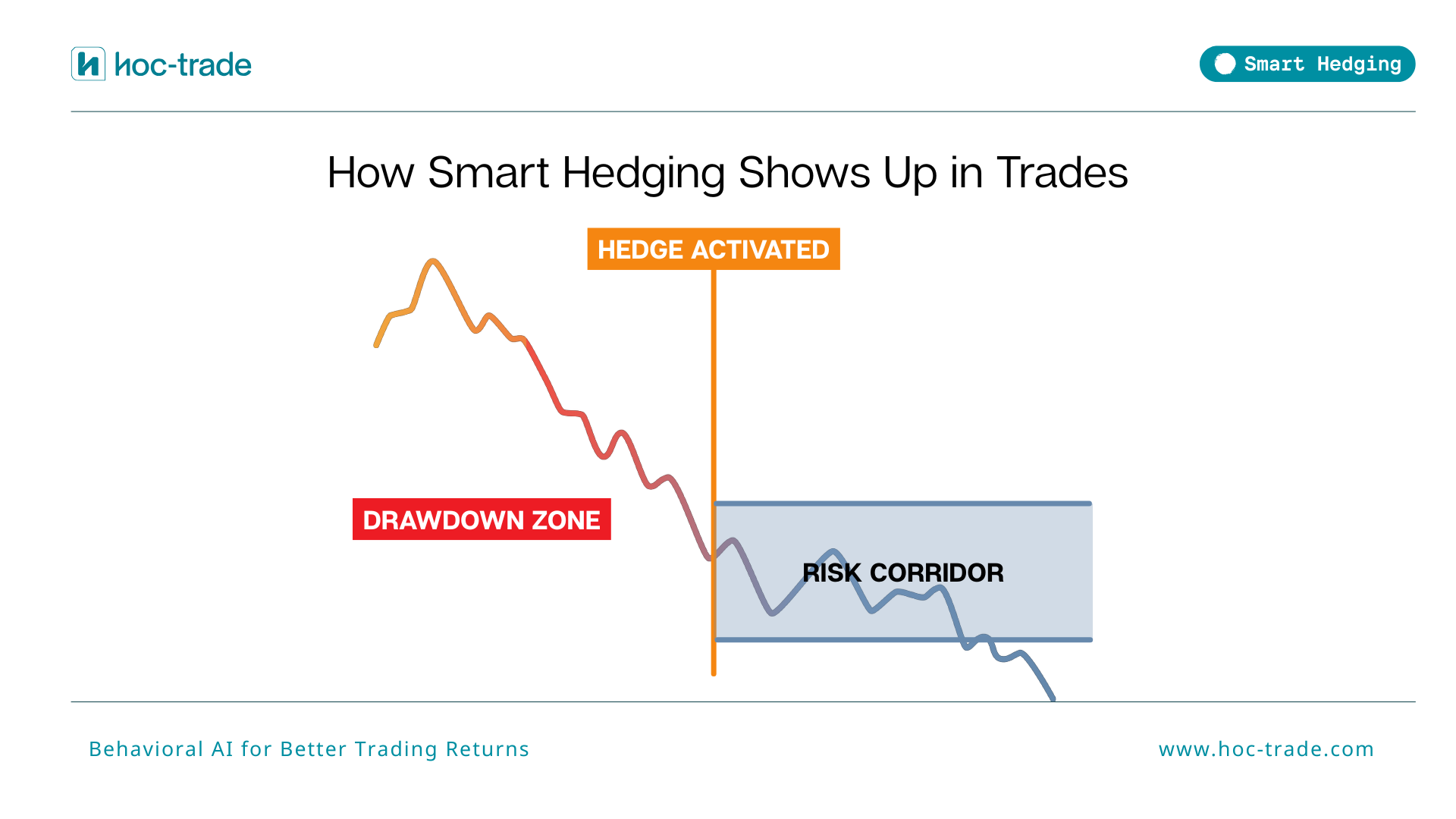
That structure earns its keep in volatile conditions. Correlated exposure that isn't hedged can compress outcomes fast once price turns against the book. A well-placed hedge absorbs part of that pressure, giving the original position room to hold until the broader move plays out.
Correlation awareness rarely stands alone here. Spotting when instruments share an underlying driver, and hedging accordingly, signals oversight that extends past any single trade. That awareness carries through entries, exits, and ongoing management, because it changes how the trader reads exposure: as a system, not a series of disconnected decisions.
How does Hoc-trade detect Smart Hedging in trading data?
TradeMedic doesn't assume a hedge is effective just because it exists. Hoc-trade flags a trade as a hedge when either the base or quote currency contradicts another position the trader already has open at entry. That's how the system identifies when a new position is functioning as an offset within someone's live exposure, rather than a fresh, unrelated bet.
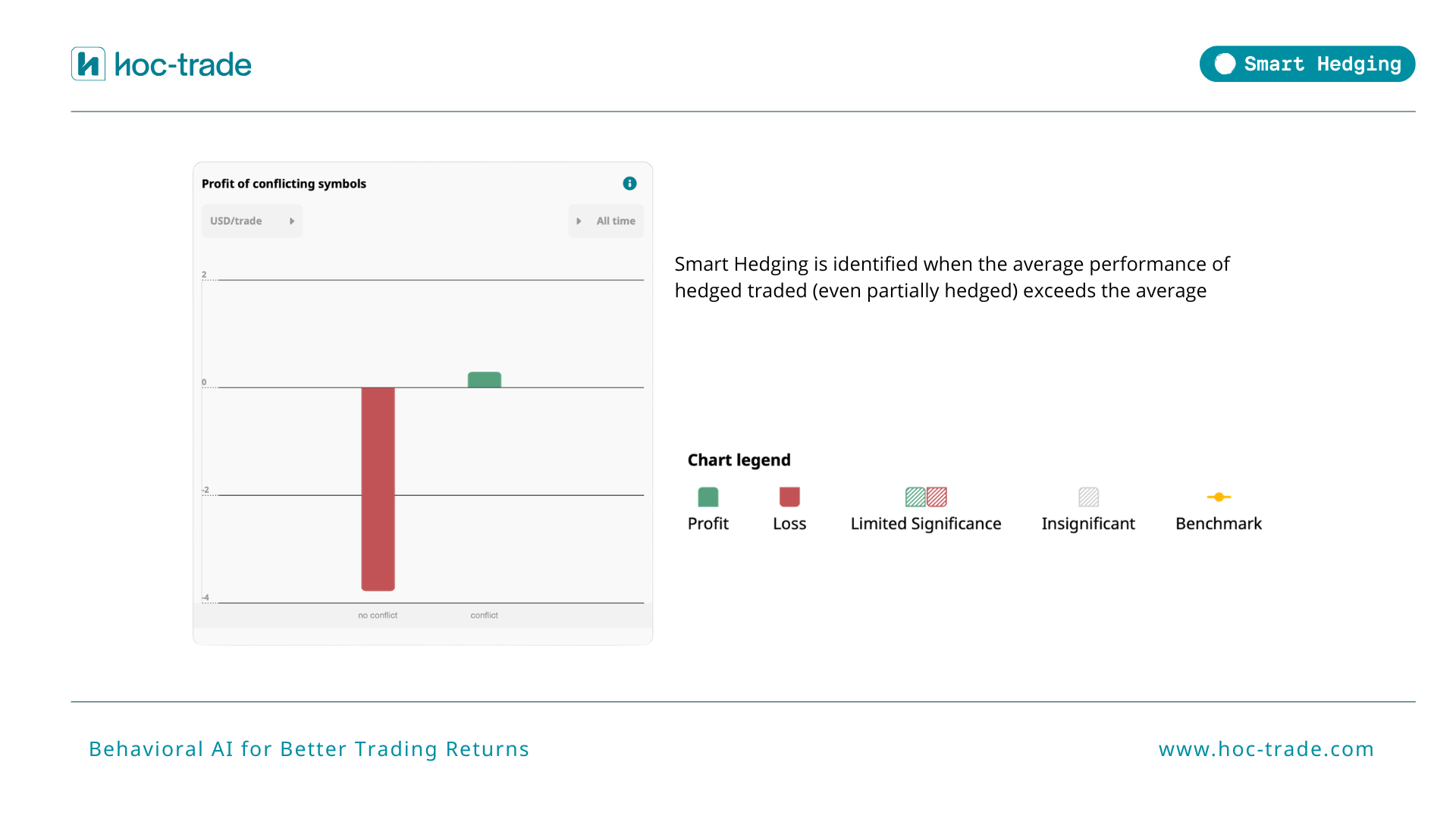
From there, TradeMedic compares the performance of partly or fully hedged positions against the trader's unhedged trades. When hedged positions consistently outperform and overall profitability holds up, the behaviour gets surfaced as Smart Hedging. The validation sits in the relationship between hedging structure and realised results, not in the presence of a hedge on its own.
What does the data say about hedging behaviour in real accounts?
TradeMedic™ AI tracks hedge-tagged trades across a dataset of 500,000+ real trader accounts, comparing hedged outcomes against unhedged ones for each individual trader. This lets the system calculate a personal risk profile around hedging rather than applying a generic rule about whether hedging is good or bad. A detailed breakdown of hedging patterns across the dataset is available through TradeMedic's ongoing research.
Smart Hedging tends to scale quietly. It becomes more visible as markets grow uncertain and correlations grow more tangled, precisely because the underlying skill is about balancing exposure rather than reshaping it constantly. Over time it can become one of the more defining features of how a trader handles volatility, not by avoiding it, but by holding it in a way that stays coherent from entry to exit.
What TradeMedic adds is confirmation. Surfacing the link between hedged positioning and actual trade performance answers a question that's otherwise hard to settle in the moment: whether a hedge is just sitting there, or doing its job. Traders working through patterns like loss aversion or overtrading often find that their hedging behavior tells a similar story about how they handle risk under pressure. The TradeMedic platform surfaces that story directly from a trader's own trade history.
TradeMedic AI analyses over 60 behavioral patterns, including Smart Hedging as a trading strength, across 500,000+ trader accounts. Visit TradeMedic to see how it works.
Watch How Smart Hedging Separates Trading Edge from Risk
Frequently asked questions
What is Smart Hedging in trading?
Smart Hedging is a trader's ability to manage risk within an open position by introducing offsets that reduce vulnerability without abandoning the original trade idea. TradeMedic identifies it when hedged positions consistently outperform unhedged trades from the same account, across a dataset of 500,000+ real accounts.
How is a hedge different from opening a random offsetting position?
A random offset reacts to short-term price movement without accounting for how it relates to other open trades. A smart hedge is structurally tied to existing exposure, reducing the impact of correlated risk rather than creating a second, disconnected bet.
Why does correlation awareness matter for hedging?
Many instruments move together because they share an underlying driver, such as dollar strength affecting EUR/USD, XAU/USD, and USD/JPY at once. Recognising that overlap lets a trader hedge the shared risk directly instead of unintentionally doubling down on the same directional bet.
How does Hoc-trade detect Smart Hedging in a trader's account?
Hoc-trade tags a trade as a hedge when its base or quote currency contradicts another position already open at entry. It then compares the performance of hedged positions to unhedged ones, and surfaces Smart Hedging only where hedged trades show a clear, positive link to overall profitability.
Does hedging always improve trading outcomes?
No. Hedging without a clear structural rationale can fragment decision-making and dilute results, which is why Hoc-trade validates it against actual performance rather than assuming any hedge is beneficial. The distinction lies in whether the hedge is doing structural work or simply reacting to short-term noise.