Category:
 Author:
 Date:Jun 26, 2026
Spotting Emotional Trading in Your Open Positions
Some of your worst entries don't come from a bad chart. They come from what you already have on the screen. A position sitting in deep profit can make you bolder than you should be. A position bleeding red can push you to chase. The trade in front of you feels separate from the ones you already hold, but your brain rarely treats it that way.
What is emotional trading?
Emotional trading is when feelings, rather than your plan, drive your entries, exits, and trade management. The trigger is often sitting right in your account: a strong unrealised profit or loss in an open position. That floating number colors how you size the next trade, where you place your stop, and whether you take a setup at all.
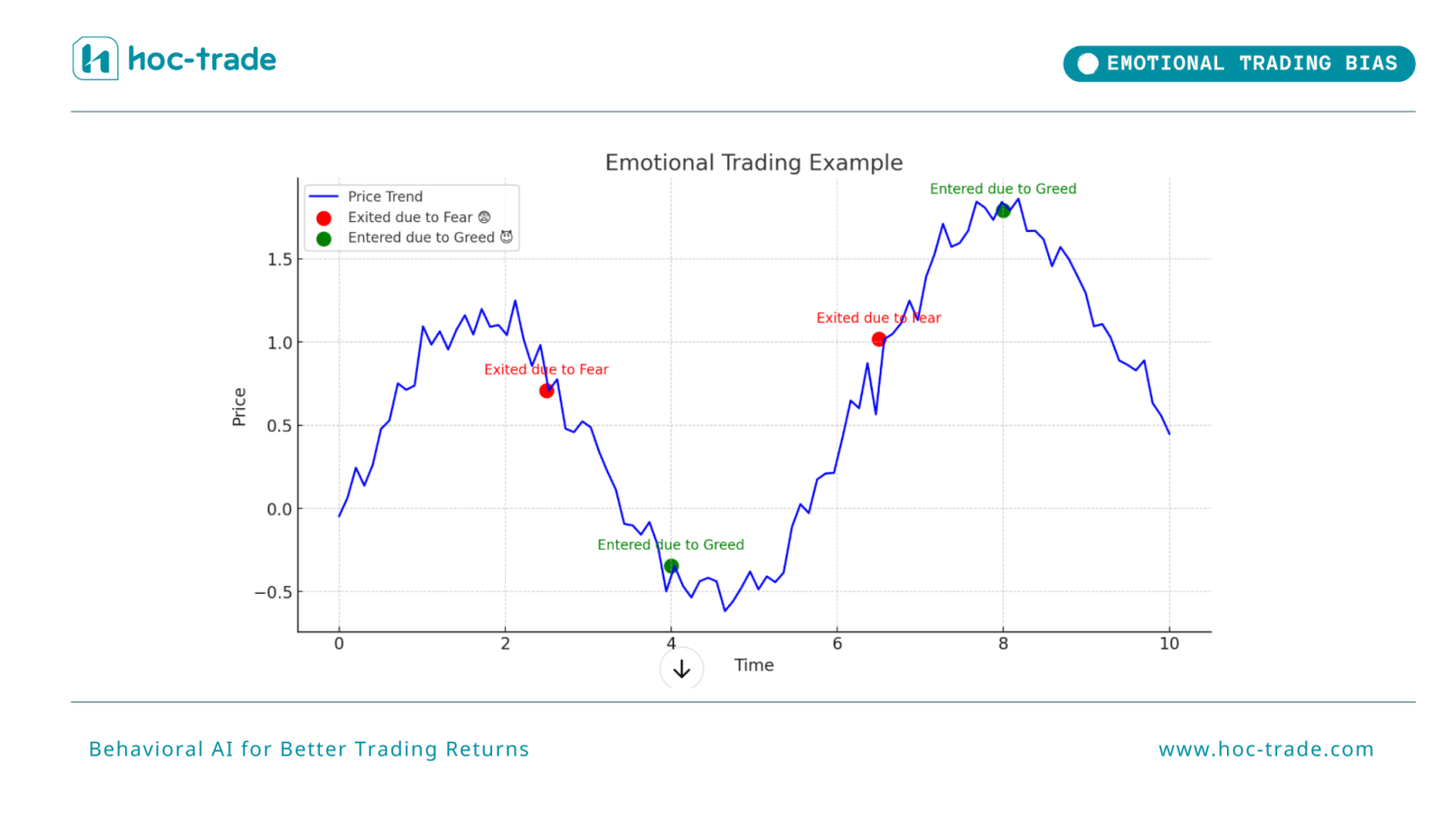
Having emotions while you trade is unavoidable, and it isn't a flaw. The problem starts when those emotions quietly replace judgement. It's natural to feel untouchable when a position is far in profit, and natural to feel rattled or angry when one is deep underwater. Both states change behaviour, and both can cost you.
Why do open profits and losses change how you trade?
Most traders only worry about the loss side. The classic example is opening larger, riskier trades to claw back what other positions are bleeding. That's real, and it's dangerous. But the profit side is the one that catches people off guard.
Strong positive emotions can hurt performance just as much. When you're sitting on a fat open profit, the next decision feels cheaper, like you're playing with the market's money rather than your own. That feeling has a name, and it shows up in similar ways to the impulsiveness behind overtrading.
What is mental accounting bias in trading?
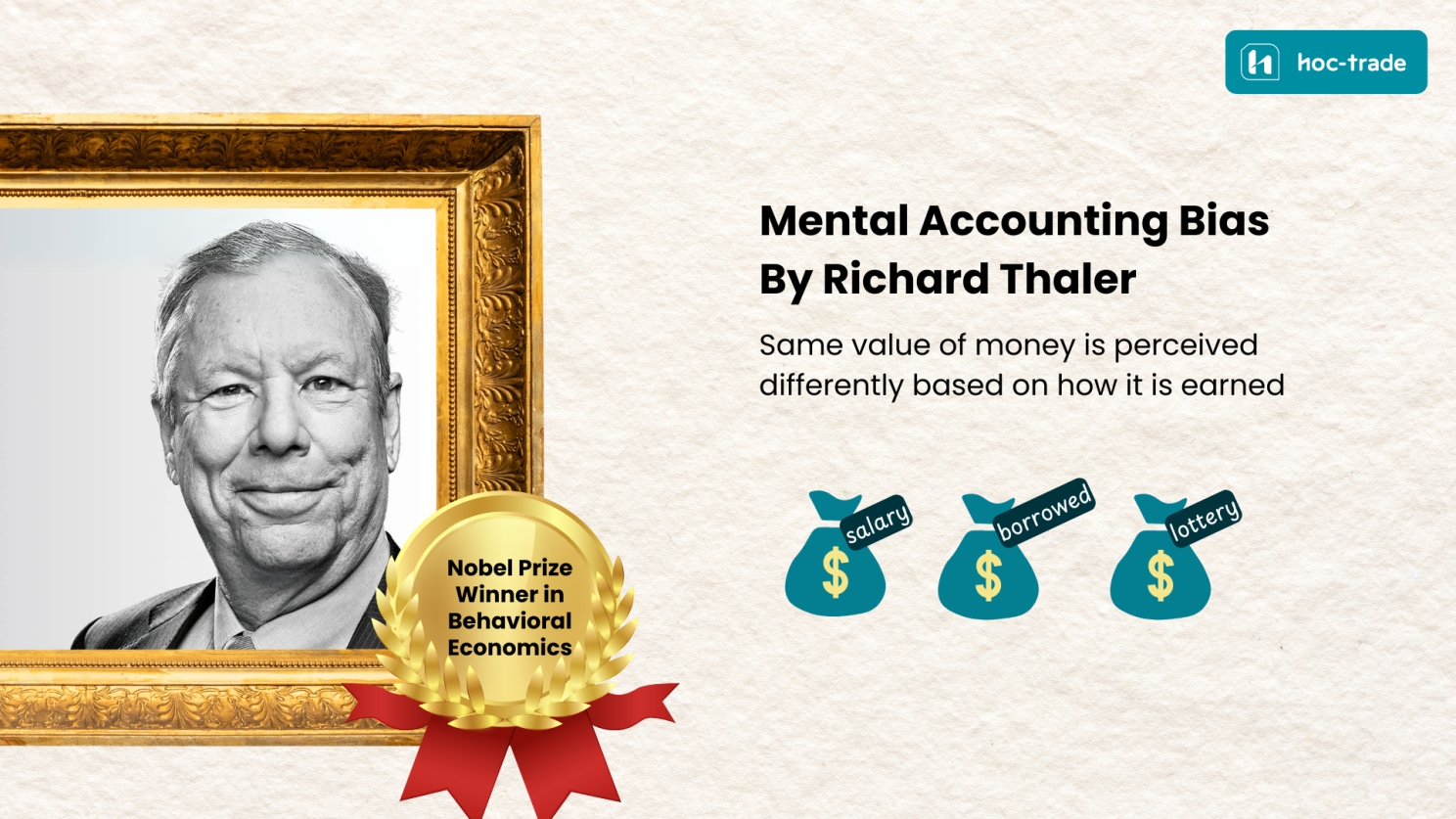
Mental accounting bias, identified by Nobel laureate Richard Thaler, describes how people value money differently depending on where it came from, even though a dollar is a dollar. Money feels disposable when it arrives as a windfall and precious when it's hard-earned, despite being completely interchangeable.
Picture a casino win. Because the cash came easily, most people happily gamble it back, as if it weren't really theirs. Logically it's identical to a paycheque or retirement savings, yet it gets spent more freely. Trading runs on the same wiring. With a large positive open P&L, traders treat the gains as house money and start taking on risk they'd never accept from a flat starting point.
How do trading emotions show up differently for each trader?
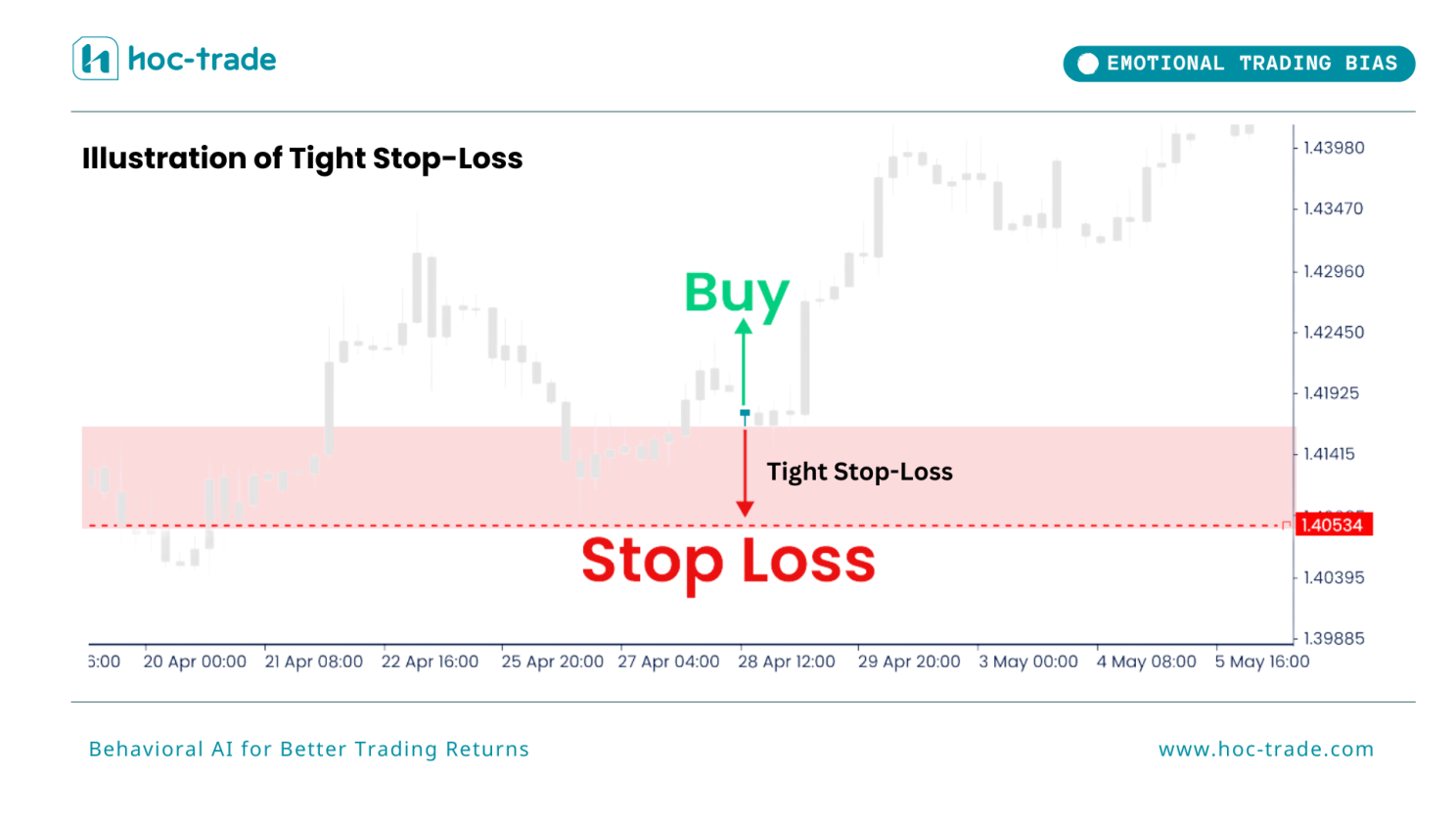
There's no single script. The same situation produces opposite reactions in different people, and even in the same person over time. A trader who has been burned before might do the reverse of chasing: they protect an open winner so tightly, with a cramped stop or a shrunken position, that they choke off perfectly good trades. Both the reckless and the over-cautious response come from the same emotional root.
This is why there's no universal rule for which emotion helps and which one hurts. The only reliable way to know your own pattern is to look at your behavior against your data, the way you would when reviewing manual profit taking decisions across a full trade history.
How does TradeMedic detect emotional trading?
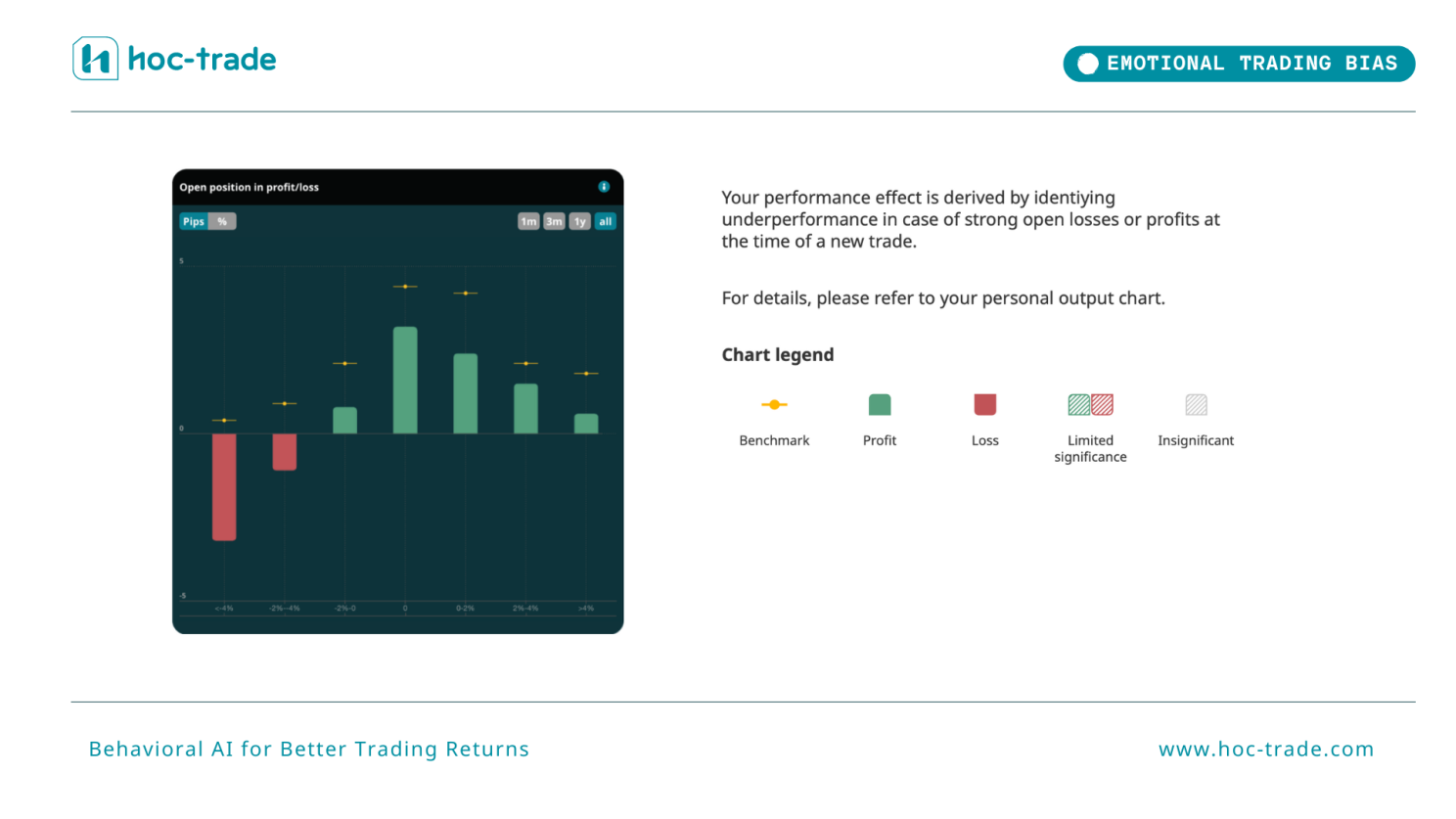
TradeMedic looks for a negative correlation between the open P&L on your existing positions and the performance of the trades you open during those windows. If either high open profits or high open losses drag down the results of new trades, the pattern is flagged as emotional trading.
In a typical case, a trader's decisions sour whenever they're holding losses elsewhere, and the new trades opened in that state trend loss-making. Comparing return against pip outcome often makes it worse: when the return is uglier than the raw pips suggest, it usually means oversized lots were stacked onto already poor decisions, deepening the damage.
How can you manage emotional trading?
Once you can see the pattern, you can interrupt it. Start by naming the feeling that arrives when you open a trade while sitting on a loss elsewhere. A trading journal that records your emotional state, not just entries and exits, is one of the most useful tools for this. The first practical fix is usually the simplest: cap your lot size during those high-emotion windows so a bad decision can't do much damage.
Track your progress over time rather than trade by trade. Comparing one-month and three-month views against your full history shows whether the behaviour is shifting. You might even find a positive pattern hiding in there, like sharper performance when you hold a small open profit. If that's true for you, you can actively seek out those conditions instead of avoiding them.
What does the data say about emotional trading?
TradeMedic™ AI detects emotional trading across a dataset of 500,000+ trader accounts, measuring how each trader's open P&L correlates with the quality of the trades they open next. It then calculates a personal risk profile for the behaviour, since the trigger point differs from one trader to the next. A detailed breakdown with specific statistics sits in our wider research.
Emotional trading isn't something you eliminate. It's something you learn to read. The traders who improve fastest aren't the ones with iron willpower, they're the ones who can see how their open positions are nudging their next move and adjust before the damage compounds. Self-analysis, honest data, and a journal turn an invisible habit into a manageable one. You can connect your account to TradeMedic for free and watch the pattern surface in your own trading.
TradeMedic AI analyses over 60 behavioral patterns, including Emotional Trading across 500,000+ trader accounts. Visit TradeMedic to see how it works and get your own personal analysis.
Watch How to Spot Emotional Trading in Your Trades
Frequently asked questions
What is emotional trading?
Emotional trading is when feelings rather than a trading plan drive your entries, exits, and risk decisions. It's often triggered by the unrealised profit or loss sitting in your open positions. The result is subjective decision-making and a strong pull toward known behavioural biases.
Can open profits hurt my trading, not just losses?
Yes. Large open profits can make traders treat gains as house money and take on risk they'd normally avoid, a pattern linked to mental accounting bias. Losses tend to trigger chasing, but profits can be just as damaging because they lower your sense of caution.
What is mental accounting bias in trading?
Mental accounting bias, identified by Richard Thaler, is the tendency to value money differently depending on how it was earned, even though money is interchangeable. In trading, it shows up when a large open profit feels disposable, prompting traders to risk it more freely than their own capital.
How can I reduce emotional trading?
Start by recording your emotional state in a trading journal alongside your entries and exits, so the pattern becomes visible. A simple first fix is capping your lot size during high-emotion windows. Reviewing one-month and three-month performance helps you confirm whether the behaviour is improving.
How does TradeMedic detect emotional trading?
TradeMedic looks for a negative correlation between the open P&L on existing positions and the performance of new trades opened in that state. When high open profits or losses drag down new trades, it flags emotional trading and builds a personal risk profile from your data across 500,000+ accounts.