Category:
 Author:
 Date:Jun 29, 2026
All-In Trades: The Fastest Path to a Margin Call
Most account blow-ups don't start with a complicated mistake. They start with a single position that's far too large for the balance behind it. The all-in trade is one of the most destructive things a trader can do, not because the analysis was wrong, but because the sizing leaves no room to be wrong. When everything rides on one move, the account stops being managed and starts being gambled.
What is an all-in trade?
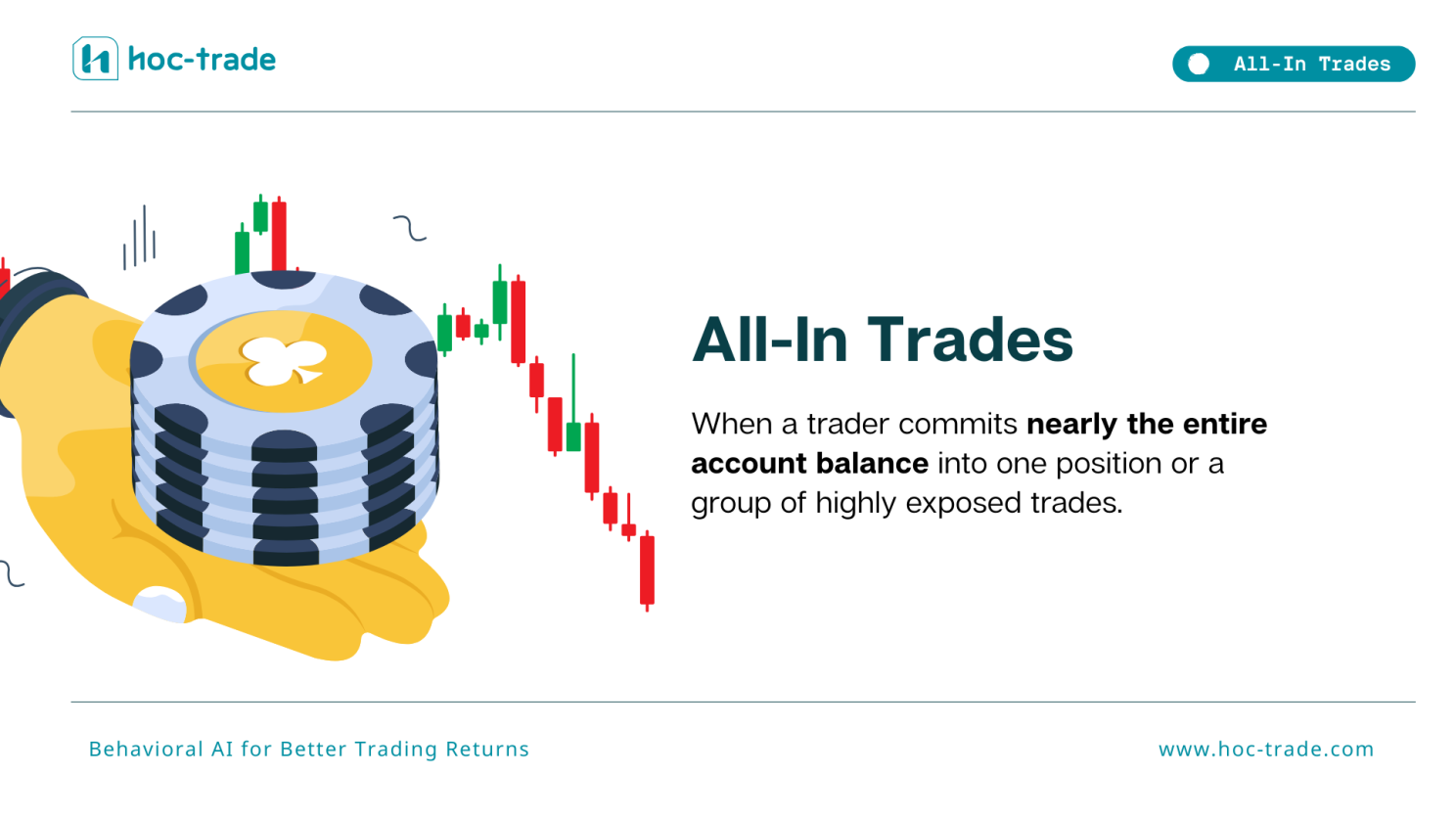
An all-in trade happens when risk exposure grows so large that even a small adverse move could wipe out the account. In practice it means the combined risk of all open positions is high enough that if stop-losses trigger, liquidation becomes unavoidable. It can be one oversized position or a cluster of highly correlated trades that behave as one. These rarely come from careful planning. They tend to appear after a losing streak, when the emotional weight of recent results starts to override discipline.
Why is going all-in so dangerous?
The danger isn't only that losses get bigger. It's that the trade creates a binary outcome where survival depends entirely on one market move. When the position turns against you, forced liquidation takes over and drains the account in moments. There's no second chance to manage the trade, because the margin call decides everything first.
The trap deepens when the trade works. A profitable all-in bet feels like vindication, and it quietly teaches the wrong lesson: that high exposure is a path to success. That learned recklessness erodes discipline over time and makes the eventual catastrophic loss more likely, not less. The win is the setup for the blow-up.
This is one reason concentrated risk often travels alongside patterns like overtrading, where the same emotional pressure drives both the frequency and the size of trades.
Why do traders go all-in?
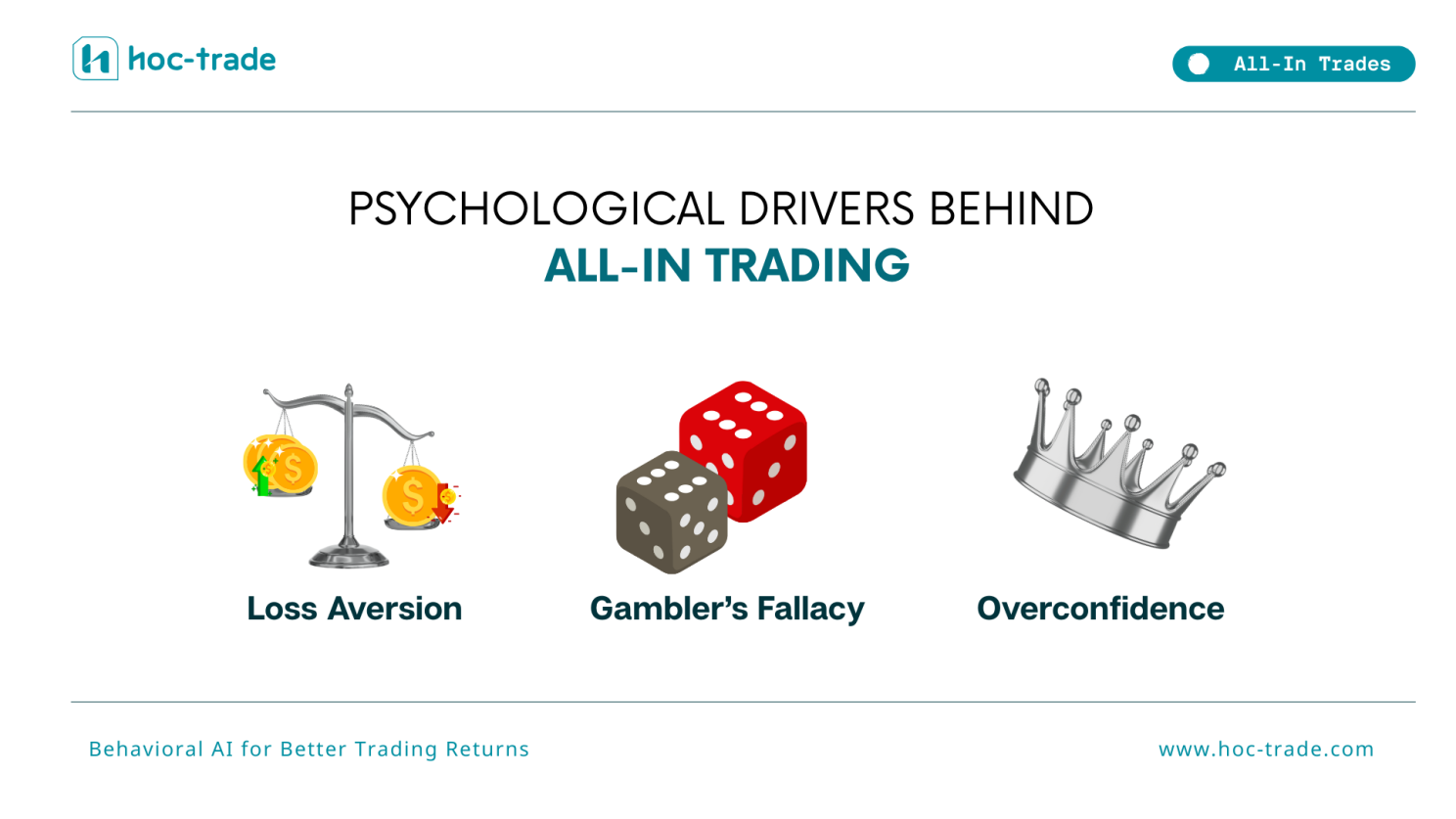
The roots of this behaviour are mostly psychological. Loss aversion pushes traders to risk more after consecutive setbacks, chasing the relief that a recovery would bring. The gambler's fallacy feeds the sense that a win is somehow due, which justifies an oversized bet to even the score. Ego and overconfidence reframe a reckless position as a decisive one. And emotional anchoring keeps decisions tied to past losses or missed chances, trapping the trader in desperate action rather than measured strategy.
There's an uncomfortable truth underneath all of this. Going all-in after a painful run of trades often feels like emotional relief, a way to finally break the string of bad outcomes. Sometimes even losing the whole account feels like release. Viewed with some distance, though, that relief is a coping mechanism built on subconscious bias. In the vast majority of cases it is not a rational decision about growing the account. This is often framed purely as a discipline problem, and discipline is part of it. But there's more going on beneath the surface.
Why are trading losses so hard to recover from?
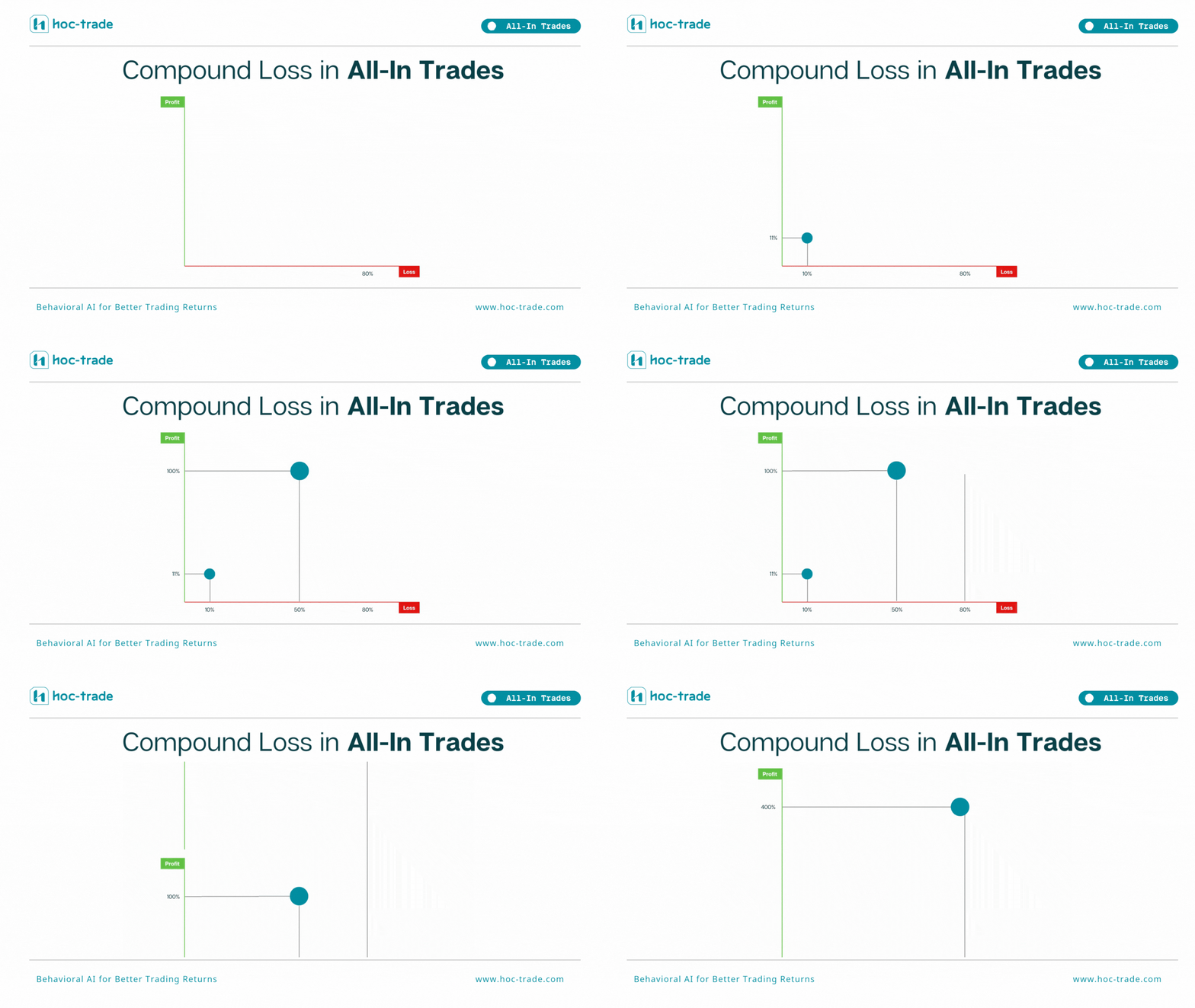
Part of what makes all-in trading so costly is the maths of recovery. Losing capital is far harder to reverse than it looks, because percentages don't move symmetrically. Lose 50% of an account and you're left with half your capital. To get back to where you started, you now need a 100% gain on that smaller balance, not 50%, just to break even. We published a dedicated articles about the most profitable risk per trade and the 3-5-7 rule in trading.
The deeper the loss, the steeper the climb back becomes. That asymmetry is the whole argument for protecting capital ahead of chasing gains. Losses compound both emotionally and mathematically, and a single all-in trade can push a trader into a hole that takes years of disciplined work to escape, if it can be escaped at all.
Careful stop-loss placement only protects the account when position size stays small enough for those stops to matter.
How can you prevent all-in trading?
The most reliable defence is consistent risk management. Cap position size to a small fraction of the account balance, and set a hard limit that stops trading after a defined percentage of daily loss. Learn to recognise the emotional states that precede oversized bets, because the warning usually shows up in how you feel before it shows up in the position. Keeping a trading journal and reviewing your own decision patterns helps you catch the drift toward excessive risk early.
It also helps to name the trade for what it is in the moment. An all-in bet offers relief from the temporary pain of losses, but it does nothing to grow the account in any rational sense. Holding onto that distinction, that the urge is emotional rather than strategic, is often what keeps a trader calm and steady when the pull toward going all-in is strongest.
What does the data say about all-in trades?
TradeMedic™ AI detects all-in exposure across a dataset of 500,000+ trader accounts and calculates each trader's personal risk profile for this behaviour. It assesses the combined risk of every open position as a percentage of the account balance: if simultaneous stop-losses would result in a margin call, the situation is automatically classified as an all-in trade. That gives traders and brokerages an early warning layer, surfacing the risk before account survival is on the line. You can explore how this works in the TradeMedic analysis tool.
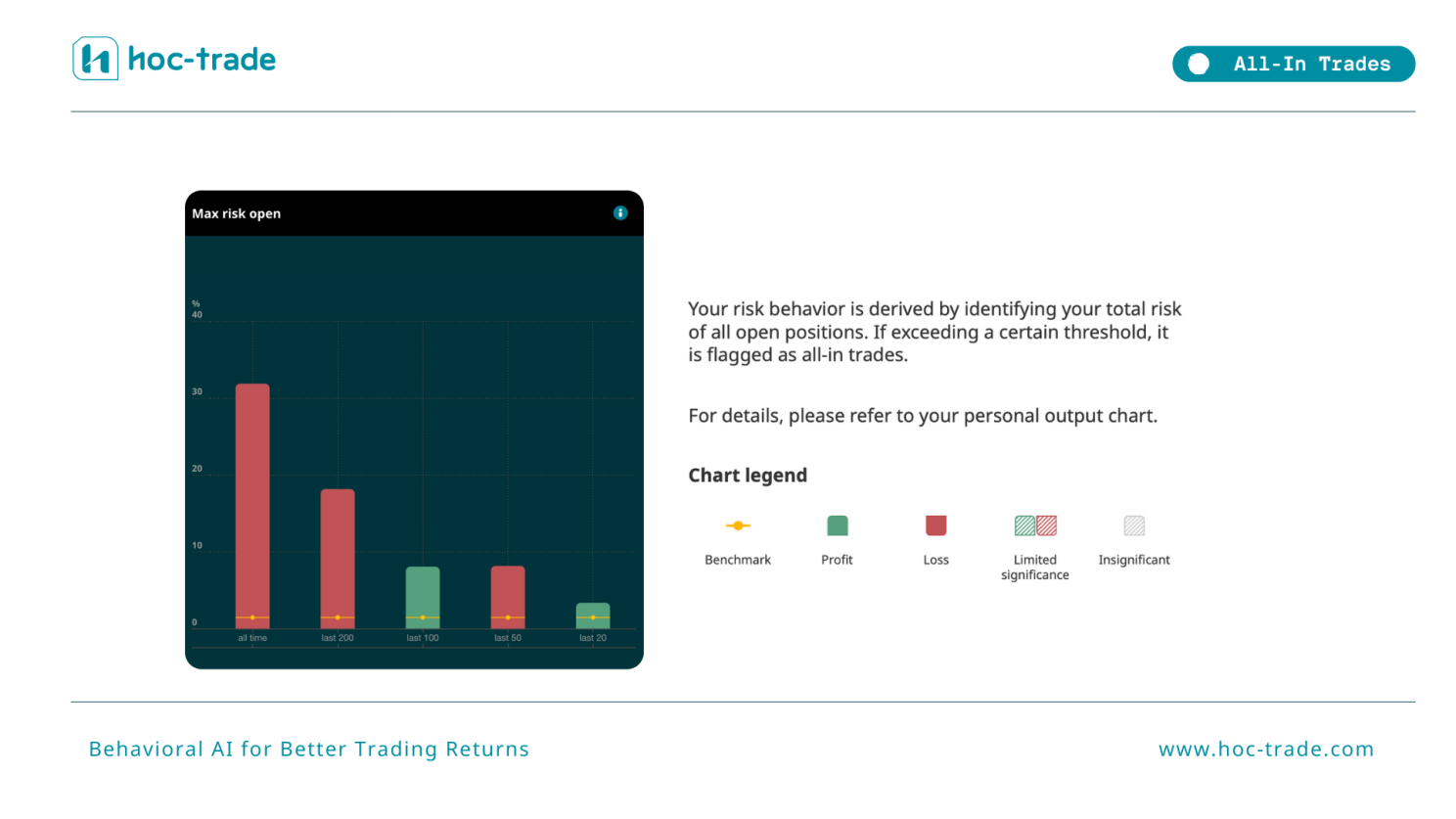
All-in trading isn't a strategy that occasionally fails. It's a structure that removes the trader's ability to survive a single bad move. The behaviour almost always traces back to an emotional need for relief rather than a considered plan, which is exactly why it's so hard to resist in the moment and so damaging afterwards. Keeping exposure small, setting firm loss limits, and recognizing the emotional trigger before it becomes a position are what stand between a manageable drawdown and a margin call you can't come back from.
Ready to trade with more rationality than reflex? Connect your trading account with hoc-trade for free and see what AI-driven behavioural insight reveals about your habits. Sign up at hoc-trade.com.
TradeMedic AI analyses over 60 behavioral patterns, including All-In Trades, across 500,000+ trader accounts. Visit TradeMedic to see how it works and get your own personal analysis.
Watch how All-In Trades is the fastest path to margin call
Frequently asked questions
What is an all-in trade?
An all-in trade is when a trader commits nearly all of their account balance to a single position or a cluster of highly correlated trades. Risk exposure becomes so large that one unfavourable move can trigger forced liquidation. It is a structural threat to account survival rather than a normal sizing decision.
Why do traders go all-in?
All-in trades usually follow a losing streak, when emotional pressure overrides discipline. Loss aversion, the gambler's fallacy and overconfidence push traders to risk more in the hope of a quick recovery. The decision feels like relief from emotional pain, not a rational plan to grow the account.
Why is it so hard to recover from a large trading loss?
Recovery is harder than the loss because of how percentages work. A 50% loss leaves half the capital, which then needs a 100% gain just to break even. The deeper the loss, the steeper the climb, which is why protecting capital matters more than chasing gains.
How can traders avoid all-in trading?
The strongest protection is consistent risk management. Cap position size to a small fraction of the balance, stop trading after a defined daily loss, and learn to recognise the emotional triggers that precede oversized bets. A trading journal helps surface the drift toward excessive risk before it escalates.
How does TradeMedic detect all-in trades?
TradeMedic assesses the combined risk of all open positions as a percentage of the account balance. If simultaneous stop-losses would trigger a margin call, the system classifies the situation as an all-in trade. This gives traders and brokerages an early warning before account survival is at risk.