Category:
 Author:
 Date:May 22, 2026
The Psychology of Weekend Trading: Recognizing Biases That Derail Your Strategy

Weekend trading presents a paradox. It offers the chance to respond to market-moving news before the traditional week begins, yet the conditions that define weekend markets often work against trader success. The combination of reduced market participation, wider spreads, and heightened emotional decision-making creates an environment where edge erodes quickly. Understanding why weekend trading differs and what makes it psychologically challenging is the first step toward improving your weekend performance, or deciding to avoid it entirely.
What is weekend trading and when is it available?
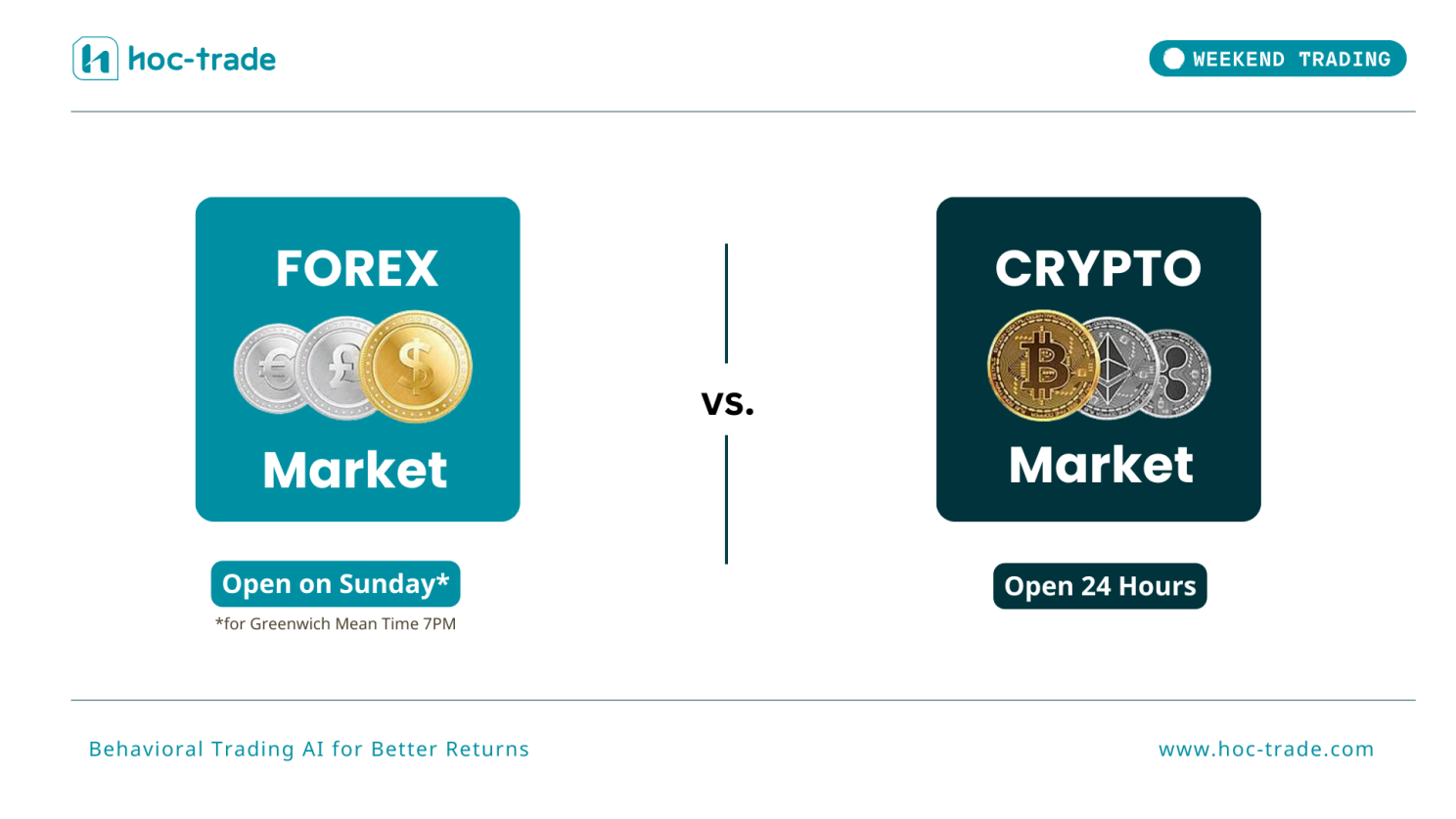
Weekend trading operates differently across market types. In Forex markets, trading resumes at 7 PM GMT on Sunday, giving traders the chance to react to economic events or news that emerged after Friday's close. Cryptocurrency markets never close, remaining active through the weekend with consistent infrastructure. However, the reduced participation from institutional investors creates a distinctly different trading environment. Liquidity drops significantly as banks, funds, and professional market makers step away. This lower activity translates directly into wider spreads between bid and ask prices, increased slippage on executed trades, and heightened price sensitivity to any individual trade, no matter its size.
How does gap trading work in weekend markets?
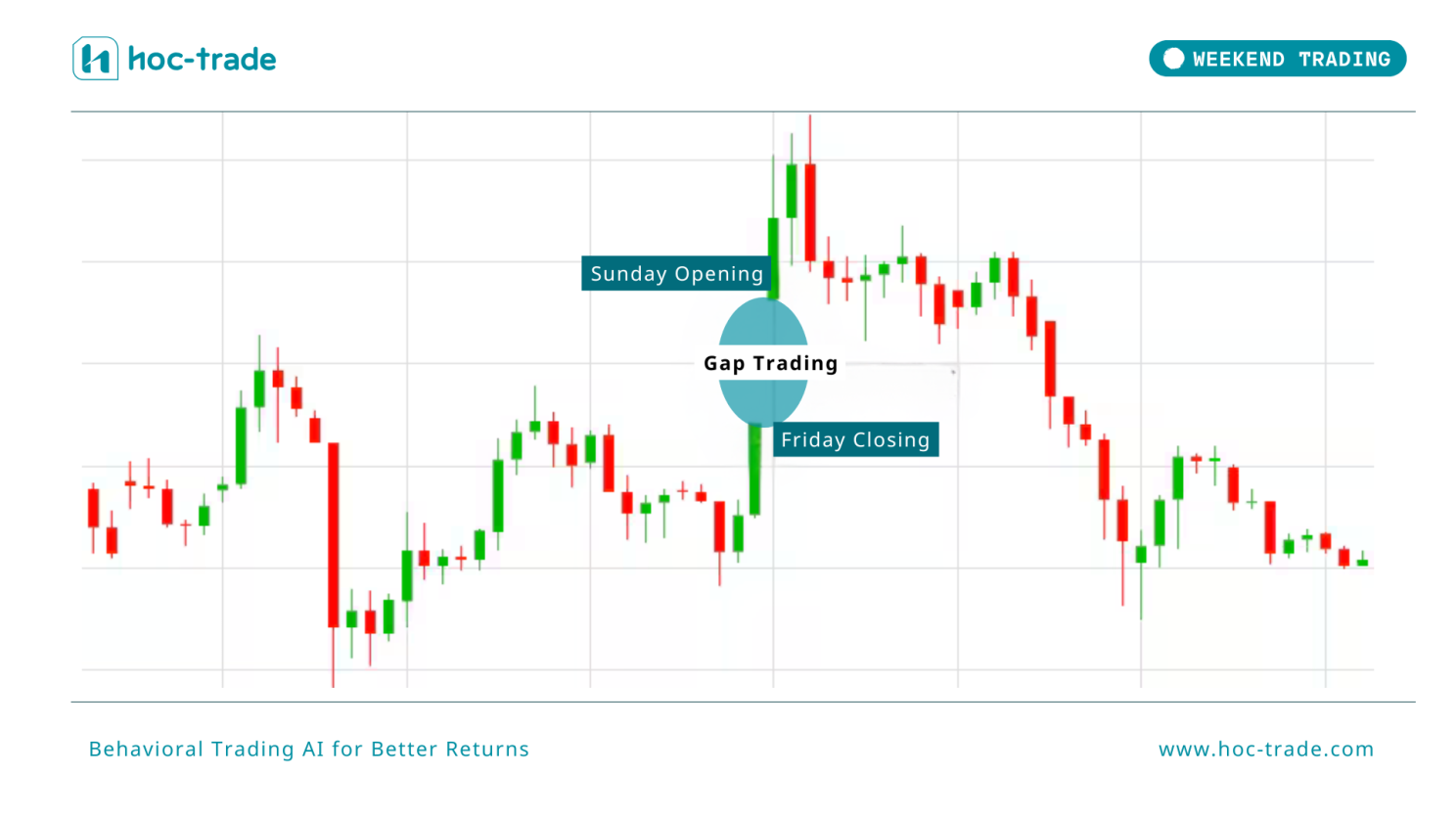
One popular weekend strategy in Forex is gap trading, which attempts to profit from the price difference between Friday's close and Sunday's opening. Traders position themselves early to capitalize on significant news or events that occurred over the weekend. In theory, this seems straightforward. In practice, traders often enter positions driven by urgency and fear of missing an opportunity rather than by careful analysis. This FOMO-driven behavior leads to decisions that overlook the actual market conditions: the scarcity of buyers and sellers, the wider spreads that eat into profits, and the volatility spikes that can wipe out positions in moments. What looks like a clean trade setup often reveals itself as an impulsive entry executed in hostile conditions.
What psychological biases affect weekend traders?
The unpredictability of weekend markets creates an environment where emotion routinely overrides analysis. Several psychological patterns emerge consistently. Fear of Missing Out drives the urgency to enter trades quickly, often before proper planning occurs. Traders who took losses in the previous week frequently engage in riskier behavior, hoping to recover quickly rather than following a disciplined plan. This recovery mindset abandons the structure that works in favor of the emotional need to get even. Many traders overestimate how strongly weekend news will move the market, reacting with intensity that does not match how the market actually settles when regular trading resumes. After a full trading week, mental exhaustion creeps in, leading to trades motivated by boredom or the desire for dopamine rather than actual opportunity. Market conditions themselves amplify these biases. With fewer participants, price movements become erratic and less predictable. Lower liquidity means a single trade can move the price significantly, creating the illusion of impact while actually increasing the risk of unexpected slippage.
How can traders identify weekend trading bias?
Recognizing patterns in your own trading behavior requires looking beyond individual trades to broader performance trends. Tools that track execution timing provide clear visibility into how weekend trading compares to weekday results. By classifying trades based on when they were entered, you can spot correlations between timing and outcomes. Negative patterns often emerge: weekend trades closing at losses more frequently, returns eroding over time, risk management rules bending more often when trading on weekends.
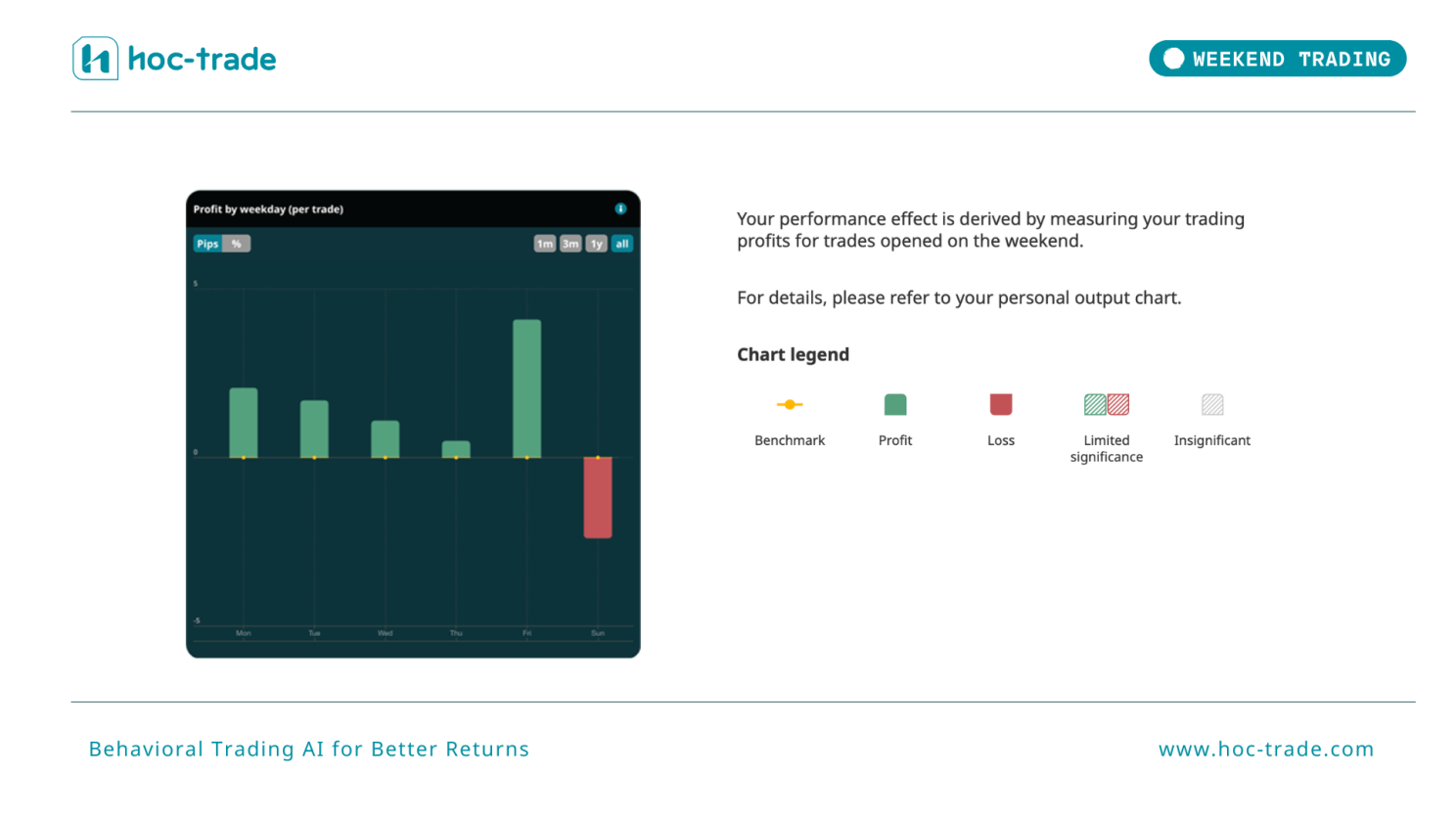
This data-driven view removes the emotional element from the assessment. Instead of relying on memory of individual trades (which tends toward selective recall), you are examining an objective record. Once these patterns surface, the path forward becomes clearer. Rather than reacting to each trade individually, you can adjust your weekend approach systematically. Some traders choose to reduce position sizing on weekends. Others establish rules that require higher conviction before entering weekend trades. The specific adjustment matters less than moving from unconscious bias to conscious choice.
What does the data say about weekend trading patterns?
TradeMedic™ AI analyzes weekend trading behavior across a dataset of 500,000+ trader accounts, identifying which traders show consistent performance degradation when trading outside regular hours. In the data, weekend trading ranks among the most impactful improvement opportunities identified, particularly for traders in the early stages of their trading journey. The specific performance metrics and breakdown of how weekend trading affects your personal trading profile are available in our detailed weekend trading analysis. Recognizing this pattern in your own account is the first step toward intentional improvement.
Success in trading is not about extracting every possible trade opportunity. It is about being selective about when, where, and how you trade. Weekend trading serves a purpose for some traders under some conditions, but for most, it introduces more friction than it creates advantage. The psychological biases that weekend markets trigger are real and measurable. By recognizing them in your own account and adjusting your approach accordingly, you move from reacting emotionally to trading deliberately.
TradeMedic AI analyses over 60 behavioural patterns, including weekend trading, across 500,000+ trader accounts. Visit TradeMedic to see how it works and get your own personal analysis.
Watch The Psychology of Weekend Trading
Frequently asked questions
What is weekend trading?
Weekend trading refers to entering or managing trades outside standard market hours, typically on Sunday in Forex markets or any time in cryptocurrency markets. While it allows traders to react to weekend news, it occurs in conditions with lower liquidity, wider spreads, and fewer institutional participants.
Why do traders make worse decisions on weekends?
Weekend markets trigger psychological biases including fear of missing out, overconfidence in news events, and loss recovery urgency. After a full trading week, traders also experience mental fatigue that leads to impulsive decisions. Lower liquidity amplifies these biases by creating erratic price action that is harder to predict.
What is gap trading?
Gap trading attempts to profit from the price difference between Friday's close and Sunday's opening in Forex markets. While some traders use this as a strategy, it often leads to FOMO-driven entries that ignore unfavorable market conditions like low liquidity and high spreads.
How can I tell if weekend trading is hurting my results?
Track your trading performance by execution time. Compare weekend and weekday win rates, average losses, and adherence to your trading plan. A data-driven tool that classifies trades by timing reveals patterns that memory alone tends to miss.
Should I avoid weekend trading entirely?
Not necessarily, but approaching it with full awareness of the risks matters. Once you identify whether weekend trading degrades your performance, you can adjust your strategy: reduce position sizing, require higher conviction, or sit out weekends entirely. The key is moving from unconscious bias to conscious choice.