Category:
 Author:
 Date:Jul 6, 2026
Trading Without a Stop Loss: Why the Habit Is So Risky

A stop loss is one of the simplest tools in trading, and one of the easiest to ignore. It caps your downside before a trade even opens, yet plenty of traders decide, quietly and repeatedly, that this one won't need it. They tell themselves they'll watch the position closely, or that the market will turn back their way given enough time. That one skipped stop loss rarely causes damage on its own. The pattern of skipping it does.
What does trading without a stop loss actually mean?
Trading without a stop loss means opening a position with no predefined level that closes it automatically once price moves against you. On paper this sounds like a minor detail. In practice it hands your entire risk management to your own reflexes, and reflexes are unreliable exactly when markets move fastest. A stop loss doesn't ask whether you're distracted, asleep, or three trades deep into a losing streak. It executes anyway.
Traders who skip it often believe manual monitoring is close enough. That belief tends to break down the moment volatility spikes or a headline hits the wires. What was meant to be a disciplined, rules-based exit becomes a live, improvised decision made under pressure, and pressure rarely produces good decisions.
Why do traders avoid setting a stop loss?
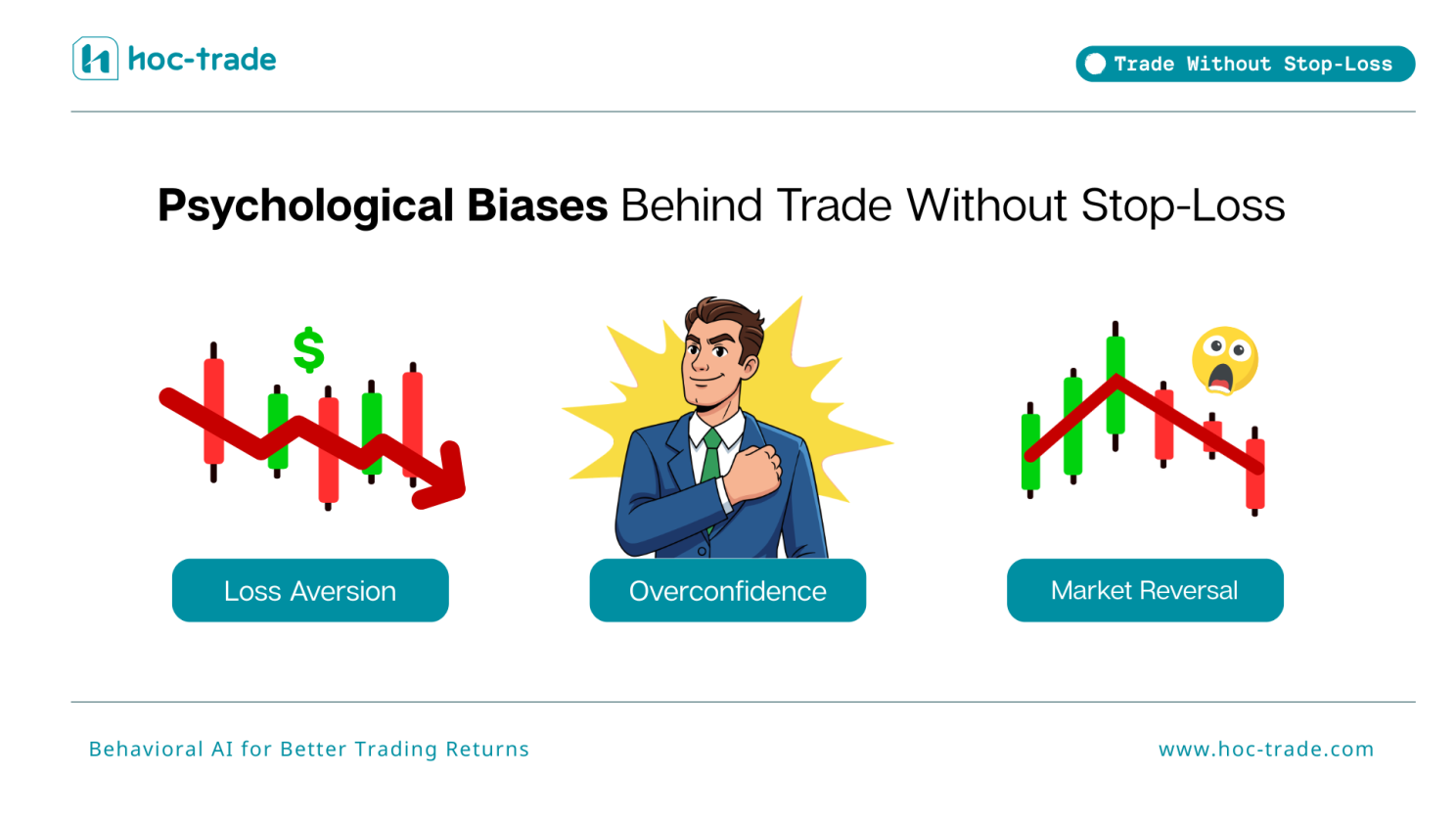
The reasons are rarely technical. Loss aversion sits underneath most of them: closing a losing trade means admitting it was wrong, while leaving it open preserves the story that it might still work out. Skipping the stop loss keeps that story alive a little longer.
Bad memories reinforce the habit. Most traders can recall a trade where the stop loss got hit moments before price reversed in their favor. That single frustrating experience tends to stick harder than the dozens of times the same stop loss quietly protected the account. Painful moments are simply easier to remember than routine ones.
Overconfidence compounds it. A trader who once rescued a losing position by holding on longer can start to believe they can do it again, on command, whenever it matters. Hope follows close behind: once a trade turns against them, many traders wait for a reversal instead of accepting the loss, and every additional hour spent waiting deepens the emotional attachment to the outcome.
Then volatility arrives, and none of this holds up. Without a stop loss to act automatically, the trader has to make decisions under real stress, and stress is exactly the condition where reaction time slows and judgment gets worse.
Why is trading without a stop loss considered high risk?
The most obvious risk is uncapped downside. A trade with no defined exit can lose far more than intended, particularly during news events or when liquidity thins out. Even traders who genuinely believe they're watching closely often find that price simply moves faster than they can react.
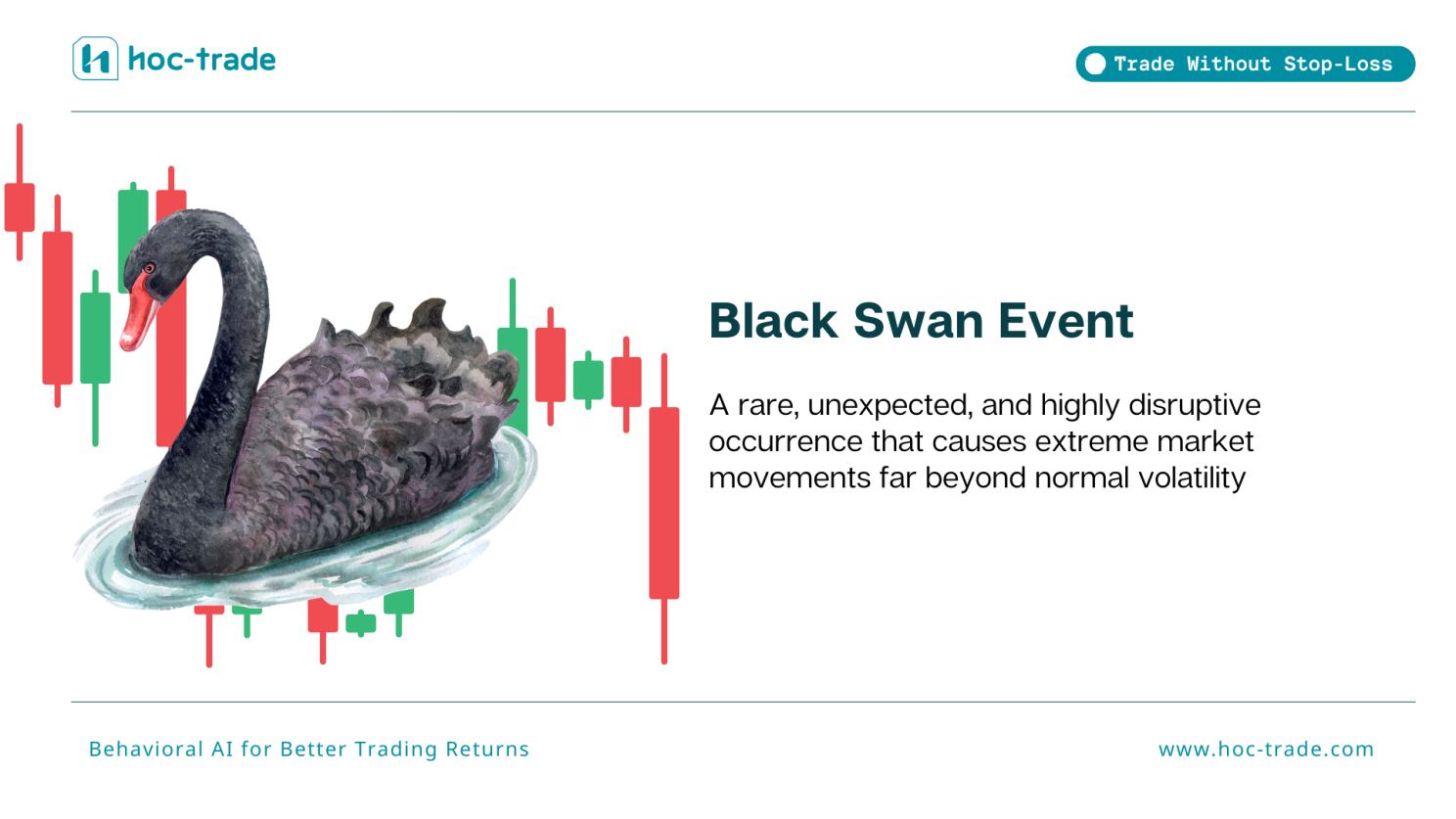
Black swan events make this worse. The Swiss franc de-pegging, oil prices briefly turning negative, sudden geopolitical shocks: these moments produce volatility that catches experienced traders off guard, not just beginners. A stop loss can't guarantee a clean exit in conditions like these, but it gives you a defined floor at the exact moment human reaction can't keep up.
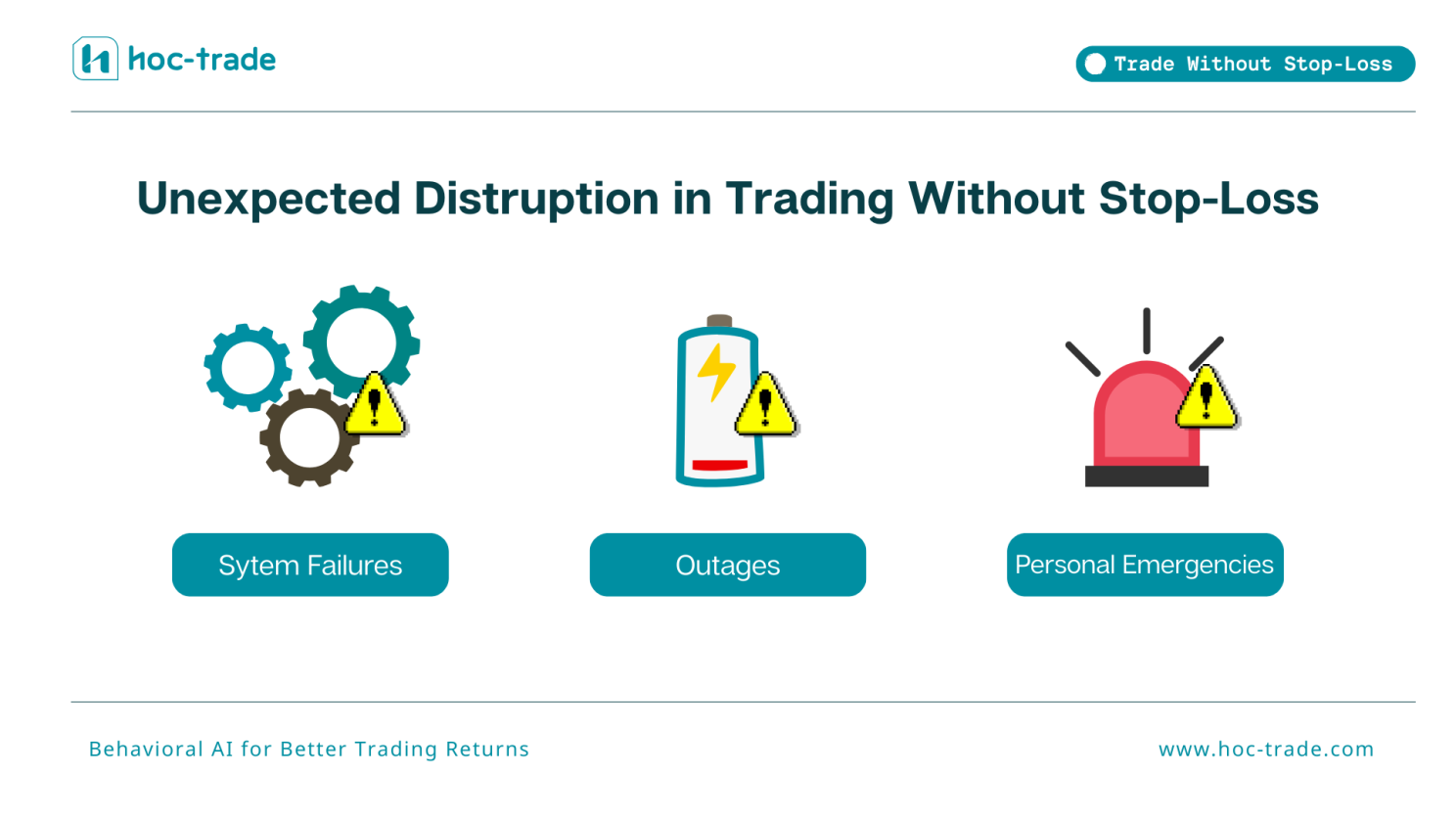
There's also the risk of simply losing the ability to watch at all. Platform outages, internet disruptions, or something as ordinary as a personal emergency can turn a supervised position into an unsupervised one in seconds. Without a stop loss already in place, that gap in attention becomes unlimited exposure at whatever moment it happens to occur.
The emotional pattern that follows is its own kind of damage. As losses grow, traders tend to hold on longer hoping for a bounce, which usually means the eventual loss is larger than it needed to be. That, in turn, often triggers revenge trading, where a trader tries to win back losses quickly through oversized or poorly timed positions. Over time, skipping stop losses doesn't just cost money in isolated trades. It erodes the discipline needed to measure whether a strategy is actually working, since without consistent risk parameters, expectancy and position sizing become guesswork.
How does hoc-trade detect trading without a stop loss?
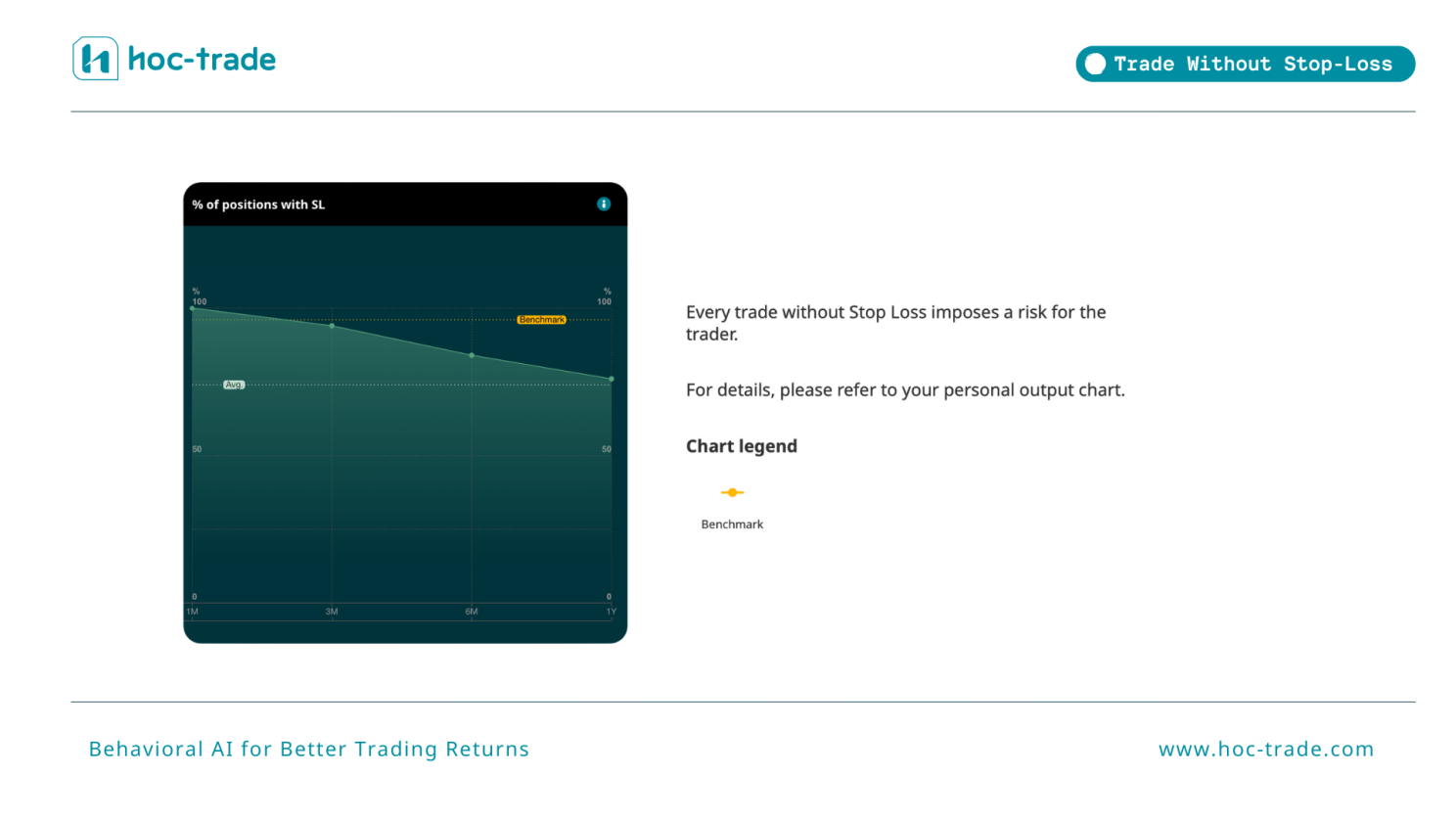
Hoc-trade looks at both frequency and impact across a trader's full portfolio rather than judging any single trade in isolation. Every position in the performance window is checked for whether a stop loss was set, and the proportion left unprotected is compared against a behavioral threshold. When too many trades fall below that threshold, the pattern gets flagged as a meaningful risk indicator.
From there, each trade is tagged based on whether it had a stop loss, which lets the system connect the missing stop loss to what happens next: deeper drawdowns, longer holding times, and follow-on behaviors like doubling down or revenge trading. The result isn't just a count of how often a trader skips stop losses. It's a picture of how that one habit ripples into everything else.
What does the data say about trading without a stop loss?
TradeMedic™ AI tracks whether a stop loss was set on every trade across a dataset of 500,000+ trader accounts, then correlates that single data point with drawdown depth, holding time, and what a trader does next. The pattern shows up consistently: trades opened without a stop loss tend to run longer, lose more, and sit closer to behaviors like overtrading and revenge trading than trades where risk was capped from the start. A full breakdown of these figures is part of the ongoing TradeMedic behavioral analysis, with a dedicated data article on this pattern coming soon.
Recognizing how often you trade without a stop loss is one of the more useful things you can learn about your own trading, and it doesn't require guesswork once it's measured. Seeing the pattern next to your actual drawdowns and holding times makes the cost concrete instead of abstract. This is often framed as a discipline problem, and discipline is part of it, but there's more going on underneath: memory bias, overconfidence, and the simple mechanics of human reaction time under stress. Understanding all three is what actually restores structure to a trading plan, rather than just adding another rule that gets skipped under pressure.
TradeMedic AI analyses over 60 behavioral patterns, including Trading Without Stop-Loss across 500,000+ trader accounts. Visit TradeMedic to see how it works and get your own personal analysis.
Watch How Trading Without Stop Loss is a Risky Move