Category:
 Author:
 Date:Apr 20, 2026
Symbol Expert: How Instrument Familiarity Becomes a Repeatable Trading Edge
Some traders chase every opportunity across a dozen markets. Others plant themselves in one instrument and refuse to leave. That second group often performs better, not because the market itself is easier, but because they have learned its rhythm well enough that decisions stop feeling like guesses. TradeMedic refers to this pattern as Symbol Expert, and it shows up clearly across the trading data hoc-trade analyzes.
What is a Symbol Expert in trading?
A Symbol Expert is a trader who consistently performs well on one particular symbol or asset class, the market they would call their favorite. Certain instruments simply fit certain trading styles better than others, and traders who find that fit tend to stick with it. Many also become informal specialists in a single symbol, tracking Gold, NASDAQ, or Bitcoin closely enough to develop a genuine feel for how that market tends to move.
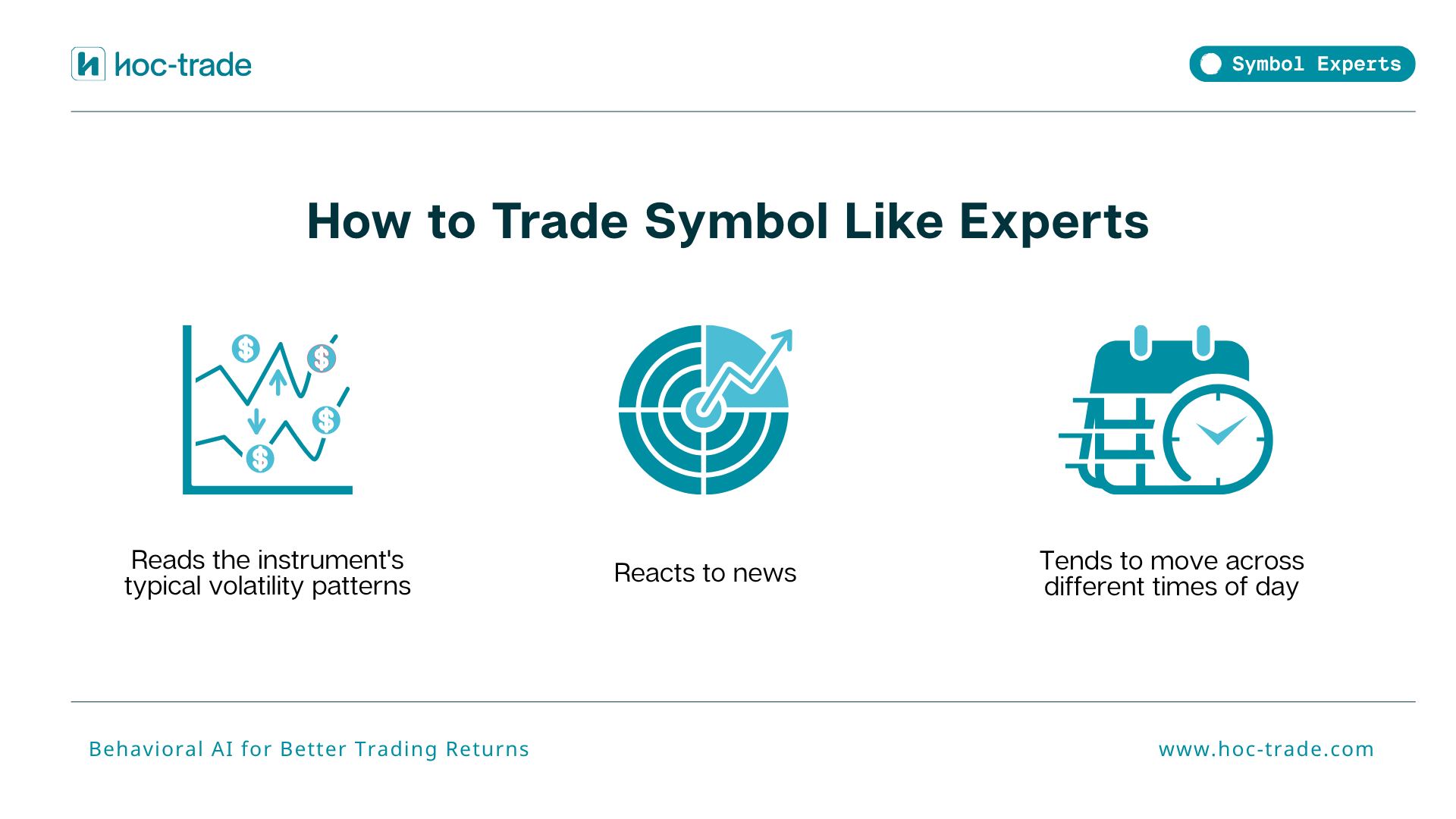
The strength here has nothing to do with generating more trade ideas. It comes from turning familiarity into cleaner execution. Inside one market context, a trader's decisions get sharper because the instrument's behavior is no longer a mystery: how it typically moves, what happens around major moments, and which conditions tend to produce real follow-through rather than noise.
How does symbol expertise show up in real trades?
In practice, this edge often looks unremarkable from the outside. Entries land closer to what “normal” movement looks like for that instrument, and exits reflect a sharper read on where the market is likely to stall, accelerate, or turn. Traders with this strength tend to make fewer reactive changes mid trade, since routine volatility rarely catches them off guard and they are less inclined to reinterpret signals the instrument produces on a regular basis.
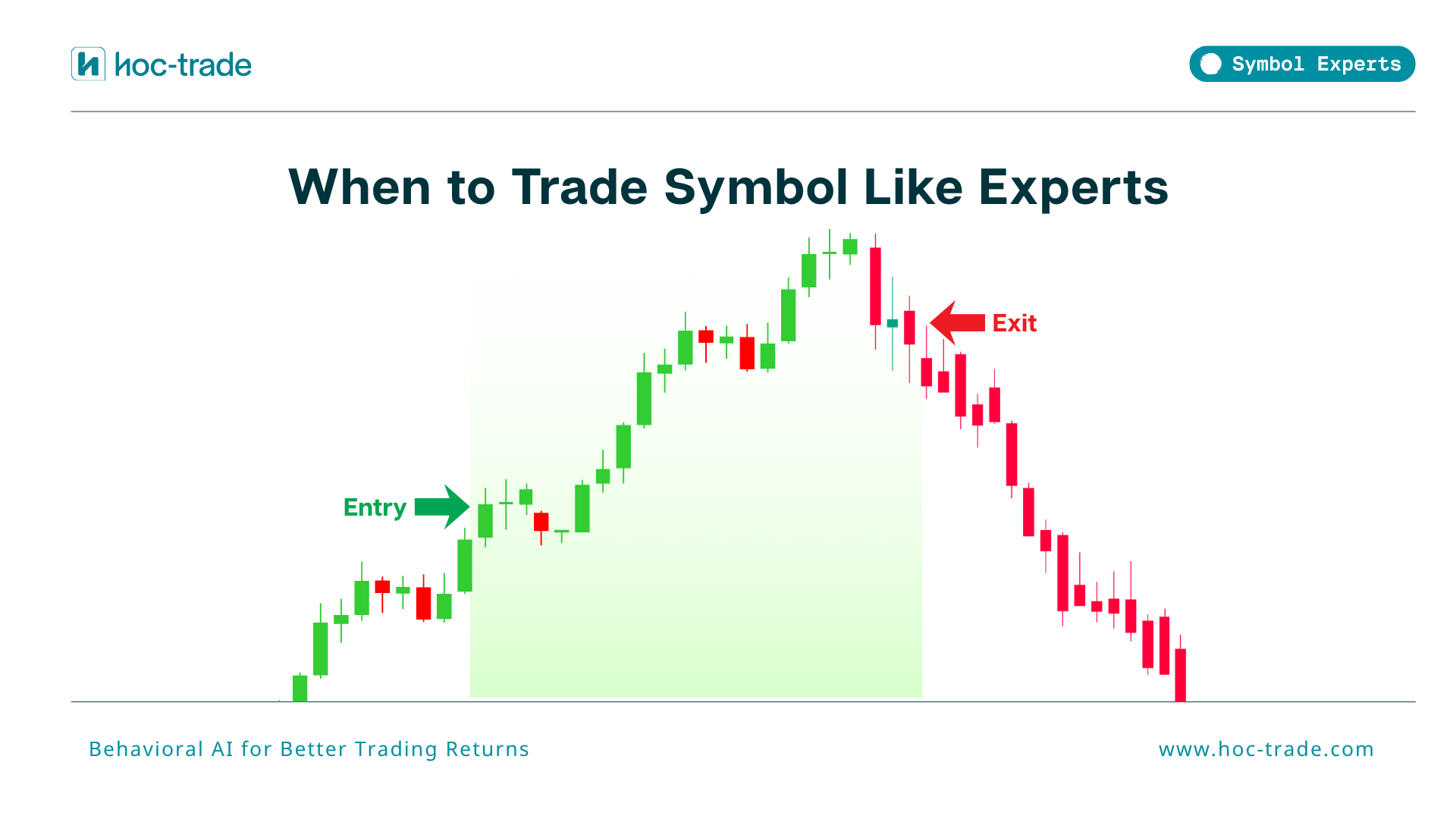
Picture a gold trader who has watched the metal react to macro releases for years. They know a softer than expected CPI print usually triggers a spike that fades back within the first fifteen minutes. They can tell a genuine breakout from a liquidity sweep. They know to wait out the initial move after an NFP release because that first reaction almost always reverses. None of this comes from a written playbook. It comes from watching one instrument, day after day, until its behavior stops feeling abstract and starts feeling familiar.
This kind of trader reads structure and volatility as recognizable patterns rather than abstract signals, and that recognition extends past the chart. They know which headlines actually move the instrument and how it tends to behave at different points in the trading day. Over time, this builds a sharper sense of timing, not just where a setup makes sense, but when it makes sense for that specific market.
The behavioral fingerprint is focus. When a trader's results concentrate around a single instrument, their decisions look steadier because they are made inside a market they understand at a granular level. Even as the wider market shifts, their internal map of that one symbol tends to stay intact.
Why is specializing in one instrument a trading advantage?
This strength holds up because it repeats. A Symbol Expert is not betting everything on one read of one setup. They operate inside a market where familiarity strips out uncertainty from execution, and over time that tends to sharpen decisions around entries, exits, and trade management. The gain comes from fit, not from effort: how well a trader's approach matches the instrument's own character.
Every symbol behaves differently. Some move in ways that suit particular styles of analysis, while others carry sharper volatility and faster regime changes. A Symbol Expert benefits, often without realizing it, from having chosen an instrument whose shape matches how they actually trade. That fit tends to show up as steadier results, since fewer trades get spent learning the instrument in real time instead of trading it.
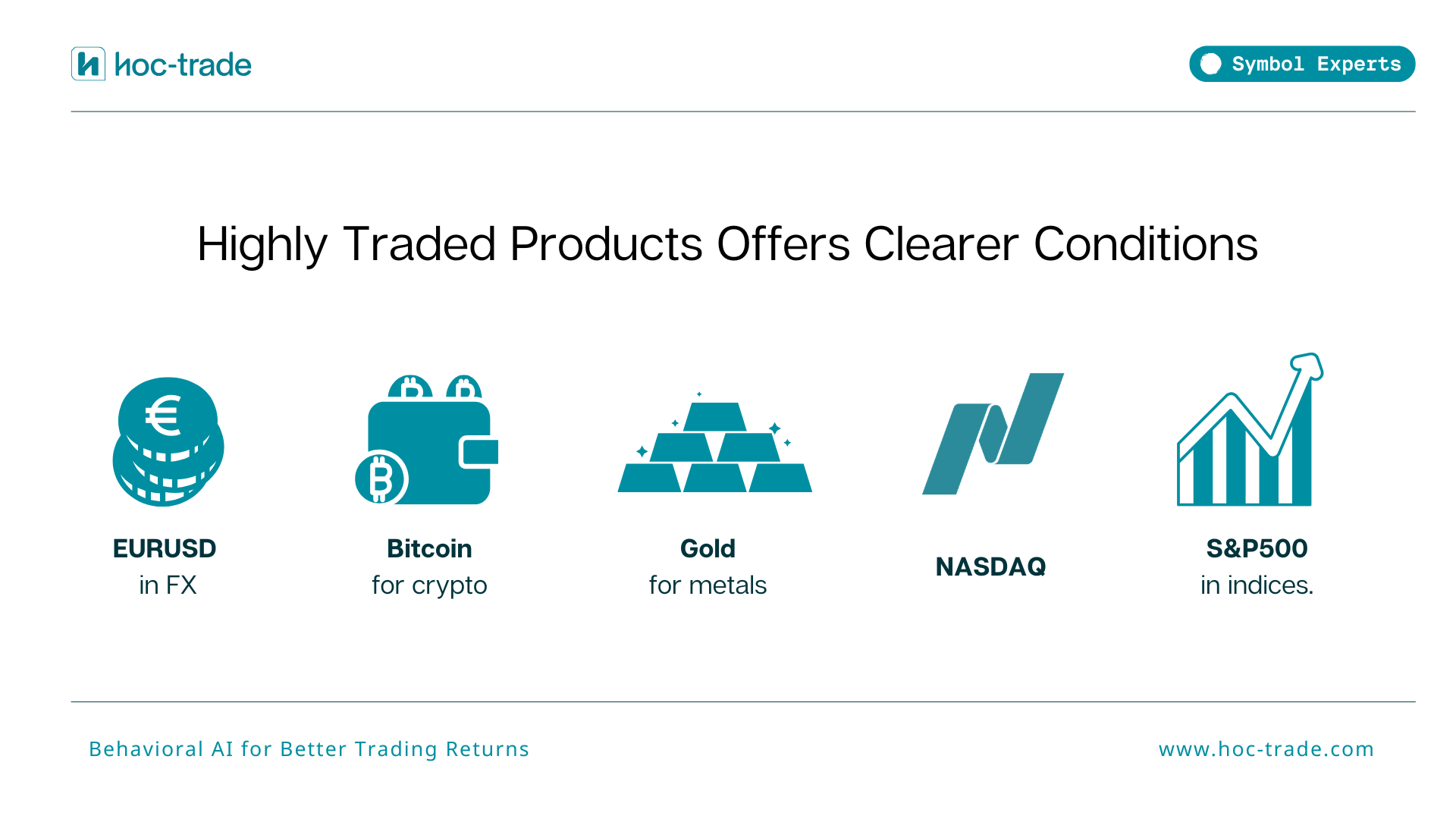
There is a practical side too. Market depth, fee structure, and typical trading conditions differ by product. Heavily traded instruments such as EURUSD, Bitcoin, Gold, or the NASDAQ and S&P 500 often offer meaningfully different execution conditions than thinner markets. When a trader consistently performs well on one specific symbol, that result usually reflects both behavioral familiarity and a good structural fit with the instrument itself.
Why does depth in one instrument beat breadth across many?
Most traders spread themselves too thin. They scan watchlists of twenty or thirty symbols hunting for the cleanest setup, and in doing so they never build the kind of fluency that turns raw information into intuition. This kind of scattered attention often overlaps with overcomplexity, where juggling too many signals across too many markets makes every decision harder than it needs to be. Trading many symbols means knowing a little about a lot. The Symbol Expert knows one market well enough that their information edge compounds.
That depth is what separates familiarity from real expertise. Familiarity means recognizing a chart pattern. Expertise means knowing how that pattern tends to behave in this specific instrument, at this time of day, under these conditions. The gap does not show up in any single trade. It shows up over hundreds of them, as a quieter and more durable edge that is hard to copy simply by switching instruments. Traders who show this kind of instrument focus often show similar selective trading habits elsewhere in their process, favoring quality of setup over quantity of markets scanned.
What does the data say about symbol specialization?
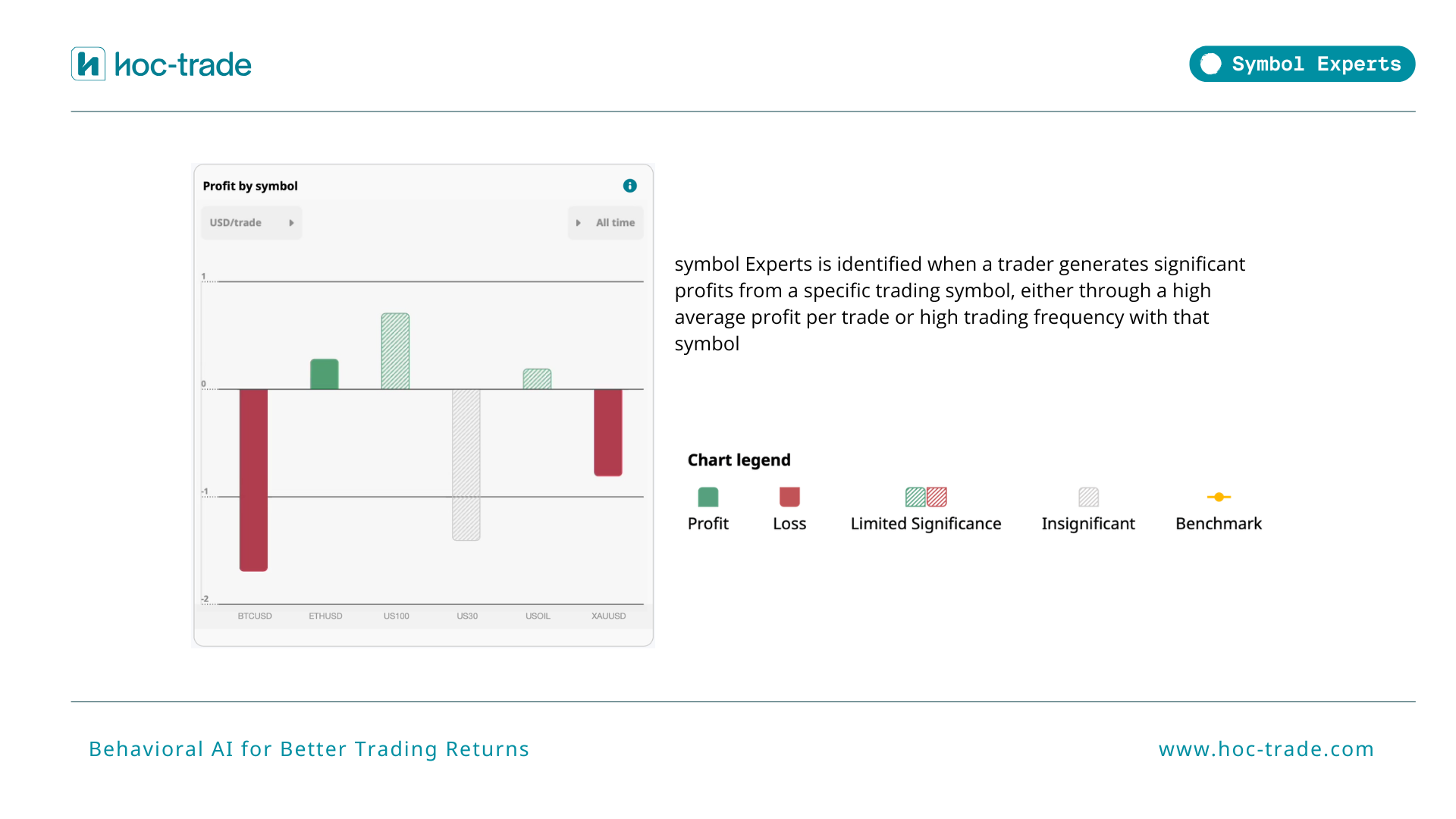
TradeMedic™ AI examines performance at the symbol level, comparing trades placed in specific instruments against a trader's average results across their book. The marker it looks for is a positive correlation between trading a given symbol and stronger than average outcomes within that symbol specifically.
Hoc-Trade's research tracks whether particular symbols repeatedly outperform over time. When that outperformance is not confined to a short cluster of trades but persists across many instances, it starts to look less like a lucky run and more like a genuine behavioral capability. Across a dataset of 500,000+ real trader accounts, TradeMedic™ AI surfaces Symbol Expert as a consistent relationship between which instrument a trader picks and the results they get from it.
Symbol Expert is less about preference and more about a repeatable execution skill built on instrument fluency. It reflects a trader's ability to operate inside the familiar rhythm of one market: its usual volatility, its typical reactions, and its patterns across different conditions.
That fluency keeps decisions clear even when time compresses and noise increases. The edge was never really about the symbol itself. It comes from the consistency of trading inside a context a trader understands in detail, where expectations and outcomes line up more often, and where that instrument's performance profile becomes visibly distinct from the rest of the book.
See how TradeMedic™ AI reads your own symbol performance
TradeMedic™ AI connects to your trading account and maps your results against the same 500,000+ account dataset referenced above, showing whether you already trade like a Symbol Expert or whether your edge is scattered across too many markets. Explore TradeMedic to see your personal behavioral breakdown.
TradeMedic AI analyses over 60 behavioral patterns, including Symbol Expert across 500,000+ trader accounts. Visit TradeMedic to see how it works and get your own personal analysis.
Watch How Instrument Familiarity Becomes An Edge
Frequently asked questions
What is a Symbol Expert in trading?
A Symbol Expert is a trader who consistently performs better on one specific symbol or asset than across their portfolio as a whole. TradeMedic™ AI detects this pattern by comparing a trader's results in a given symbol against their average performance elsewhere. The strength comes from deep familiarity with how that particular instrument behaves rather than from a broader trading edge.
Why do some traders perform better on a single symbol?
Repeated exposure to one instrument builds an intuitive sense of its normal volatility, its reaction to news, and its behavior at different times of day. That familiarity reduces uncertainty during execution, so entries and exits reflect a clearer read of the market rather than a fresh interpretation each time. Over hundreds of trades, this consistency compounds into a measurable edge.
Is trading one instrument better than diversifying across many?
Not universally, but concentrating on fewer instruments often produces stronger execution because it builds genuine fluency rather than surface level familiarity. Traders who scan dozens of symbols for setups rarely develop the depth needed to anticipate how a specific market will behave. Depth in one instrument tends to outperform breadth across many, though the right approach still depends on a trader's strategy and risk tolerance.
How does TradeMedic identify Symbol Expert behavior in trading data?
TradeMedic™ AI compares a trader's results in specific symbols against their overall average, looking for a positive and persistent correlation between trading that instrument and stronger outcomes. Across a dataset of 500,000+ real trader accounts, this pattern is treated as a behavioral capability only when the outperformance holds across many trades rather than a short lucky streak.
Which instruments are most commonly associated with Symbol Expert traders?
Heavily traded instruments such as EURUSD, Bitcoin, Gold, and major indices like the NASDAQ and S&P 500 come up often, partly because of their liquidity and consistent trading conditions. That said, Symbol Expert is defined by a trader's performance pattern rather than by any particular instrument, so it can appear in less common markets too.