Category:
 Author:
 Date:May 25, 2026
Blindly Following Momentum: Why Late Entries Undermine Trading Results
When a stock or currency pair surges after a strong price movement, many traders feel an overwhelming urge to jump in immediately. This impulse, often rooted in fear of missing out, drives traders into positions right when momentum is running out of steam. The pattern is so common it has a name among professionals: blindly following momentum. Understanding why this happens, and how to recognize it in your own trading, is critical to long-term success.
What draws traders into momentum chasing?
Momentum chasing occurs when traders enter a position based on recent price action that suggests strong directional movement. The core driver is emotional rather than analytical: the fear of missing profit combined with the psychological pull of seeing others win. Traders tell themselves they'll catch the trend early, but in reality they're arriving late, after the biggest move has already happened.
The pattern becomes visible when you review your trading record. If trades entered during periods of strong momentum consistently underperform, that's a diagnostic signal. It suggests you're responding to price movement after the fact, rather than anticipating it. This is a behavioral issue, but it has measurable consequences in your P&L.
The primary risks of entering during momentum phases
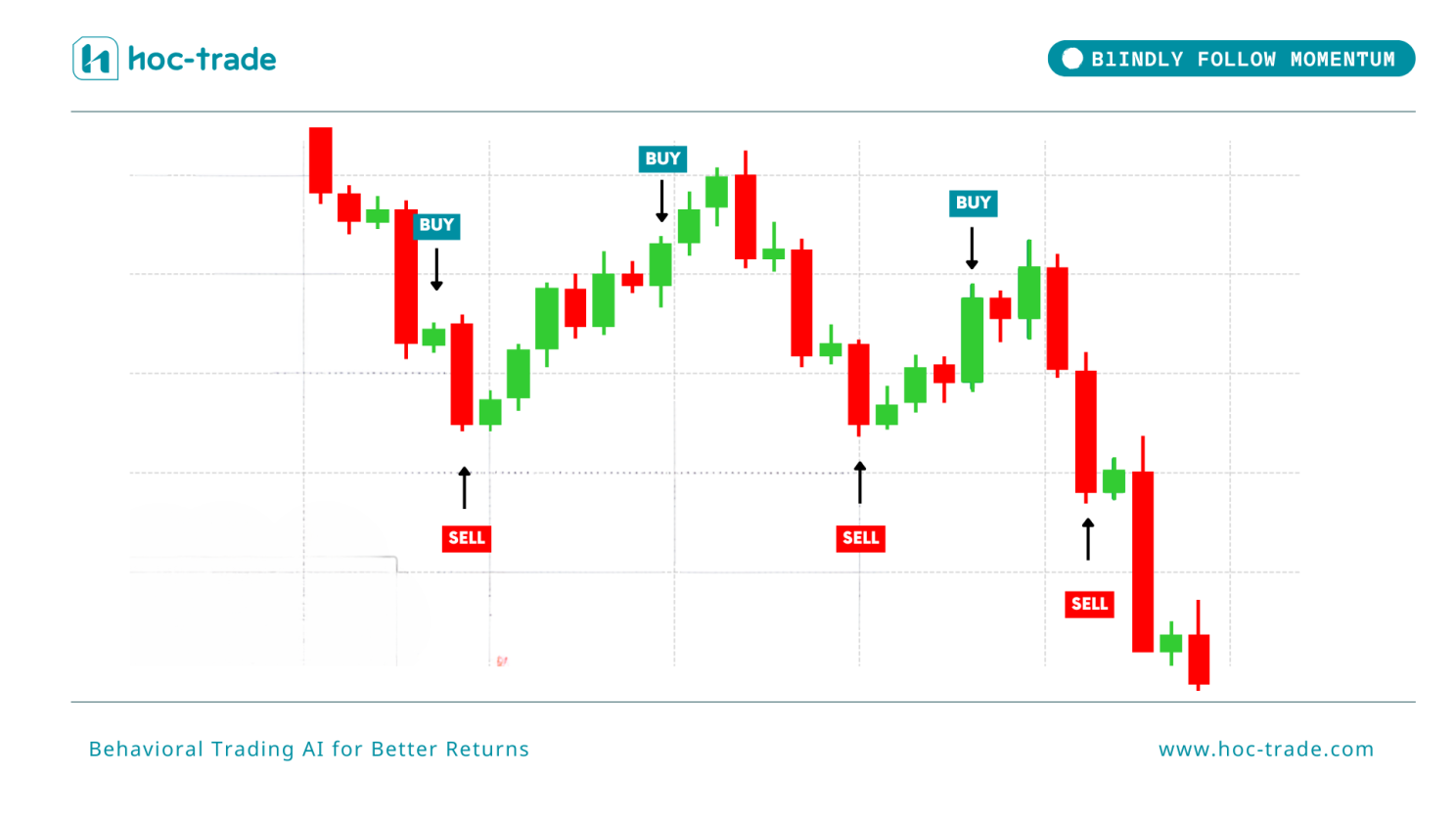
Late entry timing is the most obvious risk. By the time you notice strong momentum and decide to act, the move has often already peaked. You aim to ride the momentum, but you then face a market in correction phase, catching losses as the trend reverses. This timing trap repeats across most momentum-chasing trades.
Volatility compounds the problem. Momentum markets are inherently choppy, which creates pressure to make quick decisions under stress. This environment is where emotional trading thrives. You're more likely to exit prematurely when you see a small drawdown, locking in small losses while the remaining upside passes you by. Or you hold too long, hoping momentum continues, and watch a winning position turn into a loss.
The third major risk is entering without a plan. Momentum creates urgency that shortcuts the planning process. You skip the checklist. You don't set clear exit levels or position size. You don't calculate your risk before pulling the trigger. Without these guardrails, you become vulnerable to emotional reactions and cognitive biases. You might hold a losing position hoping it bounces, or add to it in the hope of averaging down, actions that further erode your edge.
Technical indicators that reveal overbought and oversold conditions
The Relative Strength Index (RSI) and Bollinger Bands are two tools that help traders gauge whether a market has extended too far too fast. When RSI climbs above 70, the asset is typically in overbought territory. Bollinger Bands, which measure volatility and price extremes, show when price has moved beyond normal ranges. Neither indicator tells you exactly when a reversal will happen, but both signal when caution is warranted.
The value of these indicators isn't prediction. It's perspective. They answer the question: Am I entering when conditions favor continuation, or when they suggest exhaustion? Using them doesn't eliminate the momentum trap, but it tilts the odds in your favor. A trader who waits for RSI to pull back below 70 before entering will catch fewer trades overall, but the ones they do catch will have better odds of working out.
Risk management frameworks that reduce momentum trade damage
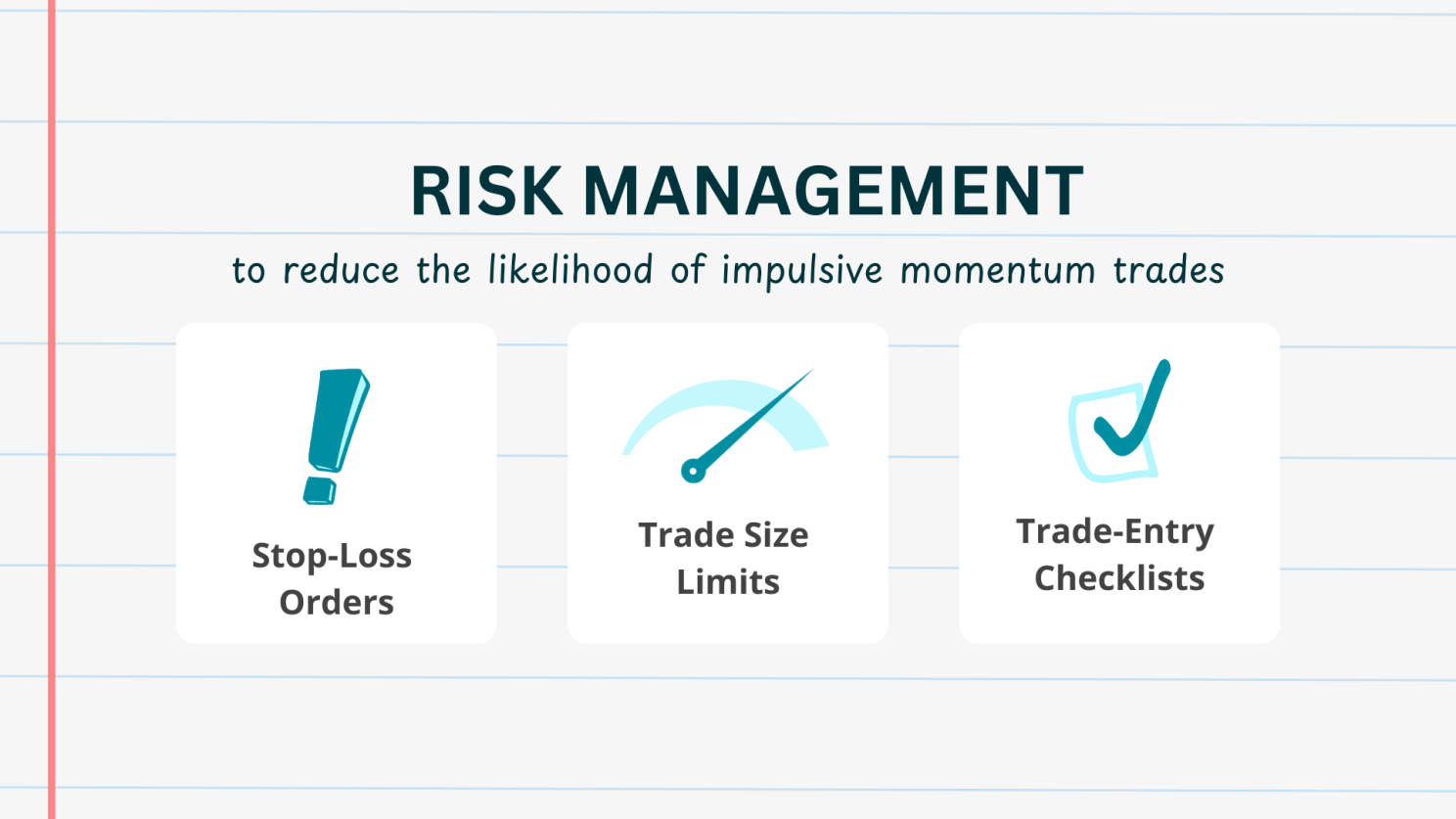
The most effective defense against momentum chasing is a structured approach to risk. Stop-loss orders are the first line of defense. They force you to exit when you're wrong, before the loss becomes catastrophic. Position sizing is the second. If you limit how much you risk on any single trade, even a string of momentum-chasing losses won't wipe out your account.
Psychology plays an equally important role. Understanding why momentum is seductive helps you resist it. You're not lacking discipline. You're responding to real psychological forces: FOMO (fear of missing out) and herd behavior (the instinct to follow the crowd). Once you name these forces, you can develop countermeasures. One practical approach is a trade entry checklist. Before you enter any position, you answer specific questions: Is this entry based on a technical setup or FOMO? Do I have a clear exit plan? Is this position size appropriate for my risk tolerance? This checklist turns trading into a deliberate process rather than a reactive one.
What the data reveals about momentum-driven trading
Momentum chasing ranks among the most common patterns detected in real trading data. TradeMedic's analysis of 500,000+ trader accounts identifies this behavior across all experience levels and strategy types. Traders who frequently enter during high-momentum phases consistently show negative correlation between trade frequency and P&L: more trades don't lead to more profit. Instead, the opposite pattern emerges. Traders who reduce momentum-chasing entries and wait for better setups show measurable improvement in win rate and average trade outcome. A detailed analysis of how common this pattern is, and how much it costs individual traders, is available in our full momentum-chasing research report.
How trading analysis tools help identify the pattern
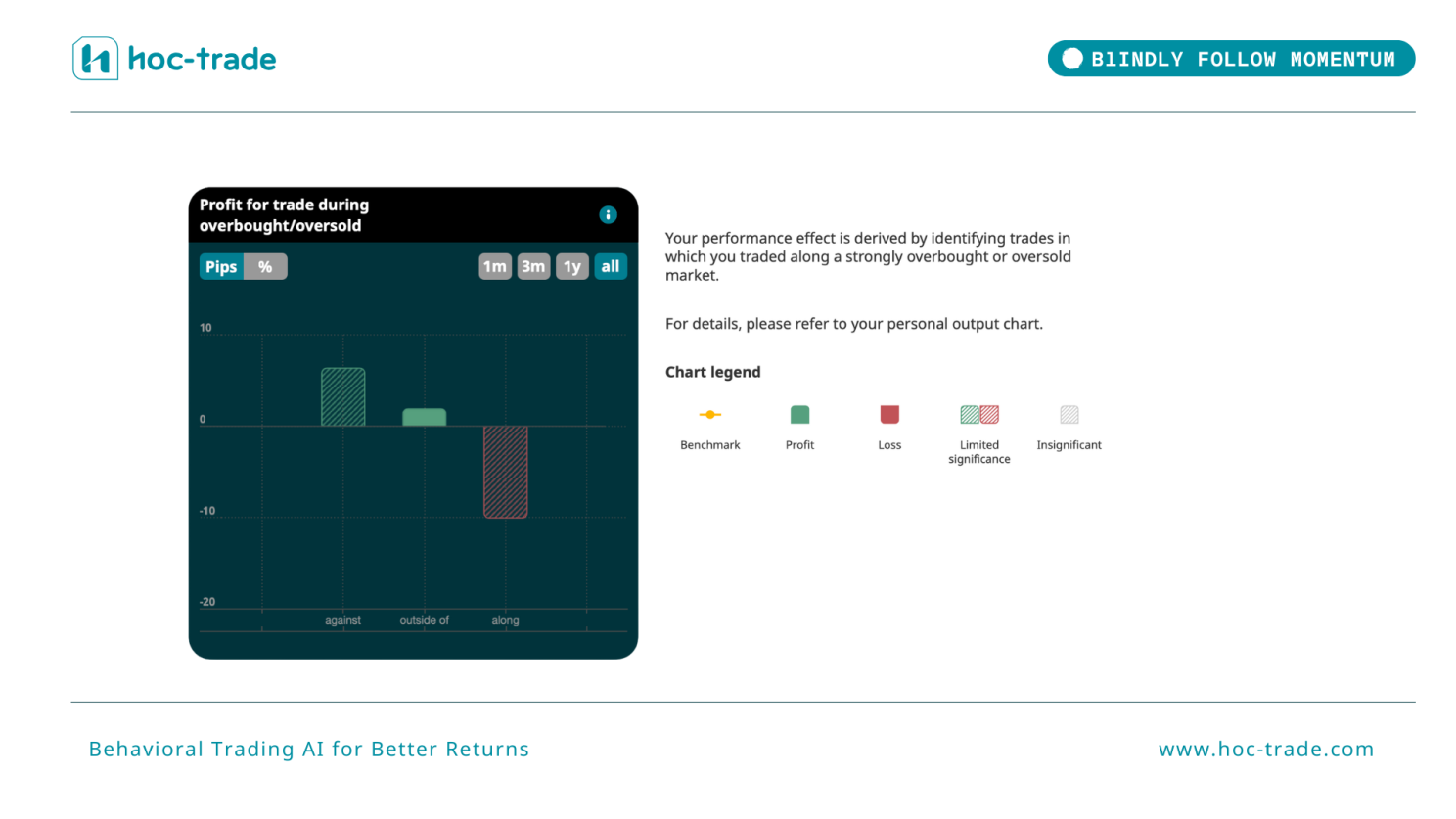
Identifying momentum chasing in your own trading requires honest review of your trade data. TradeMedic detects this pattern by analyzing the correlation between the market conditions at your entry time and your subsequent trade performance. If your entries during high-momentum periods consistently underperform your baseline, the pattern is flagged. This kind of automated detection matters because human review is often biased. You remember your winners more vividly than your losers. You might not notice the pattern even though it's costing you significant money.
Once the pattern is visible, you can respond to it. Some traders adjust their technical indicators to filter out momentum trades. Others implement rules that prevent entries during overbought conditions. Still others focus purely on the psychological aspect, using checklists and journaling to create space between impulse and action. The specific solution matters less than taking action. Recognizing the pattern is the essential first step.
TradeMedic's detection specifically uses RSI-based market environment classification at the time of trade entry, combined with trade direction, to identify whether a trader consistently underperforms when entering along existing momentum.
Making momentum work for you, not against you
Momentum is a real force in markets. Strong trends do persist, and traders who can harness them capture outsized returns. The problem isn't momentum itself. It's the careless approach to momentum trading that plagues most traders. Jumping into every big move without preparation, entering too late, and exiting in panic is a formula for losses.
The traders who profit from momentum aren't more disciplined by nature. They've simply built systems that substitute for willpower. They use technical tools to confirm when momentum is sustainable. They use position sizing and stops to protect themselves when they're wrong. They use checklists to prevent emotional entries. These structures don't guarantee profits, but they tilt the odds meaningfully in your favor. The path to better trading doesn't require a complete overhaul of your personality. It requires recognizing the specific patterns that sabotage your results, and implementing specific tools to counteract them.
TradeMedic AI analyses over 60 behavioural patterns, including blindly following momentum, across 500,000+ trader accounts. Visit TradeMedic to see how it works and get your own personal analysis.
Watch Why Blindly Following Momentum Undermine Trading Results
Frequently asked questions
What is momentum chasing in trading?
Momentum chasing is entering trades after a strong price movement, driven by FOMO rather than a tested strategy. These entries typically occur too late, catching the tail end of a move or entering just as momentum exhausts. The pattern shows up as a negative correlation between trades made during high-momentum periods and actual trading performance.
Why do traders struggle to avoid momentum chasing despite knowing the risks?
Momentum chasing is driven by psychological forces, not a lack of knowledge. Fear of missing out and herd behavior are powerful instincts. Most traders react to price movement emotionally rather than analytically. Without external structure (like checklists, risk limits, or technical filters), these emotional impulses override conscious intentions.
How can technical indicators help prevent momentum-driven losses?
The RSI and Bollinger Bands signal when a market has extended too far too fast, indicating potential exhaustion. These indicators don't predict reversals precisely, but they show when entering is particularly risky. Waiting for overbought readings to normalize before entering reduces the frequency of late-entry trades and improves the quality of your setups.
What role does position sizing play in surviving momentum trades?
Position sizing is a critical risk management tool. By limiting how much you risk on any single trade, even a string of momentum-chasing losses won't erode your account. Many traders who struggle with momentum chasing can reduce the damage substantially by simply cutting their position sizes in half, giving them more room to be wrong.
How can traders identify if momentum chasing is a real problem in their trading?
Review your trading journal and look for a pattern: Do trades entered during high-momentum periods consistently underperform your other trades? If yes, momentum chasing is a real leak. Trading analysis tools like TradeMedic automate this detection by analyzing correlation between market conditions at entry and subsequent performance, making the pattern visible without human bias.