Category:
 Author:
 Date:May 22, 2026
Overoptimism in Trading: When Ambitious Targets Undermine Performance
Traders often talk about staying optimistic, and there's truth to it. Confidence matters. But there's a difference between healthy optimism and the kind that works against you. When expectations about where a trade will move disconnect from what the market actually delivers, something changes. Profit targets that sound reasonable on the chart start to feel like wishes. And wishes don't generate consistent returns.
What makes unrealistic profit targets dangerous?
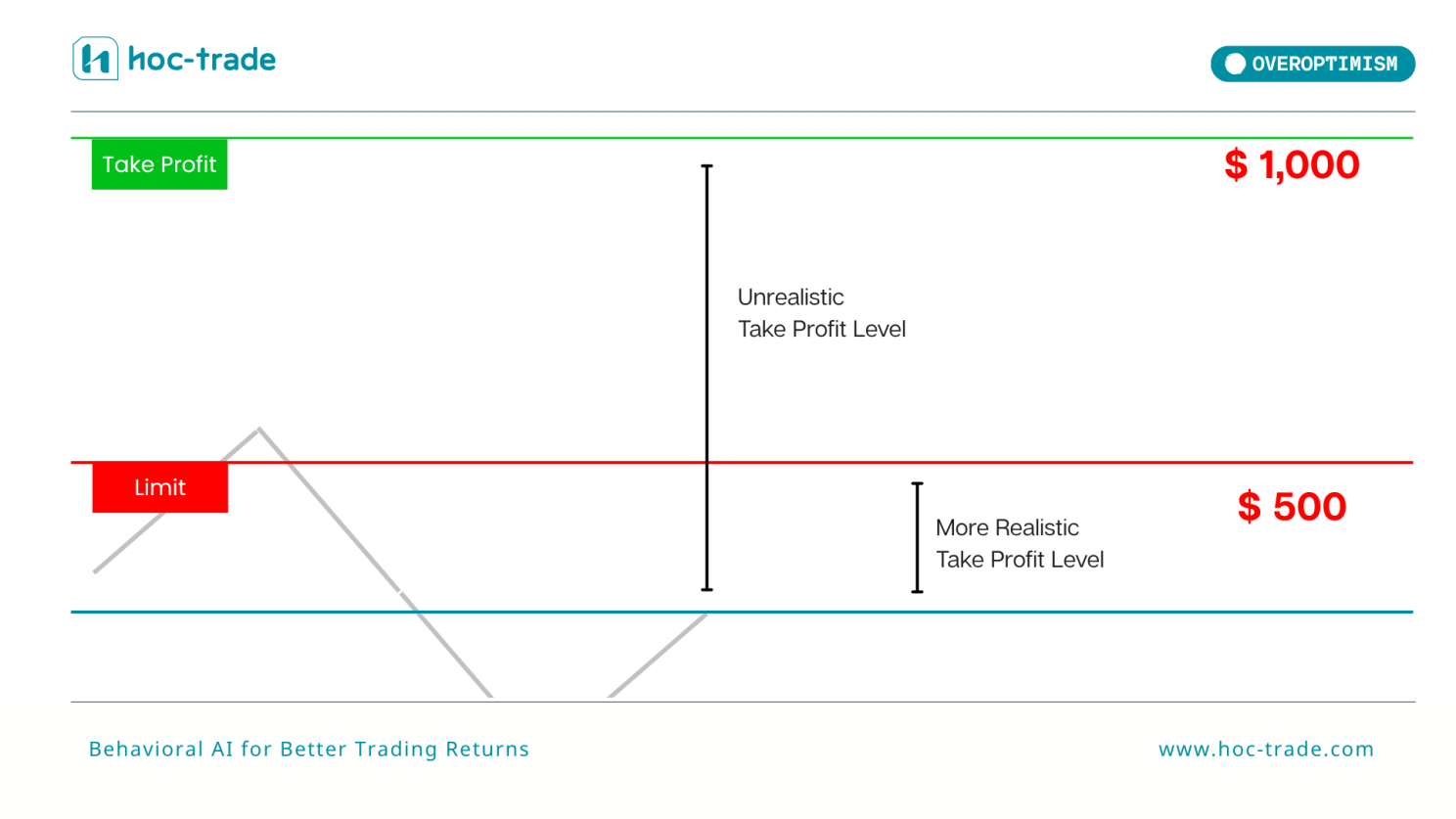
Consider a common scenario: a trader enters a position expecting a $1,000 profit, but the market typically moves $500 in similar setups. The trade starts working. The price moves halfway to the target, then wavers. The trader stays in, convinced the bigger move is coming. Instead, the market reverses. The gain evaporates. Sometimes it turns into a loss.
The trader's analysis wasn't necessarily wrong. Direction might have been correct. The problem was the destination. This pattern, repeated across dozens of trades, compounds quietly. Each missed opportunity where the trader held for an unrealistic target instead of taking a smaller, real profit chips away at the year's results.
The core issue isn't overconfidence in the conventional sense. Overconfident traders believe they're always right. Overoptimistic traders believe the market will deliver more than it historically does. They misjudge the opportunity, not their own skill.
Why does optimism bias affect trading decisions?
Behavioral finance has documented this pattern for decades. Optimism bias is the human tendency to overestimate the likelihood of positive outcomes, especially those we benefit from. In trading, it manifests as an unrealistic belief that the market will move further than data suggests it should.
Add greed to the mix, and the issue deepens. The thinking goes: "If I just hold a bit longer, I can double this win." But the market doesn't reward optimism. It rewards decisions grounded in what actually happens, not what we hope happens. Traders who stay disciplined about realistic targets consistently outperform those chasing the "what if."
How should you calculate realistic profit targets?
Most traders have heard of reward-to-risk ratios. A 3:1 ratio means three dollars of potential profit for every dollar risked. Mathematically, that's elegant. With a 3:1 ratio, you only need a 25% win rate to break even. The appeal is obvious.
But here's where reality and math diverge. If the market doesn't typically move far enough to hit that 3:1 target in your trading environment, the beautiful ratio becomes useless. You'll chase targets the market won't reach, miss more trades than expected, and watch losses accumulate.
A more conservative 2:1 ratio requires a 33% win rate to break even. Less flashy, perhaps, but if that target aligns with how the market actually behaves in your setup, your win rate improves. More wins, more consistency. Smaller frequent gains beat infrequent home runs in the long game.
How can traders identify overoptimism bias?
Spotting this bias in your own trading requires honest data analysis. TradeMedic's behavioral analytics approach this by running simulations with alternative take-profit levels, testing whether tighter targets would have improved your actual results.
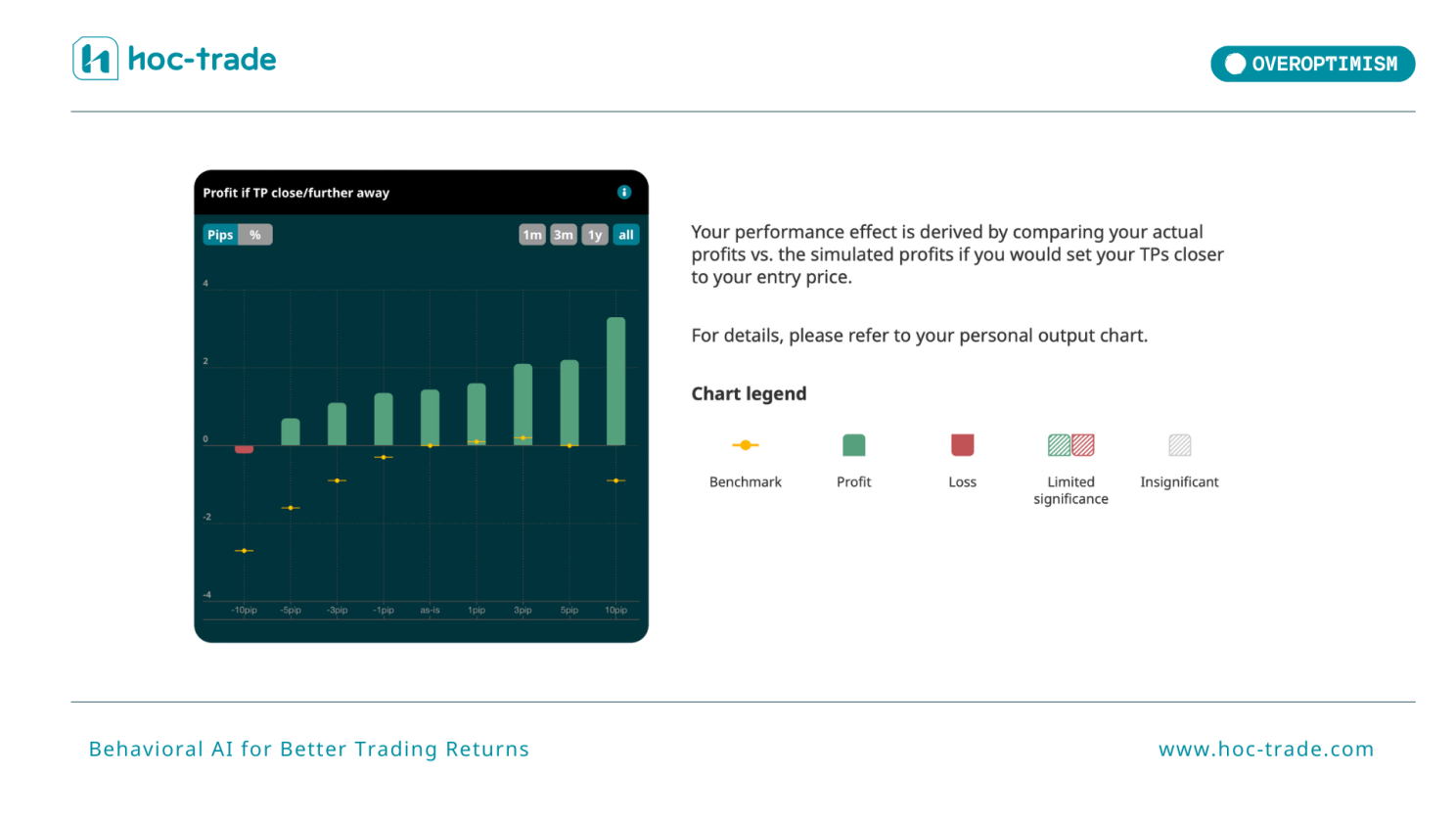
The process is straightforward: if a pattern emerges where narrower profit targets consistently would have led to more wins and better overall returns, that's a signal. TradeMedic flags these patterns and provides actionable feedback, giving traders a clear view of whether they're aiming too high.
What makes this valuable is the feedback loop. Instead of relying on intuition or willpower, traders get data-backed evidence. They can reassess their take-profit strategy in real time, adjusting expectations to match what the market actually delivers.
What does TradeMedic's data show about overoptimism?
TradeMedic's AI analyzes behavioral patterns across a dataset of 500,000+ trader accounts, identifying where individual traders struggle with realistic expectations. Overoptimism about take-profit targets ranks among the most common improvement opportunities detected across the platform. Traders who adjust their targets based on what the data reveals typically see measurable gains in win rate consistency and overall return stability.
Success in trading rarely comes from reaching for the biggest possible win on each trade. It comes from making consistently good decisions. The traders who improve fastest aren't those with the most conviction. They're the ones who let the data guide expectations. That means understanding your market's natural movement, respecting those limits, and building a strategy around what happens, not what you hope happens. With tools that surface these patterns, traders can replace optimism bias with evidence, and replace wishes with reliable decision-making.
TradeMedic AI analyses over 60 behavioural patterns, including overoptimism, across 500,000+ trader accounts. Visit TradeMedic to see how it works and get your own personal analysis.
Watch: How Overoptimism Undermine Performance
Frequently asked questions
What is the difference between overconfidence and overoptimism in trading?
Overconfidence is believing you're always right about market direction or your skill. Overoptimism is expecting the market to move further than it historically does. A trader can be right about direction but overoptimistic about how far the move will go, leading to missed profits when they hold for unrealistic targets.
Why do traders set unrealistic profit targets?
Optimism bias, a well-documented cognitive distortion, leads people to overestimate the likelihood of positive outcomes. Combined with greed and the hope that just holding longer will double a win, traders often chase targets the market won't reach. The emotional appeal of bigger rewards overrides data-backed reality.
What reward-to-risk ratio should I use?
The ideal ratio depends on what's realistic for your trading environment. A 3:1 ratio sounds better mathematically, but if your market won't move that far, a more conservative 2:1 ratio aligned with actual market behavior will yield higher win rates and better long-term returns. The goal is consistency, not the biggest possible number.
How can I identify if I have an overoptimism bias?
Analyze your trade history to see if narrower profit targets would have improved your results. If you consistently hit a portion of your target before the market reverses, or if tighter stops would have given you more wins, you likely have an overoptimism bias. Tools like TradeMedic can run these simulations automatically and highlight the pattern.
Does taking smaller profits reduce my earning potential?
The opposite is true. Smaller, consistent wins compound into better annual returns than infrequent larger wins. If your realistic target gets hit 60% of the time instead of 25% (because it's aligned with actual market movement), your account grows faster despite smaller individual trades.