Category:
 Author:
 Date:May 22, 2026
Why Traders Fight Market Trends: The Conviction Trap
Momentum works. That's not debatable. Every trader knows this, yet many spend their careers fighting against it anyway. They hold losing positions in a downtrend, convinced the market will reverse. They short a rising market, certain their analysis trumps the price action unfolding in real time. It's not technical incompetence. It's conviction turned stubborn, emotion mistaken for insight.
The paradox is this: the same conviction that allows traders to stick to a strategy through drawdowns also blinds them to when that strategy has stopped working. They double down. They rationalize. They wait for the market to "come around" instead of accepting what it's telling them right now.
What psychological biases make traders fight trends?
Trend-fighting doesn't come from nowhere. It comes from three overlapping cognitive traps that work together to lock traders into positions that the market has already rejected.
Confirmation bias shapes how you process information. Once you've taken a long position, bullish news stands out while bearish signals fade into the background. A trader holding through a downtrend doesn't ignore the selling pressure. They selectively emphasize the fundamentals that support their thesis, treating them as evidence that the market is "wrong" and will eventually correct.
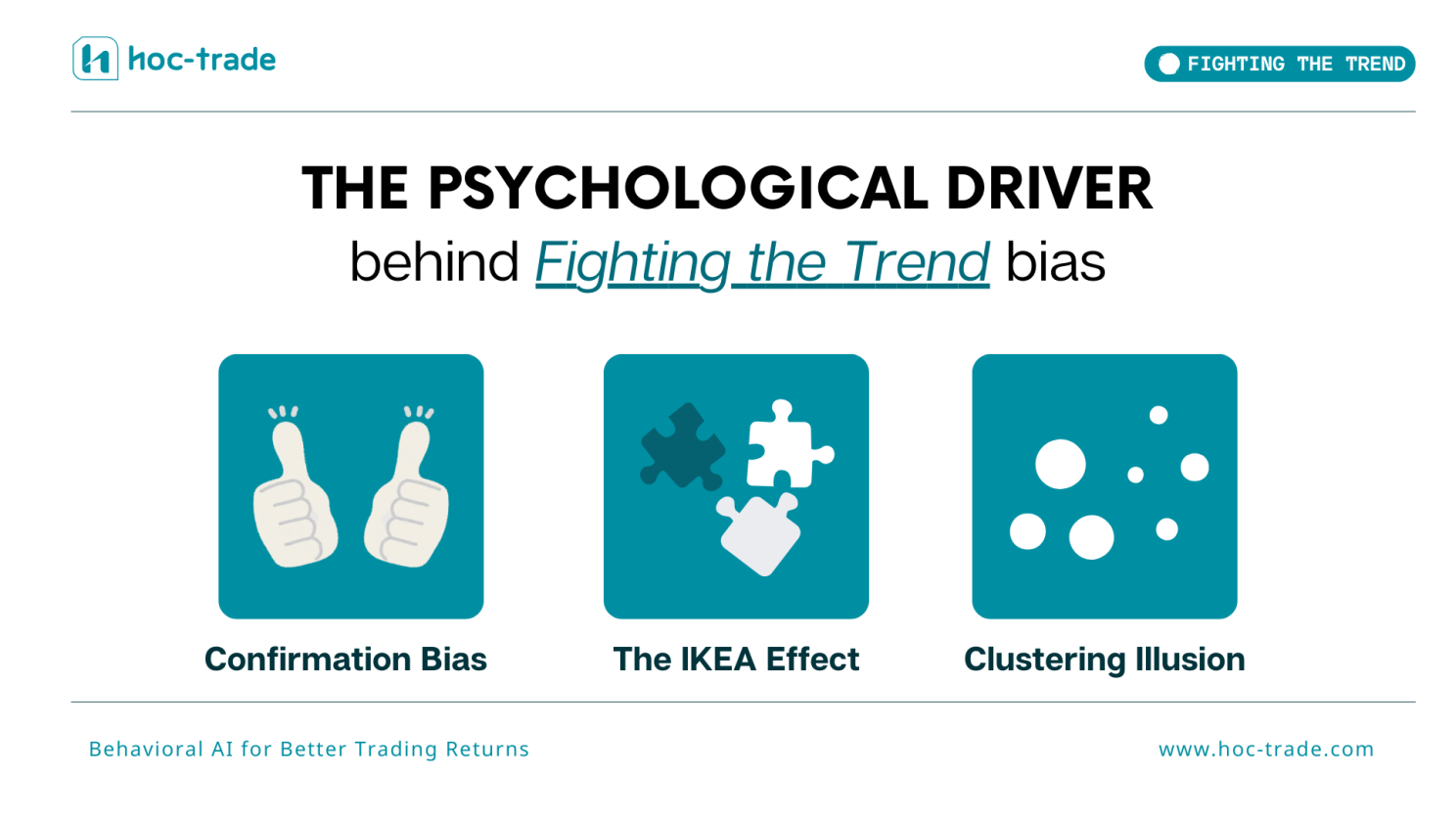
The IKEA effect compounds this. Because you built your analysis yourself, you value it more than you should. Your chart setup, your thesis, your conviction matters partly because it's yours. A trader who worked hard on a long setup is psychologically invested in its success. Contradictory signals don't just mean the trade is wrong. They threaten your sense of judgment.
Clustering illusion is the final piece. You spot a small bullish pattern, a failed breakdown, one retrace that might mean reversal. Your mind extracts meaning from noise. The broader market is in a downtrend with lower lows and lower highs, but you've latched onto what looks like a turning point. You mistake a local formation for a meaningful reversal, unaware that your narrow focus has blinded you to the bigger picture.
These three biases feed each other. Confirmation bias filters what you see. The IKEA effect makes you reluctant to let go. Clustering illusion convinces you that your isolated observation carries more weight than it should. Together, they create a loop where traders don't just hold losing positions. They actively defend them.
When does conviction become a liability?
The line between conviction and rigidity isn't always clear. Good traders need strong beliefs about their edge. They need to hold through temporary drawdowns. The problem is that holding through drawdowns and fighting the trend look identical in the moment. You won't know which one you're doing until the market decides.
Where it breaks down is when analysis stops adapting. A trader with genuine conviction still watches the market. They look for confirmation that their thesis is playing out. They adjust if the setup fails. But a trader controlled by bias doesn't do this. They've already decided what should happen. They interpret price action through that lens, accepting evidence that supports it and dismissing everything else.
The key difference is humility. Traders who improve recognize the limits of their conviction. They know their analysis could be wrong. They know the market might be telling them something they didn't anticipate. This recognition becomes the foundation for better decision-making. Without it, conviction is just ego with a thesis attached.
What does the data reveal about trend-fighting behavior?
TradeMedic™ analyzes trend-fighting patterns across 500,000+ trader accounts in real time. The system identifies when traders consistently take positions that oppose short and medium-term moving averages, then tracks whether those trades result in consistent losses. The pattern is remarkably common, and the edge it sacrifices is measurable.
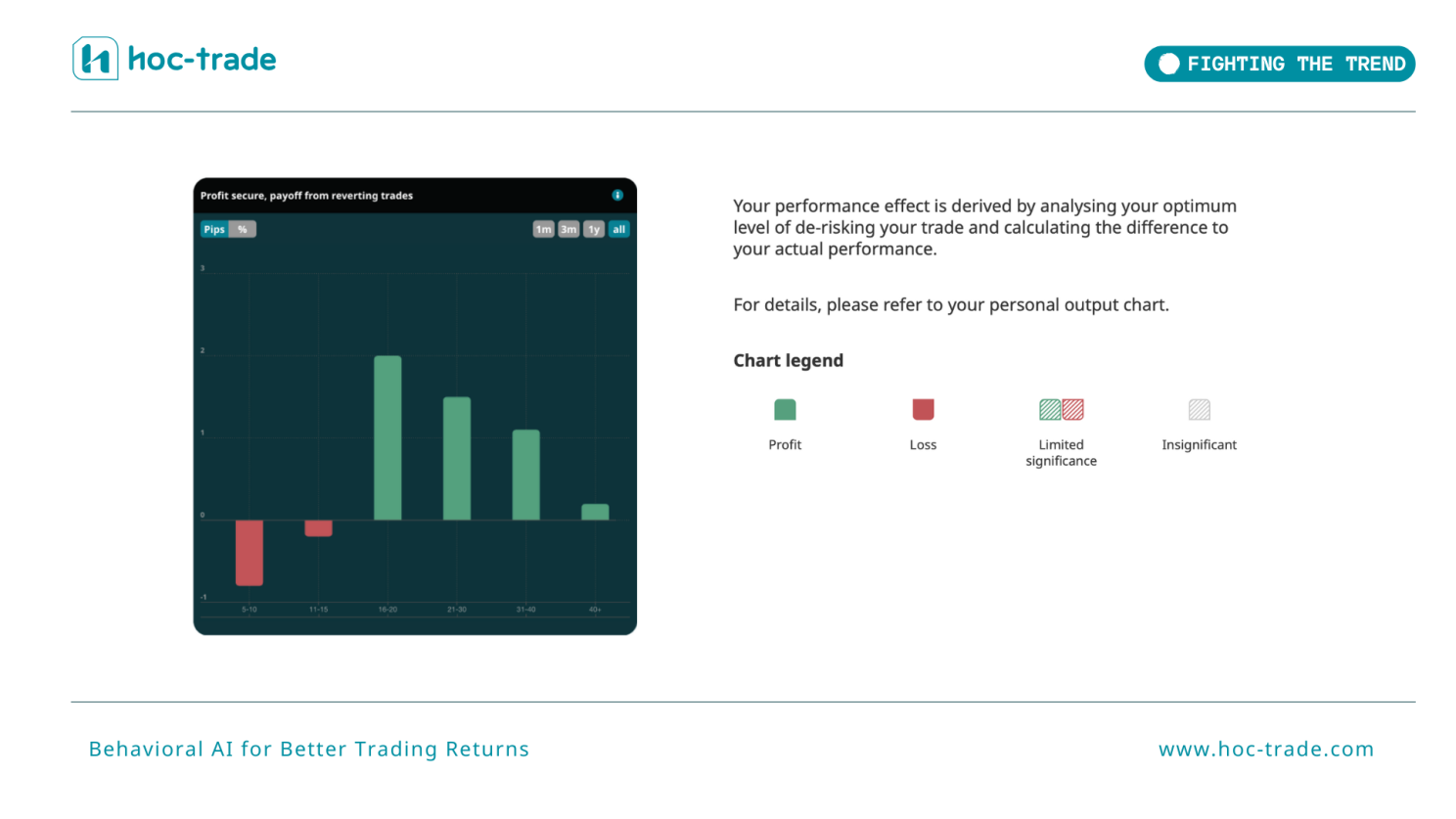
When traders fight the trend, they're not just fighting the market. They're fighting statistical probability. The longer the trend, the stronger the momentum signal, and the more costly the decision to trade against it. TradeMedic flags this behavior so traders can see it in their own data and recognize when conviction has crossed into bias.
How to identify trend-fighting in your own trades
Recognition is the first step. Pull up your trading journal. Look for trades where you entered against the prevailing trend, especially trades where you doubled down or held through multiple stop-loss moves. Count how many of those trades worked versus how many became losses. Most traders discover a pattern they hadn't consciously seen.
Ask yourself: did this trade thesis make sense because I analyzed the market, or because I wanted it to be true? Did I look for evidence against it, or only for it? When price moved against me, did I update my view, or did I rationalize why the market was "wrong"? These aren't judgments. They're calibration points.
The most useful question is the simplest: am I trading with the trend or against it? If you're against it, what will make you exit? If the answer is "I'll wait for it to reverse," you've already told yourself what you want to hear. Real exit criteria come from the market, not from hope.
Fighting the trend isn't just a technical mistake. It's a psychological one, rooted in how we process information and protect our self-image. The traders who improve fastest aren't those who suddenly find perfect discipline. They're the ones who see the pattern, understand why it's there, and build systems to interrupt it.
With awareness and the right tools, this bias can be identified and corrected. That clarity is what separates traders who fight the market from those who trade with it.
TradeMedic AI analyses over 60 behavioural patterns, including fighting the market trend, across 500,000+ trader accounts. Visit TradeMedic to see how it works and get your own personal analysis.
Watch Why Traders Fight Market Trends
Frequently asked questions
What is trend-fighting in trading?
Trend-fighting is taking positions against the prevailing market direction, typically because a trader's analysis or conviction suggests the trend is wrong. A trader might go long in a downtrend or short in an uptrend, expecting reversal rather than following momentum. This behavior is driven by psychological biases like confirmation bias and the IKEA effect, and TradeMedic data shows it results in consistent underperformance.
Why do traders fight trends even when they know it's risky?
Traders fight trends because conviction and bias become intertwined. Confirmation bias makes them selectively notice bullish or bearish evidence that supports their thesis, while the IKEA effect causes them to overvalue their own analysis simply because they created it. The result is a psychological loop where traders interpret losses as temporary rather than signals to exit.
How can I spot trend-fighting behavior in my own trading?
Review your trading journal and count trades where you entered against a clear trend, especially where you doubled down or held through multiple price moves against you. Compare your win rate on trades with the trend versus against it. TradeMedic analyzes this pattern automatically by comparing each trade to short and medium-term moving averages, flagging positions that consistently oppose momentum.
Is trend-following always the right strategy?
Trend-following isn't the only profitable approach, but fighting the trend is statistically costly. The benefit of recognizing this bias isn't that you'll never trade against a trend, but that you'll do so deliberately with clear exit criteria rather than unconsciously out of conviction and hope. The traders who improve fastest adjust their conviction based on what the market tells them.
How does TradeMedic help traders avoid trend-fighting?
TradeMedic uses behavioral analytics to detect when traders consistently perform poorly against short and medium-term momentum. By comparing each trade to moving averages and analyzing win rates, the system identifies the trend-fighting pattern in your data. Once you see the pattern in your own trades with statistics attached, it becomes much harder to rationalize away, creating the self-awareness needed to change.