Category:
 Author:
 Date:Jun 11, 2026
Why Setting Your Stop-Loss Too Wide Costs You Money
Stop-losses are one of the simplest tools in a trader's kit. Set a level, walk away, and let the market decide. The problem isn't the mechanism. It's where traders put them.
Most traders set their stops too far from the entry. The reasoning is understandable: a tighter stop means a higher chance of getting taken out before the trade has time to work. So they give it room. A little extra breathing space. And the losses, when they come, are bigger than they needed to be.
This is one of the more common and more quietly damaging patterns in trading behaviour. And it's one TradeMedic tracks across its full dataset.
Why do wide stop-losses feel like the safer choice?
There's a logic to it. If a stop gets hit and the price reverses shortly after, the loss stings twice as much. You were right about the direction but wrong about the timing, and the wide stop might have saved you. Traders remember those moments.
The problem is that memory is selective. The trades where a wide stop prolonged a losing position, where it let a bad trade breathe when it should have been closed, tend to blur into the general noise. Over time, the habit of widening stops feels like experience rather than avoidance.
There's also overconfidence at play. When a trader believes strongly in a setup, widening the stop is a way of protecting that belief. It's not about risk management at that point. It's about staying in the trade long enough to be proven right.
How does stop-loss placement affect your reward-to-risk ratio?
The reward-to-risk ratio (RRR) is the clearest place to see the cost. Take a straightforward example: a trade targeting 20 pips of profit with a 20-pip stop gives an RRR of 1:1. At a 55% hit rate, that strategy earns an average of 2 pips per trade.
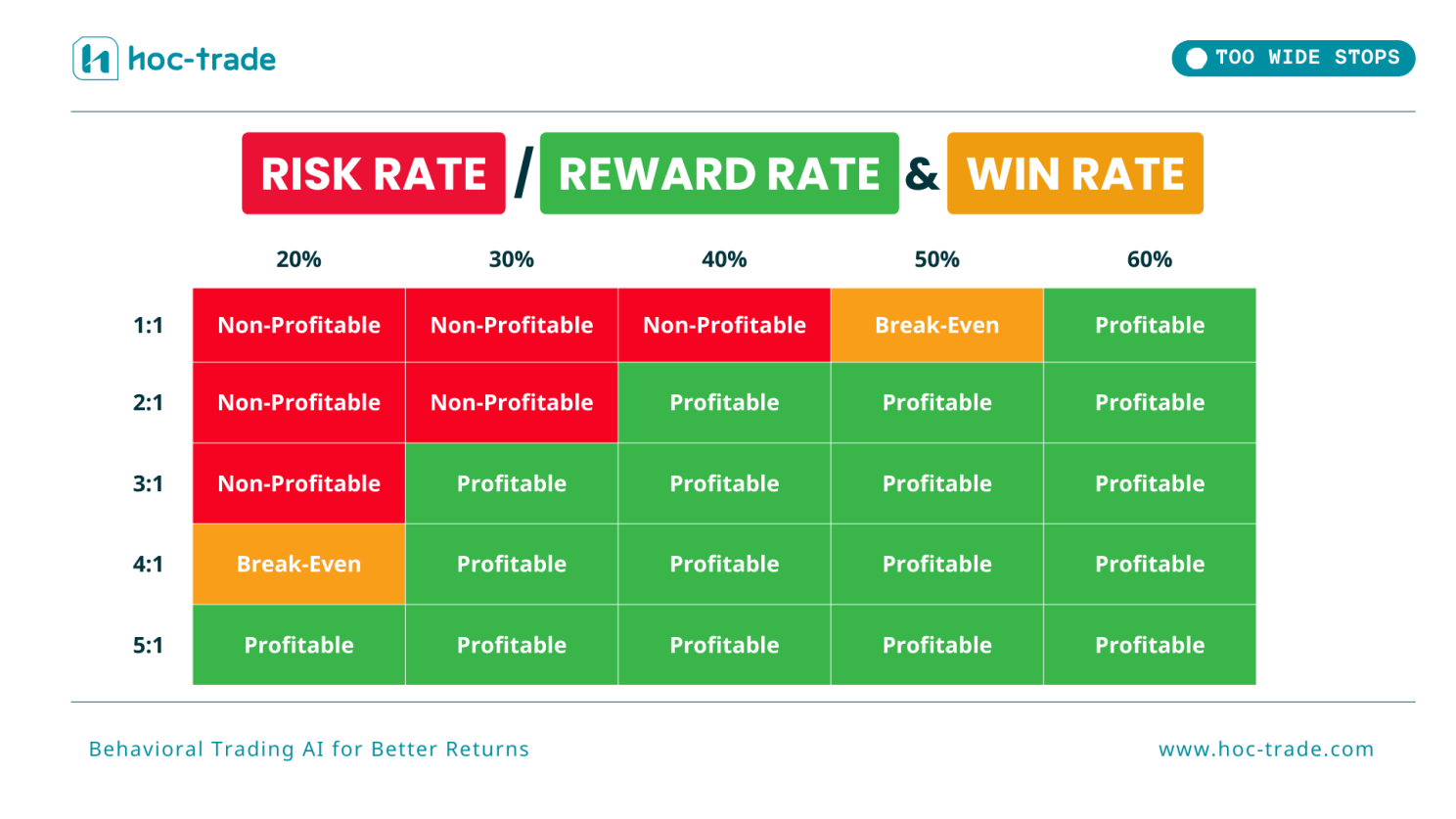
Now add 5 pips to the stop. The setup looks the same, but the maths shifts. To keep earning 2 pips per trade at the wider stop, the hit rate needs to climb to 60%. If it stays at 55%, the strategy flips from profitable to loss-making, averaging -0.25 pips per trade.
Five pips. That's the margin. And it compounds across hundreds of trades.
The same effect runs in the other direction with take-profits. Pulling a target in by 5 pips because of uncertainty about market noise can require a hit rate of 67.5% just to maintain the same average result. That's a very high bar for most setups.
We have published dedicated analyses on whether RRR or win rate is more important for the overall profitability of a trader.
When does a wide stop-loss stop reflecting the setup?
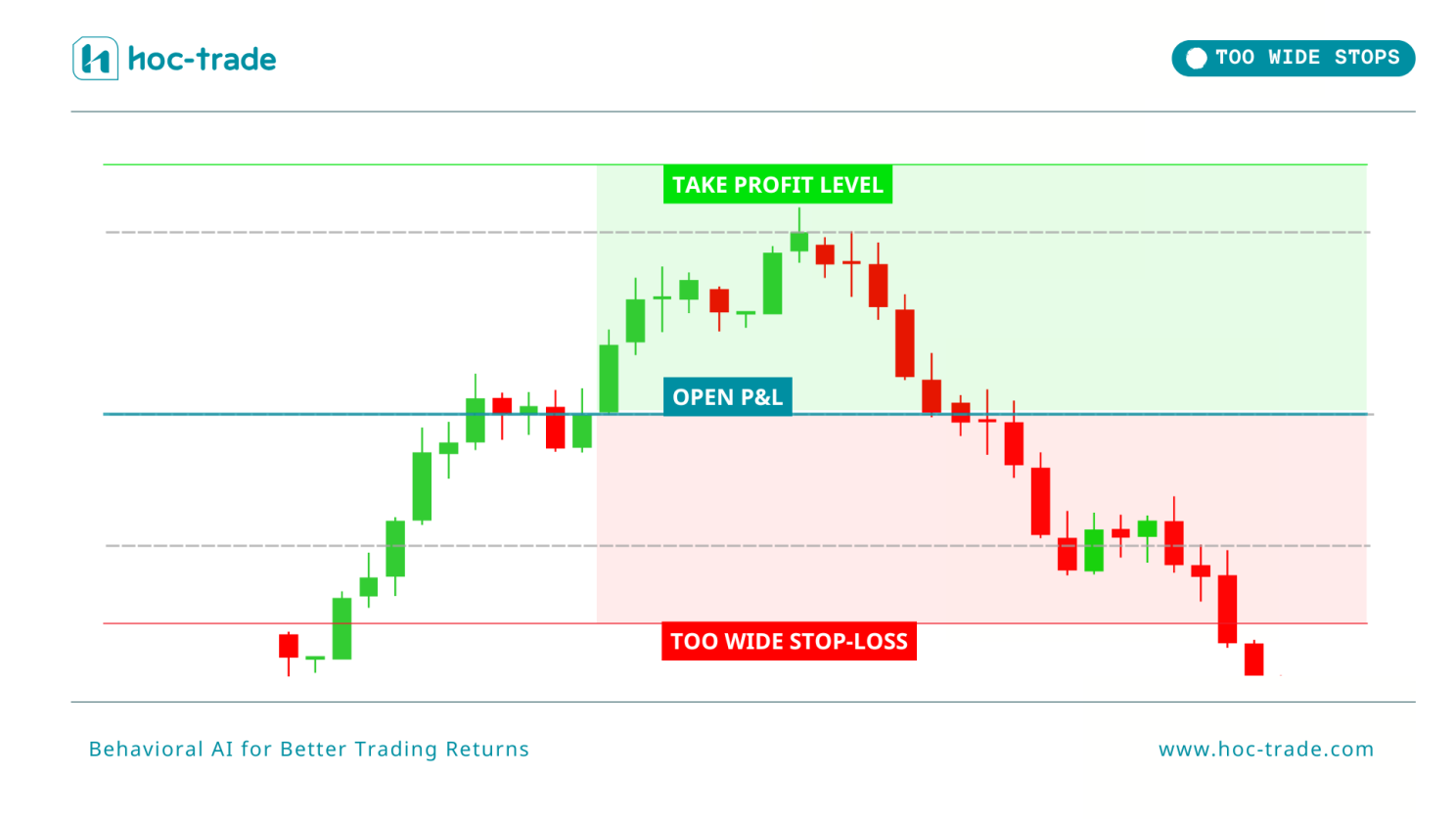
Every stop-loss should be tied to the trade setup. It sits where the technical thesis would be clearly invalidated, not where the trader feels comfortable with the potential loss.
When the stop is placed beyond that point, it no longer serves its purpose. The price could breach the original invalidation level and keep moving against the position, and the trade stays open because the stop hasn't been reached. By the time it is, the setup has been wrong for a while.
This is where wide stops do the most damage. They keep capital tied to trades that have already failed on their own terms. That capital can't be deployed elsewhere. And the eventual loss, when it comes, is larger than the setup warranted.
What does the data say about stop-loss width?
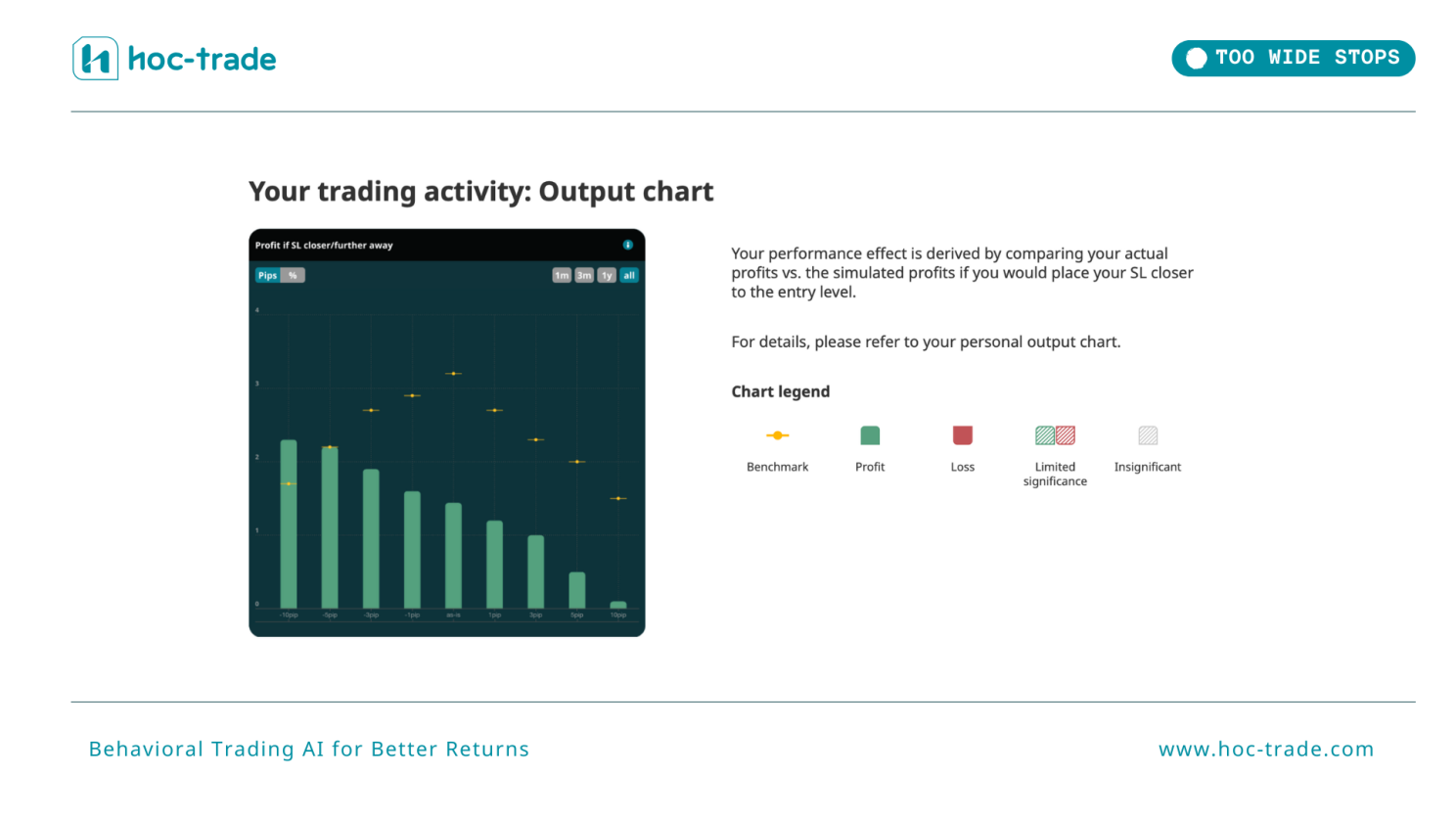
TradeMedic detects wide stop-loss patterns across a dataset of 500,000+ trader accounts. The method is direct: simulate performance using tighter stop levels and compare outcomes. When tighter stops consistently produce better results for a given trader's historical data, that's a signal worth examining. TradeMedic™ AI also flags in case the opposite is the case and and your stop losses were too tight.
Wide stops rank among the more common patterns flagged in the dataset. In many cases, traders aren't aware their stop placement has drifted from the logic of their setups. A detailed breakdown of this pattern, with statistics across account types and trading styles, is available in the TradeMedic stop-loss analysis.
The research page at hoc-trade.com/research covers the broader methodology behind how TradeMedic analyses behavioral patterns across the dataset.
How can traders improve their stop-loss placement?
The goal is to align the stop with the setup, not with a comfort level. That sounds straightforward but requires consistent self-examination, because the tendency to widen stops is persistent and often disguised as prudence.
One practical approach is reviewing past trades to check whether the stop was placed beyond the actual invalidation point. If the price breached the original technical level and the trade was still open, that's a sign the stop was wider than the setup required.
Market conditions also matter. A stop calibrated to one volatility environment may be too wide in another. Traders who adjust their stops for current conditions, rather than using fixed distances, tend to stay closer to setup logic across different market phases.
Some traders find partial profit-taking useful when a trade is moving slowly. Securing part of the gain while leaving the remainder running can reduce the pressure to hold on, which in turn reduces the temptation to widen the stop as protection.
Traders dealing with overtrading alongside wide stops often show reinforcing patterns in their data. The same fear-driven logic that widens a stop tends to produce extra entries. TradeMedic's analysis of overtrading covers the overlap between these two behaviours.
The real cost of giving trades too much room
Setting a stop-loss isn't just a mechanical step before entering a trade. It's a statement about where the setup ceases to be valid. When that distance gets stretched, the statement becomes meaningless, and so does the stop.
Tighter stops, placed at levels that reflect actual setup logic, don't just limit losses. They keep capital moving and keep the strategy honest. Small changes to stop placement can determine whether a profitable setup stays that way over hundreds of trades.
TradeMedic AI analyses over 60 behavioural patterns, including Stop Loss Too Wide, across 500,000+ trader accounts. Visit TradeMedic to see how it works and get your own personal analysis.
Frequently asked questions
Why is setting a stop-loss too wide a problem in trading?
Wide stop-losses increase risk exposure without a corresponding improvement in hit rate. When a stop is placed beyond the point where a trade setup is technically invalidated, it keeps losing trades open longer than necessary, leading to larger losses and less efficient use of capital.
How does a wide stop-loss affect the reward-to-risk ratio?
Widening a stop-loss by even a small amount can require a significantly higher hit rate to maintain profitability. For example, adding 5 pips to a 20-pip stop on a strategy with a 55% hit rate can turn a profitable approach into a loss-making one without any change to the entry or target logic.
What causes traders to set stop-losses that are too wide?
The most common driver is fear of being stopped out prematurely. Traders often remember occasions where a wide stop saved a trade that later recovered, reinforcing the habit. Overconfidence in a setup can also lead traders to widen stops to stay in a position longer, rather than accepting that the thesis has been disproven.
How can traders tell if their stop-loss placement is too wide?
One useful check is reviewing whether stops were placed beyond the level where the trade setup was technically invalidated. TradeMedic's analysis flags this pattern by simulating performance with tighter stops and identifying traders where the tighter placement would have improved outcomes.
Does stop-loss width affect take-profit targets too?
Indirectly, yes. Traders who widen stops out of caution often also pull in take-profit targets for the same reason. Reducing a take-profit by 5 pips can require a hit rate of 67.5% or more just to maintain the same average return, which most setups can't sustain consistently.