Category:
 Author:
 Date:May 21, 2026
Trade Without Break and Why the Pause Matters
The market rewards patience. Yet many traders do the opposite, entering a new position before the previous one has even settled in their mind. The space between trades is rarely about market opportunity. Most often, it's about emotion, unmet expectations, or the neurochemical drive to feel back in control.
This pattern, trade without break, is the habit of moving directly into the next position with little to no review time. It masks itself as decisiveness. In reality, it's usually the trader's nervous system seeking relief from the anxiety of an unfavorable outcome, or the dopamine rush of a recent win.
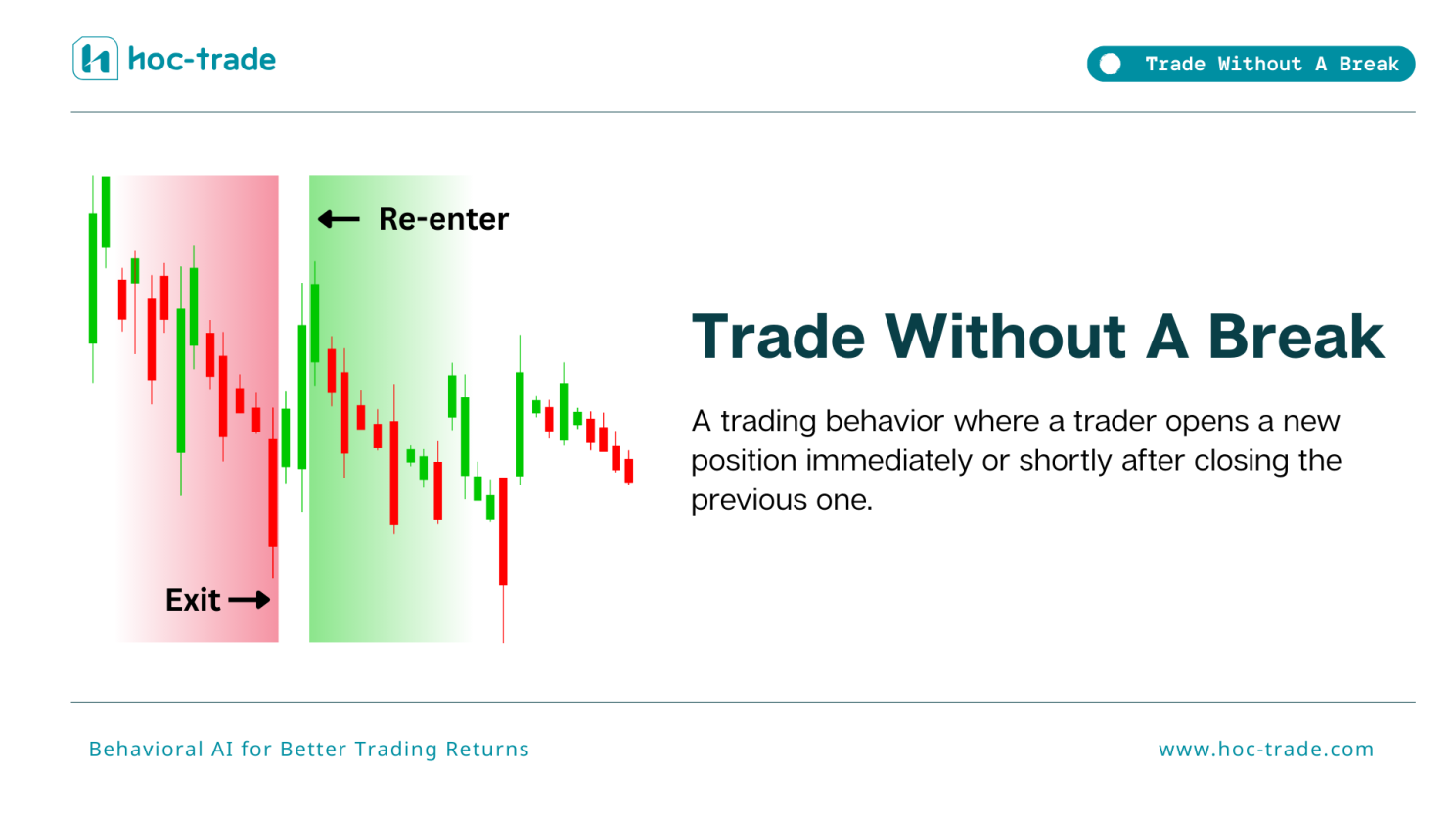
The cost accumulates quietly. Each rushed entry compounds into a pattern of lower-quality setups, looser risk management, and a decision-making process untethered from strategy. Over time, this becomes self-reinforcing. Without a break to reflect, traders can't see the pattern forming. They only see more losses they need to recover from.
Why do traders enter positions too quickly?
The psychological machinery behind trade without break operates on a few well-known principles. Impatience is one: the discomfort of sitting still while the market moves without you. Loss aversion is another. A losing trade activates a powerful motivation to make it back immediately, as if speed could undo the loss.
But beneath both lies something deeper: the need to feel in control. A trader who closes a loss feels they've failed. Jumping into the next position is an attempt to reclaim that feeling of agency. Winning creates a different temptation. The thrill of a profitable trade can feel like the market rewarding you, and the urge to strike again while you're 'hot' becomes irresistible.
None of this is rational. None of it comes from strategy. It all comes from the desire for emotional resolution. And when there's no deliberate pause built into a trader's process, there's nothing to interrupt the cycle. The next decision follows automatically from the neurochemical state of the previous one, not from a fresh assessment of the current setup.
How does this pattern harm trading outcomes?
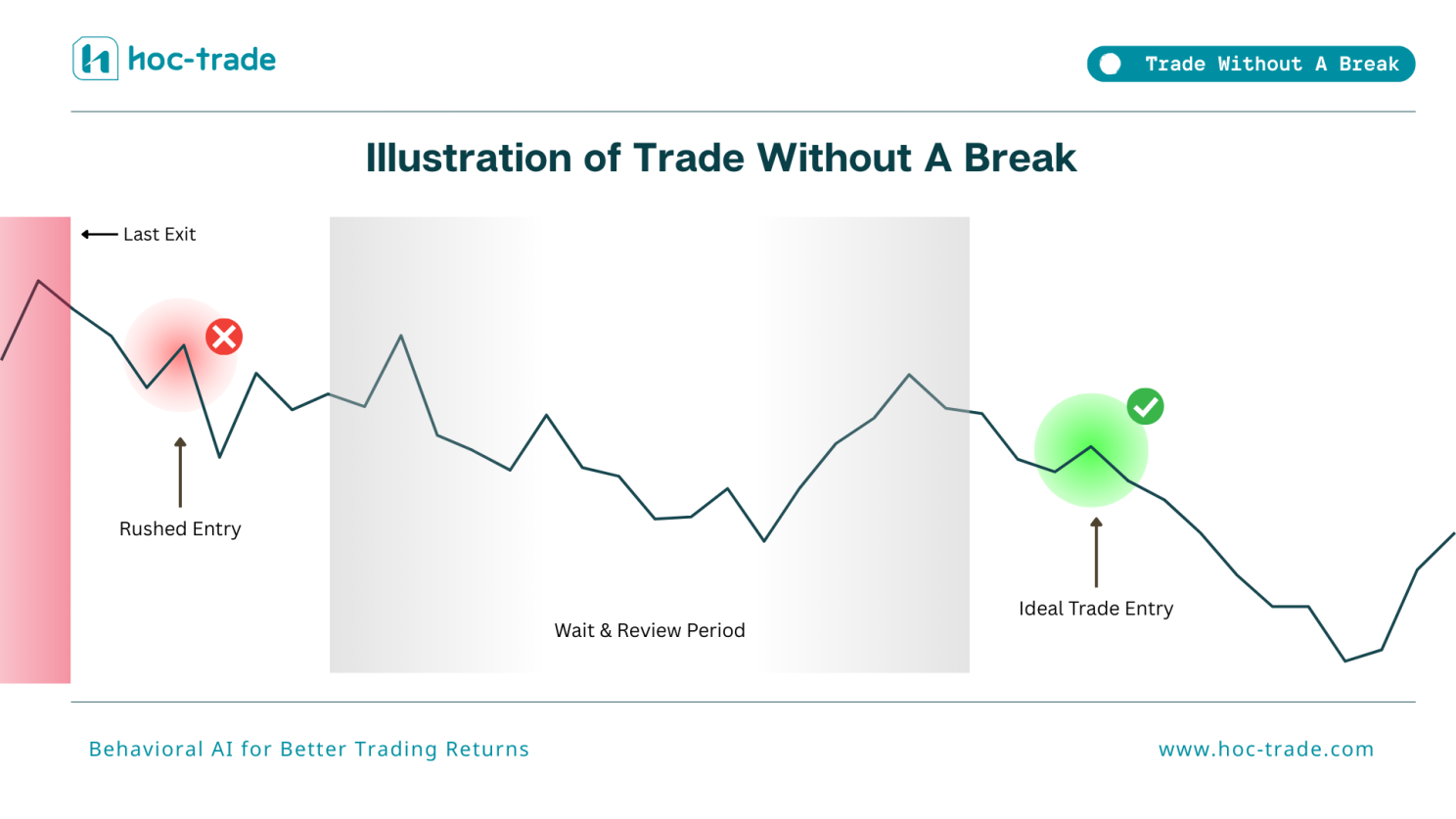
When a trader skips the break, they skip everything that could interrupt the emotional flow: reviewing the last trade's setup and outcome, reassessing the current market structure, resetting their mental state. Instead, they enter the next position already carrying forward the emotional weight of the last one.
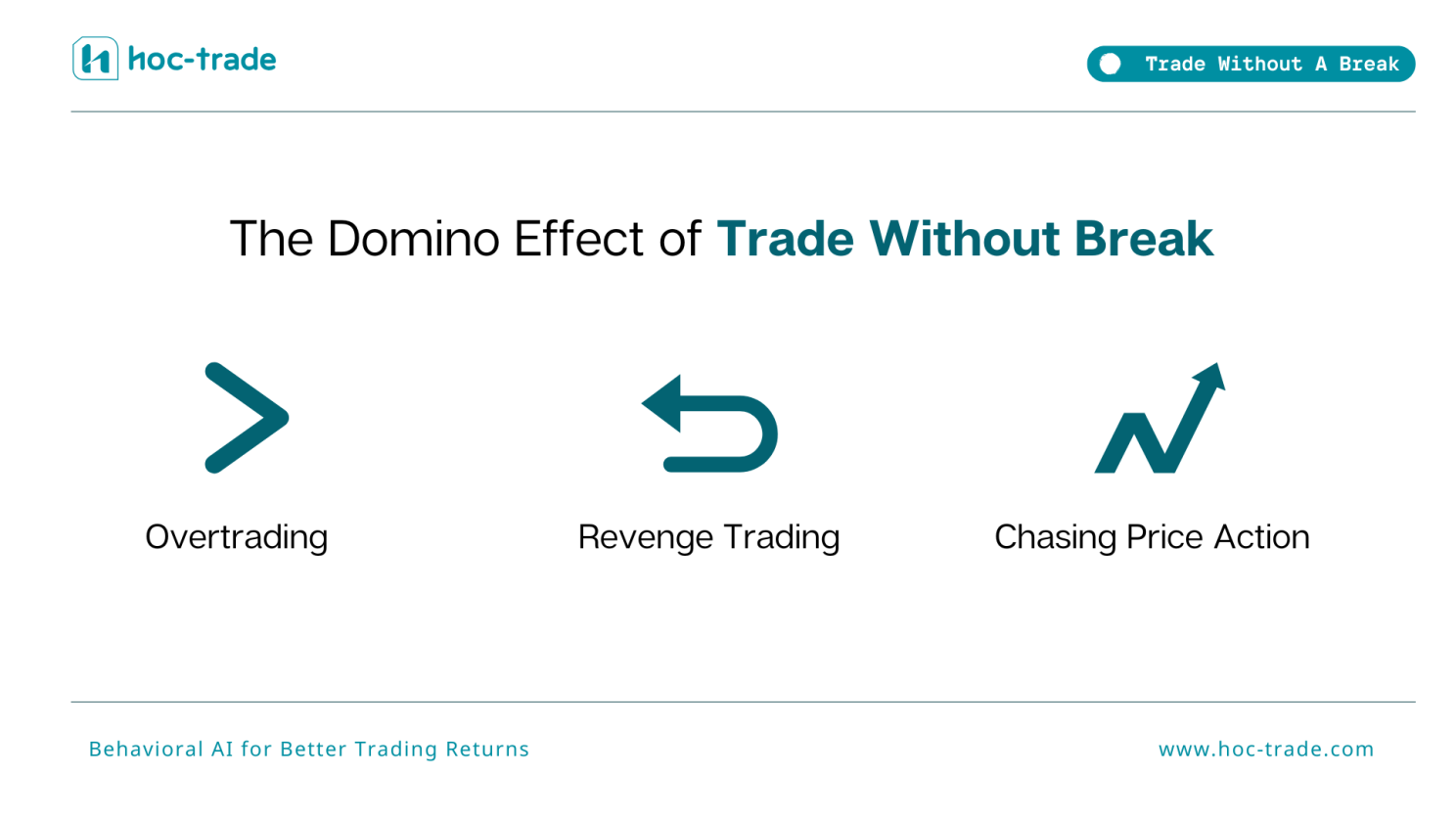
The consequences are predictable. Entries lack the same precision as those made after reflection. Risk management becomes casual. The trader's attention, already depleted by the emotional intensity of the previous trade, operates at reduced capacity. Mistakes compound.
Over days and weeks, traders with this pattern accumulate a higher volume of lower-quality trades. They're not just trading worse per entry, they're taking more entries to begin with because they never hit the natural reset that a pause provides. The trading journal, if they keep one, starts to reveal a clear correlation: trades taken after a brief moment to think perform differently from those entered in haste.
How can traders break the cycle of rushing?
The solution doesn't require eliminating emotion. It requires creating a structured gap between emotion and action. A trader needs what the neuroscience literature calls a deliberate pause: a moment of enforced stillness that shifts the brain from reactive mode into reflective mode. TradeMedic™ AI also tracks sufficient breaks after trades as a strength.
Simple routines work. After closing a trade, spend two minutes reviewing what just happened. Not analyzing whether you won or lost, but examining whether your entry matched your setup requirements. Did the price action align with your plan. What was the context that day. Then, and only then, look at the next potential setup.
Some traders find that stepping away from the screen entirely is essential. Five minutes of looking at something other than charts can be enough to reset the nervous system. Others build in a rule: no new position for at least 10 minutes after closing the previous one.
The specific ritual matters less than its consistency. What matters is that something interrupts the automatic flow and creates a moment of choice instead. That's the difference between trading with discipline and trading with compulsion.
What does the data reveal about trading without breaks?
Hoc-trade's analysis of 500,000+ trader accounts reveals a measurable pattern: traders who consistently take positions with minimal breaks between them show lower win rates and reduced returns compared to their own performance during trades taken after longer intervals. This isn't universally true at the extreme of very long breaks, which suggests diminishing returns. But the trend is clear: rushing correlates with worse outcomes.
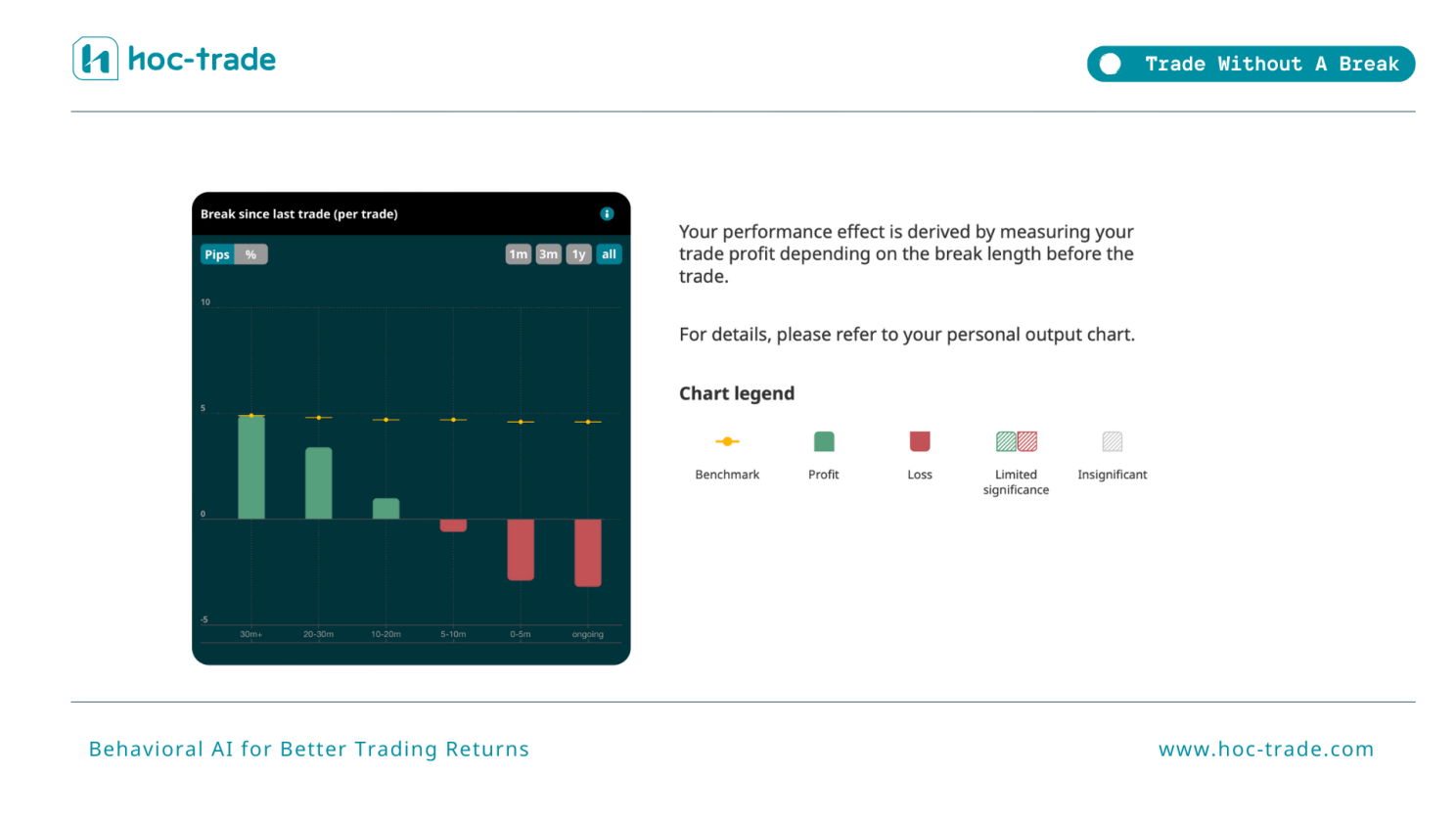
The behavioral AI tracks this by analyzing the interval between trade closes and opens, then mapping those intervals against performance. For individual traders, the data often speaks clearly. Some traders perform noticeably better after allowing a 10 to 15 minute reset. Others show improvement once they enforce even a 2 minute pause. The specific threshold varies by trader, but the principle holds: intentional spacing improves results.
A detailed analysis of how this pattern affects your personal trading is available through the TradeMedic platform. By understanding your own break dynamics, you can test whether introducing pauses into your process shifts your outcome distribution.
The pressure to stay active in trading is constant and relentless. But the most profitable traders aren't necessarily the ones trading the most. Many are the ones who've learned that the space between trades is as important as the trades themselves. It's where reflection lives. It's where strategy wins out over impulse. The next time you close a position, pause. Look at what happened. Then, only then, decide what comes next. That moment of deliberation might change your trading in ways no strategy adjustment ever could.
TradeMedic AI analyses over 60 behavioural patterns, including trading without breaks, across 500,000+ trader accounts. Visit TradeMedic to see how it works and get your personal analysis.
Watch how Trading Without a Break affects your trading
Frequently asked questions
What is trade without break?
Trade without break refers to the habit of entering a new trading position immediately after closing the previous one, without taking time to reflect on the last trade or reassess market conditions. This behavior is typically driven by emotional urgency rather than strategic opportunity.
Why is trading without breaks harmful?
When traders skip the pause between positions, they lose the opportunity to reflect on their decision-making and reset emotionally. This typically results in lower-quality entries, looser risk management, and higher trade volume. Data from 500,000+ trader accounts shows this pattern correlates with reduced profitability compared to performance after intentional breaks.
What psychological factors drive this pattern?
Trade without break is typically driven by impatience, loss aversion, and the neurochemical desire to regain a sense of control after a loss or replicate the feeling after a win. These emotional drivers override rational decision-making when there's no structured pause to interrupt the cycle.
How can traders break the cycle of rushing between positions?
Building in a deliberate pause between trades interrupts the emotional flow and shifts the brain into reflective mode. This can be as simple as a 2 to 5 minute break to review the previous trade and reassess the market, or stepping away from the screen entirely. The specific routine matters less than consistency.
How does Hoc-trade help identify this pattern?
Hoc-trade analyzes the time interval between closing one trade and opening the next, then correlates those intervals with performance outcomes. By quantifying your personal break dynamics, the platform reveals whether you tend to perform better after longer gaps, allowing you to test the impact of intentional pauses on your results.