Category:
 Author:
 Date:May 25, 2026
Why Traders Struggle to Cut Losses in Trading
A well-designed trading strategy can collapse under emotional pressure. Among the psychological obstacles that derail trading decisions, one stands apart for its quiet but destructive nature: the reluctance to close losing positions when they should be exited.
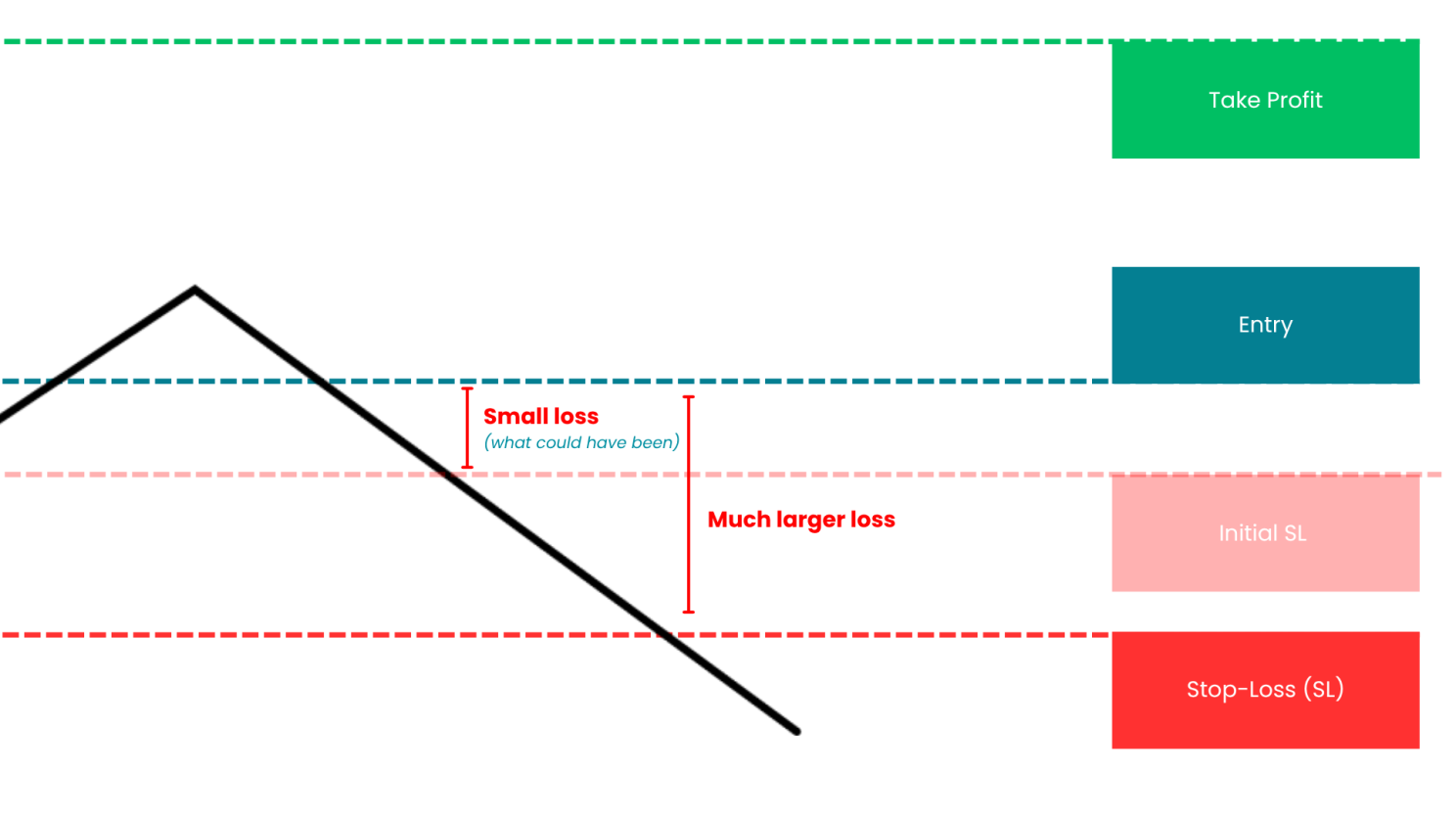
This behavior disguises itself well. It hides behind words like patience and adaptability. A position goes against you, and instead of exiting at the planned stop loss, you shift it farther away. The belief? The market will turn in your favor. In reality, that moment of hesitation frequently becomes a cascade of losses that could have been contained.
How does loss aversion manifest in trading decisions?
At its foundation, this pattern reflects how traders respond to losses psychologically. When a position goes underwater, many traders refuse to close it at the original stop loss. Instead, they widen the exit point, hoping for recovery. The reasoning presented is tactical, but the driver is emotional: avoiding the discomfort of accepting a loss.
This isn't a minor tactical mistake. It's a systematic break from the risk framework you planned. Repeated over time, it corrodes even the soundest trading system.
Why do traders delay cutting losses?
The reluctance to lock in losses isn't irrational by itself—it reflects something deeply human. Psychologists Daniel Kahneman and Amos Tversky identified this in their work on Prospect Theory: loss aversion. The core insight is simple: the pain of a loss feels sharper than the joy of an equal gain.
In trading, this translates directly. Closing a losing position feels like failure. So traders delay. They give the market more time, hopeful for a reversal that often doesn't come. When it doesn't, the financial and psychological cost escalates.
How does failing to cut losses impact overall trading performance?
The effects ripple far beyond a single trade. They reshape your entire portfolio and trading mindset in damaging ways:
Risk-reward distortion happens when one large loss wipes out gains from multiple smaller wins, making it harder to sustain profitability. When you abandon your system by moving stop losses, your strategy's reliability vanishes, and future performance becomes unpredictable. Emotional fatigue sets in as you watch a manageable loss grow into something severe, triggering regret and stress that sometimes spiral into impulsive revenge trades. Over months or years, repeated exposure to large drawdowns erodes your ability to assess trades objectively, locking in destructive patterns.
How can traders identify loss aversion patterns in their trading?
Recognizing the pattern is the first step. Measuring it precisely is what separates awareness from change.
TradeMedic detects when a stop loss has been adjusted after a trade turns against you. The platform then runs a simulation to compare what actually happened with what would have happened if you'd held to your original exit parameters. If the real result underperformed the simulated one, the trade is flagged as a loss aversion event.
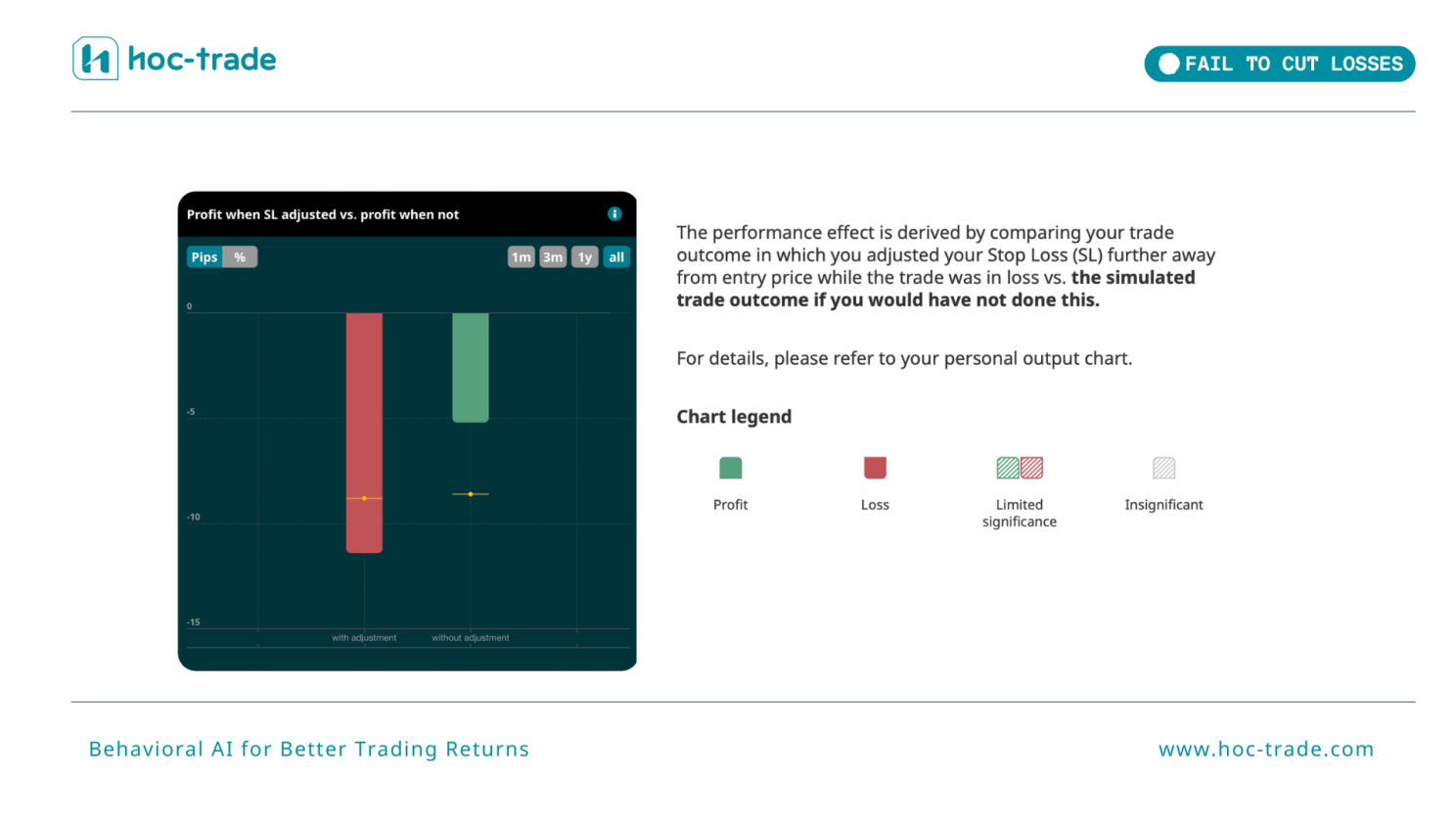
This goes beyond a performance metric. It's behavioral feedback with teeth. Instead of vague self-awareness, you get evidence-based data on exactly how emotional decisions have shaped your results.
What does the data say about loss aversion in trading?
TradeMedic AI detects loss aversion patterns across a dataset of 500,000+ trader accounts and measures the personal cost for each trader. Among the most common behavioral improvement opportunities the system identifies, loss aversion ranks consistently high. The behavioral analytics show measurable differences between traders who move stops frequently and those who honor their system, with the gap widening over time.
A detailed breakdown of how this pattern manifests across real trading data and its financial impact is available in our full loss aversion analysis.
What strategies help traders overcome loss aversion?
The goal of detection is transformation. TradeMedic doesn't just flag where you went wrong—it builds a path toward better habits.
Behavioral reports show you precisely when and where each stop loss was moved and what that cost. Simulated comparisons let you see real numbers: the difference between your actual outcome and what discipline would have delivered. Pattern tracking across multiple trades reveals recurring tendencies, so you can address them systematically instead of treating each loss as an isolated incident.
Over time, this feedback loop moves you from reactive decision-making to planned execution. You stop justifying moves in the moment and start seeing yourself clearly.
The market is uncertain. You cannot control price movement. But you can control how you respond when a position goes against you. Loss aversion isn't a character flaw—it's a pattern that can be recognized, measured, and changed.
Tools that make your behavior visible—not as judgment, but as data—create the foundation for lasting change. When you can see exactly where you deviate from your plan and what it costs, the path forward becomes clear. That's where consistent trading begins.
TradeMedic AI analyses over 60 behavioural patterns, including failing to cut losses, across 500,000+ trader accounts. Visit TradeMedic to see how it works and get your own personal analysis.
Watch Why Traders Struggle to Cut Losses
Frequently asked questions
What is loss aversion in trading?
Loss aversion is the psychological tendency to feel the pain of losses more acutely than the pleasure of equal gains. In trading, this manifests as traders moving stop losses to avoid realizing losses, hoping for recovery instead of following their original risk plan.
Why do traders struggle to cut losses instead of following their system?
Closing a losing position triggers emotional discomfort—a sense of failure. Rather than accept this, traders delay, widening their stops and hoping for reversal. This emotional avoidance is rooted in Prospect Theory and how our brains process financial pain differently than gain.
How does failing to cut losses affect overall trading results?
Single large losses can erase profits from multiple smaller trades. Moving stops also breaks the consistency of your strategy, making future performance unpredictable. Beyond the financial impact, repeated exposure to large drawdowns erodes emotional resilience and objectivity, locking in destructive patterns.
How can I detect if I have a loss aversion pattern?
Review your trading journal for instances where you moved a stop loss after entering a position. Compare what happened with what would have happened if you'd stuck to your original plan. If your actual results underperformed the disciplined exit, that's loss aversion in action. TradeMedic automates this detection across your entire trade history.
Can traders overcome loss aversion?
Yes. Loss aversion is a pattern, not a fixed trait. When traders gain visibility into their behavior through precise measurement and feedback, they can identify the pattern and systematically change it. Behavioral tools that show the cost of deviation in real numbers make the incentive for change clear.