
Trading Psychology
A collection of 24 posts
Master the mental game by understanding the emotional drivers behind every trade. Learn practical techniques to maintain discipline and stay focused, even when market volatility tests your strategy.
Trading Psychology
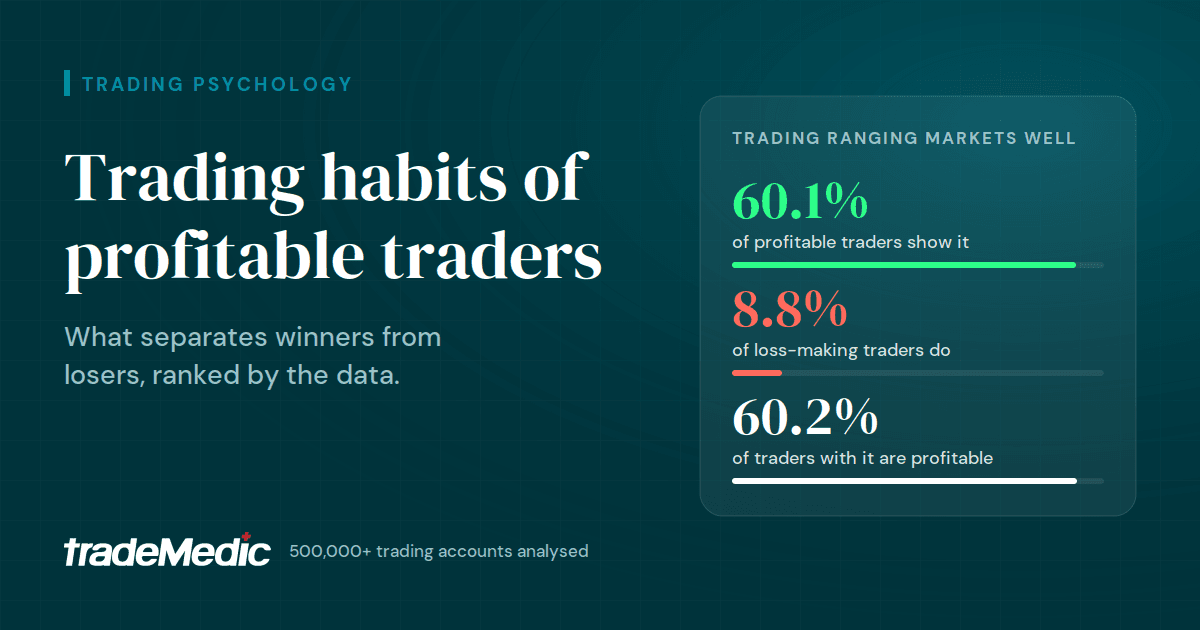
Trading Habits of Profitable Traders: What 500,000 Accounts Show
Which trading habits separate profitable traders from losing ones? Trading ranging markets well appears in 60.1% of profitable accounts and 8.8% of losing ones. The full ranking, the habits that separate nobody, and the one that backfires.
Jonas Schleypen
Trading Psychology
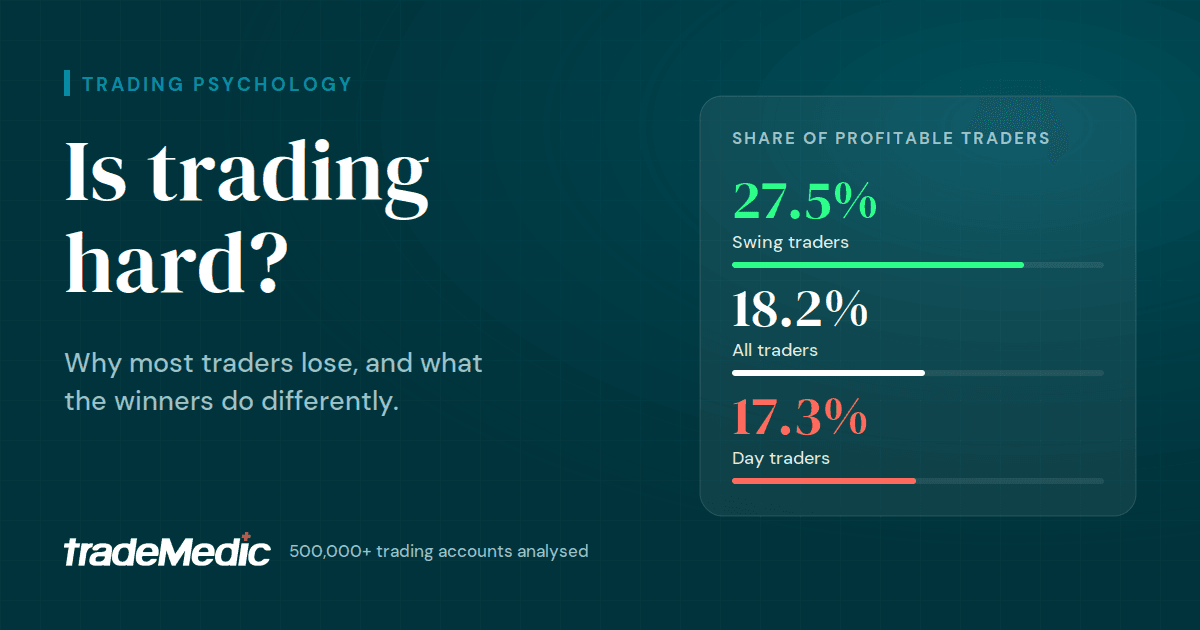
Is Trading Hard? Why Most Traders Lose, and What the Winners Do Differently
Is trading hard? Across 500,000+ trading accounts, 18.2% of traders are profitable, and day traders do worst. Why trading is so hard, why experience alone does not fix it, whether it is worth it, and what the winners do differently.
Jonas Schleypen
Trading Psychology
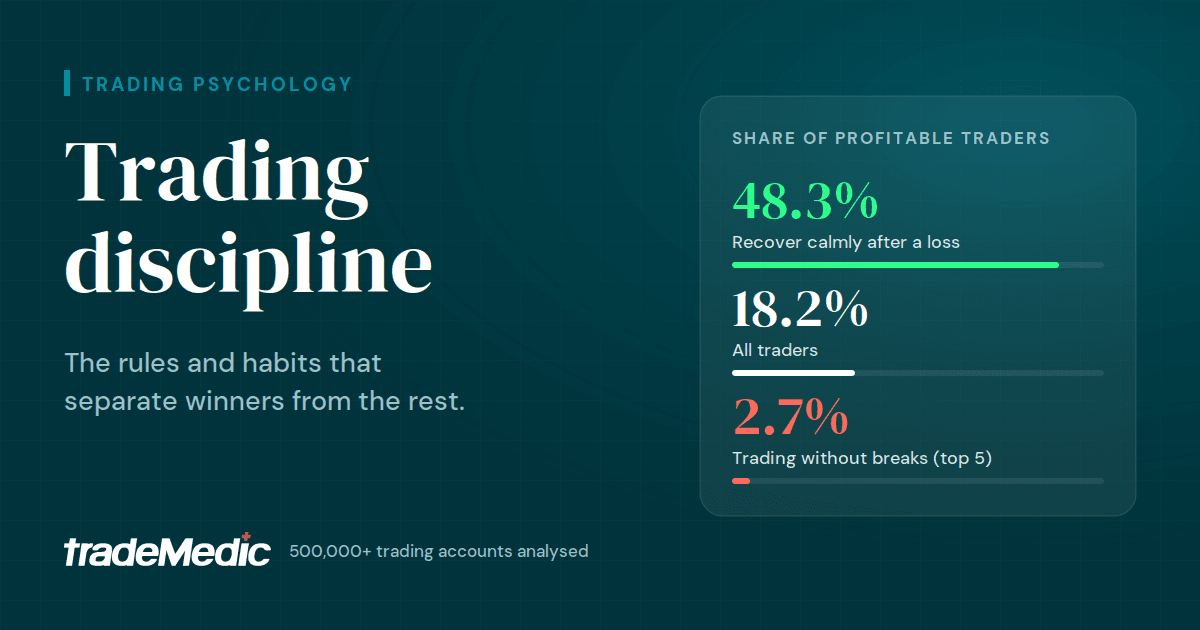
Trading Discipline: What 500,000 Trading Accounts Show It Really Takes
Almost every trader agrees discipline matters. Data from 500,000+ trading accounts shows what it looks like: 2.7% of traders who trade without breaks are profitable, against 48.3% of those who recover calmly after a loss. The rules that work.
Jonas Schleypen
Trading Psychology
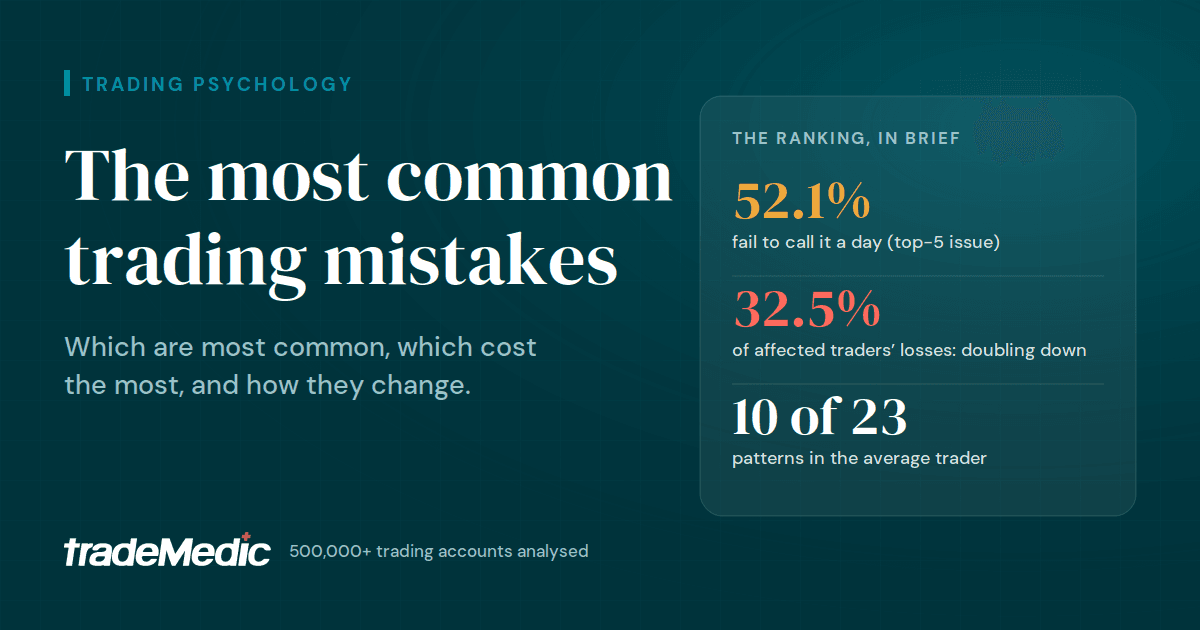
The Most Common Trading Mistakes, Ranked by 500,000 Trading Accounts
Only 18.2% of traders are profitable, and the average trader shows 10 of 23 problem patterns. This ranking shows which trading mistakes are most common, which cost the most money, which cost upside, and how they change with experience.
Jonas Schleypen
Trading Psychology
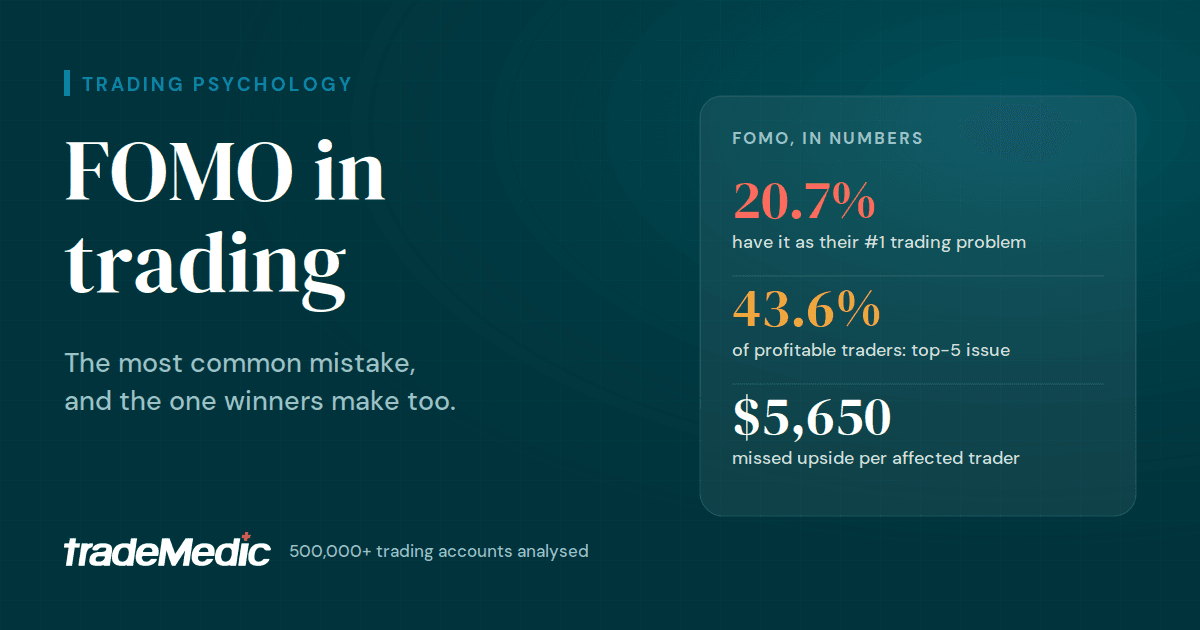
FOMO in Trading: The Most Common Mistake, and the One Winners Make Too
FOMO is the most common trading problem there is. Across 500,000+ trading accounts, late FOMO-driven entries are the single biggest improvement area for 20.7% of traders, and a top-five issue for more winners than losers. How to stop it.
Jonas Schleypen
Trading Psychology
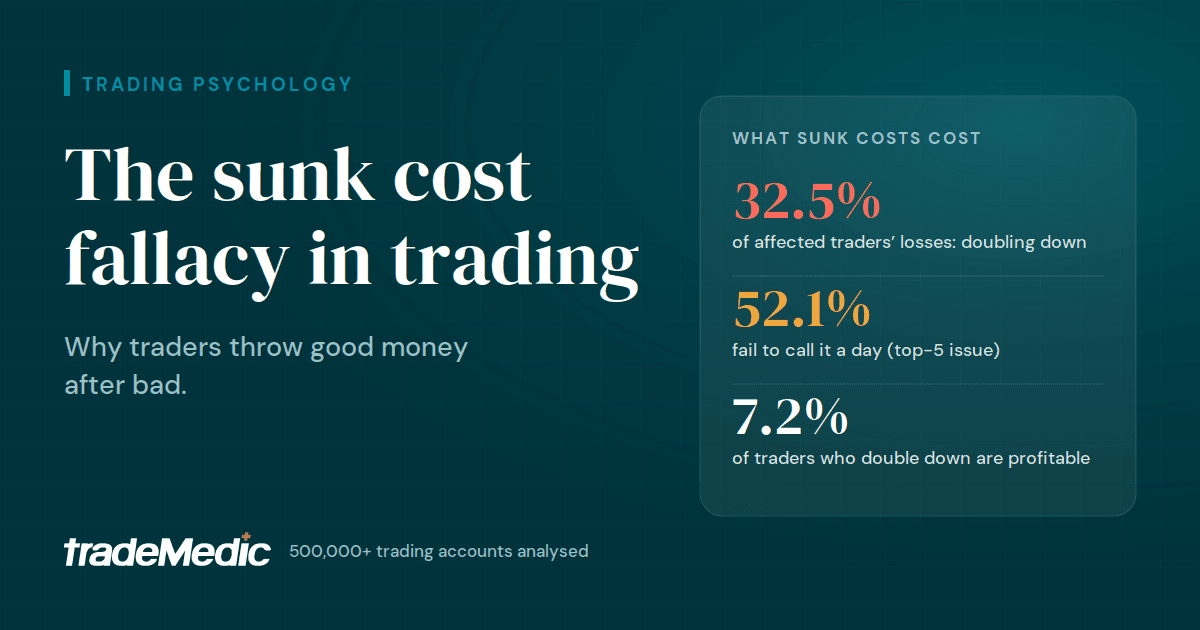
The Sunk Cost Fallacy in Trading: Why Traders Throw Good Money After Bad
Money already lost on a trade should not decide the next one, but it often does. Across 500,000+ trading accounts, the behaviours the sunk cost fallacy drives are among the most expensive in trading. Examples, data and fixes.
Jonas Schleypen
Trading Psychology
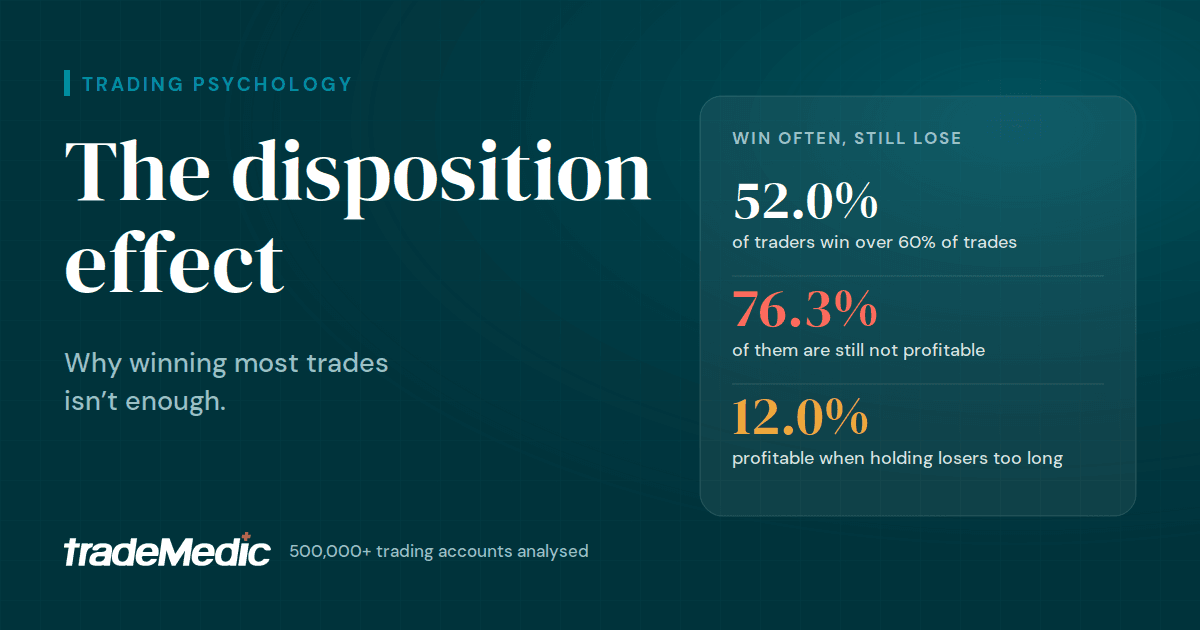
The Disposition Effect: Why Winning Most Trades Isn't Enough
Most traders win more trades than they lose, and most still lose money. Across 500,000+ trading accounts, 3 in 4 traders who win most of their trades are not profitable. The disposition effect explains why, and how to stop it.
Jonas Schleypen
Trading Psychology
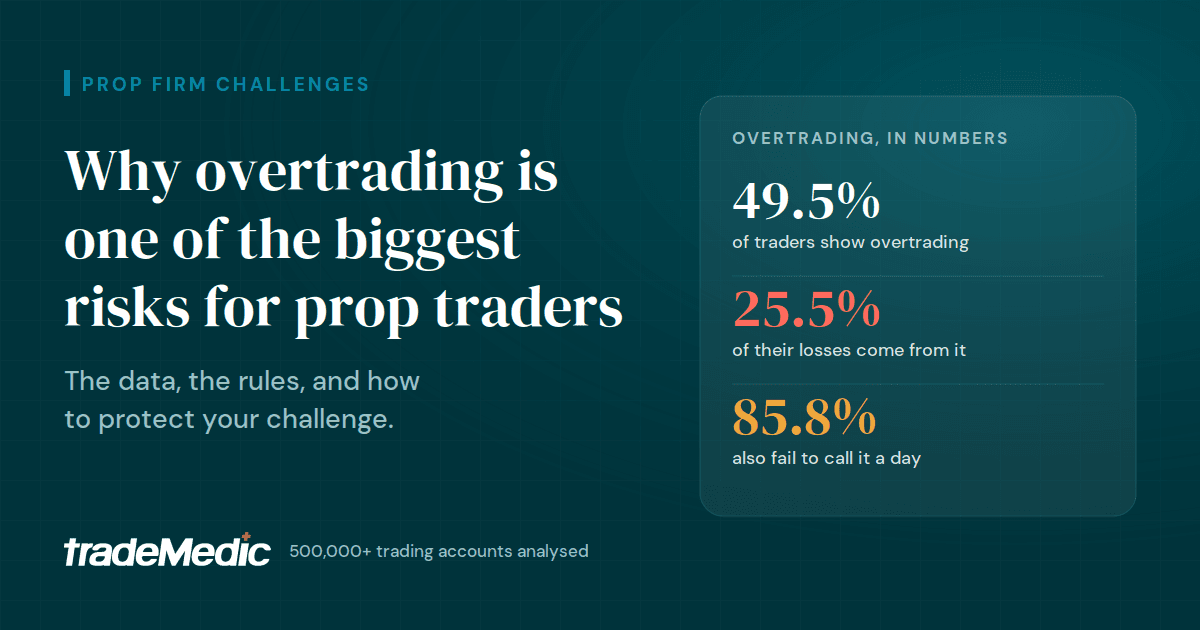
Why Overtrading Is One of the Biggest Risks for Prop Traders
Overtrading causes about a quarter of affected traders' losses. In a prop challenge with a 5% daily loss limit, it can end the account in a single afternoon. What 500,000+ trading accounts show, and how to protect your challenge.
Jonas Schleypen
Trading Psychology

Is Trading Gambling? What 500,000 Trading Accounts Reveal
Most retail traders lose money, which makes trading look like gambling. But data from 500,000+ trading accounts shows profitability ranges from 5% to over 60% depending on behaviour. Here is what separates trading from gambling.
Jonas Schleypen
<
1
2
3
>