Category:
 Author:
 Date:Jun 5, 2026
AI in Trading: Smarter Decisions or New Risks?
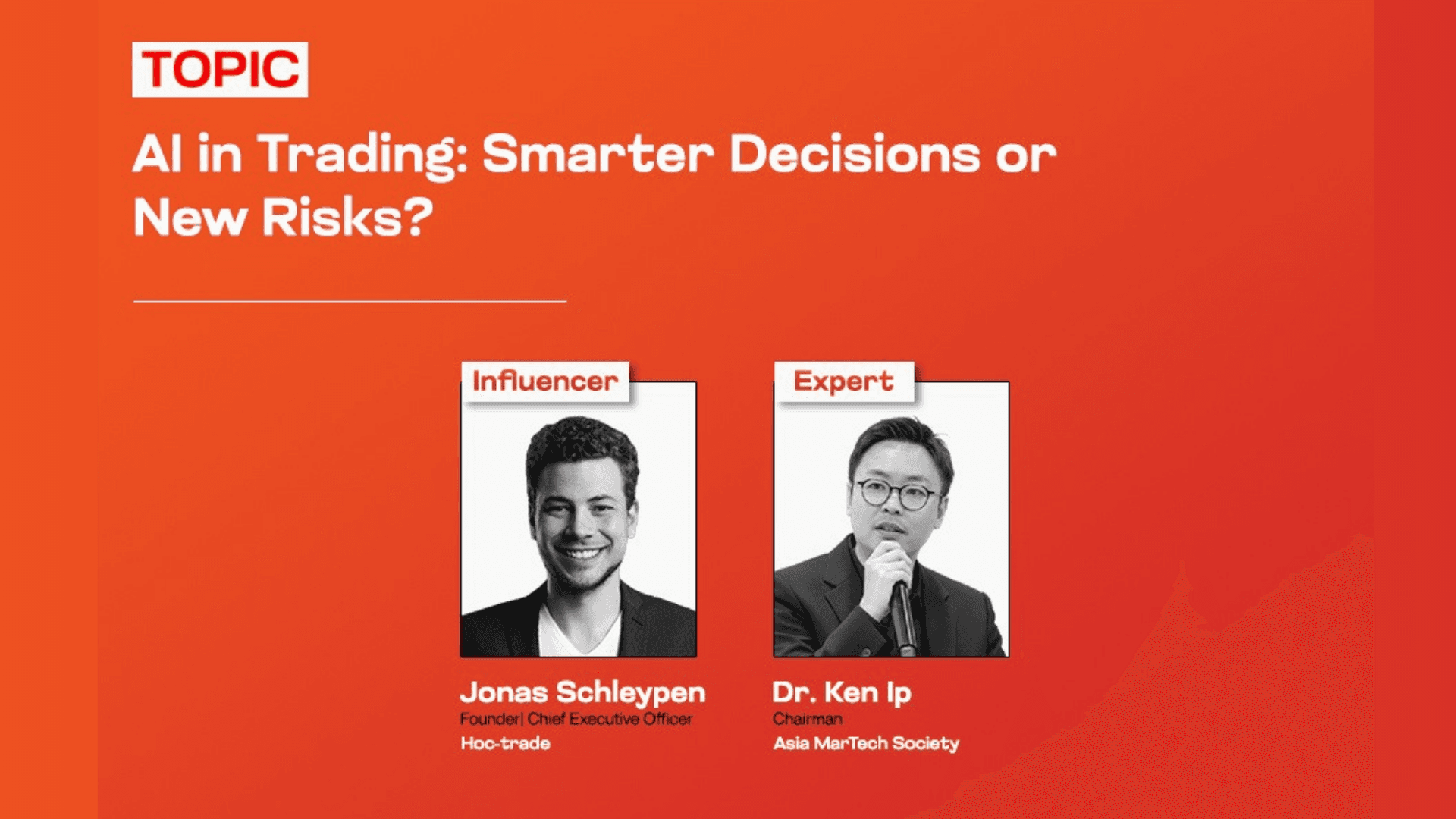
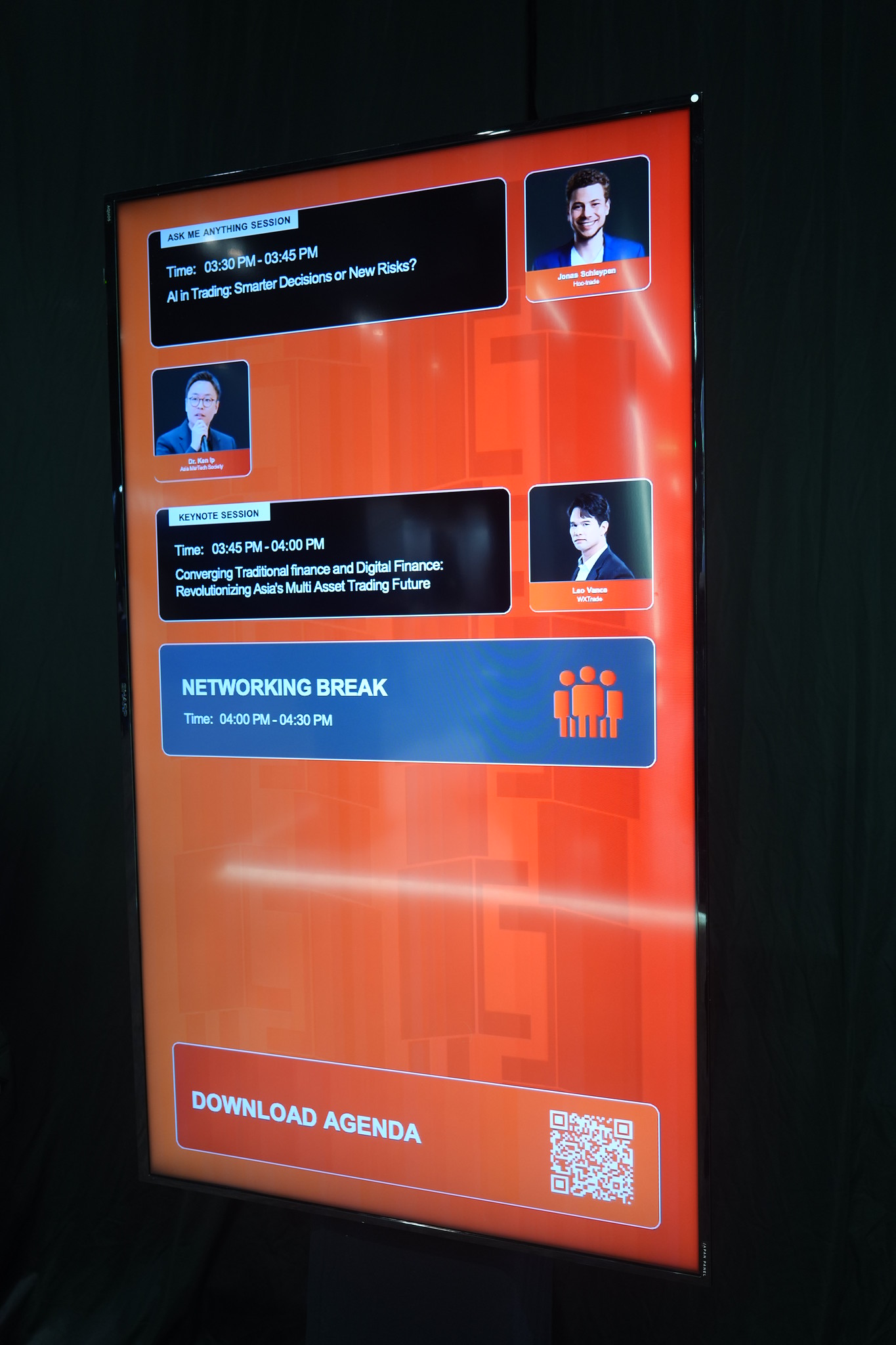
On May 27, 2026, I represented Hoc-Trade on stage at the Online Trading Expo in Hong Kong, hosting an Ask Me Anything session with Dr. Ken Ip, Chairman of the Asia MarTech Society. The session, titled "AI in Trading: Smarter Decisions or New Risks?", was scheduled for 15 minutes. It ran closer to the wire because of how engaged the audience was, particularly around the topic of systemic risk.
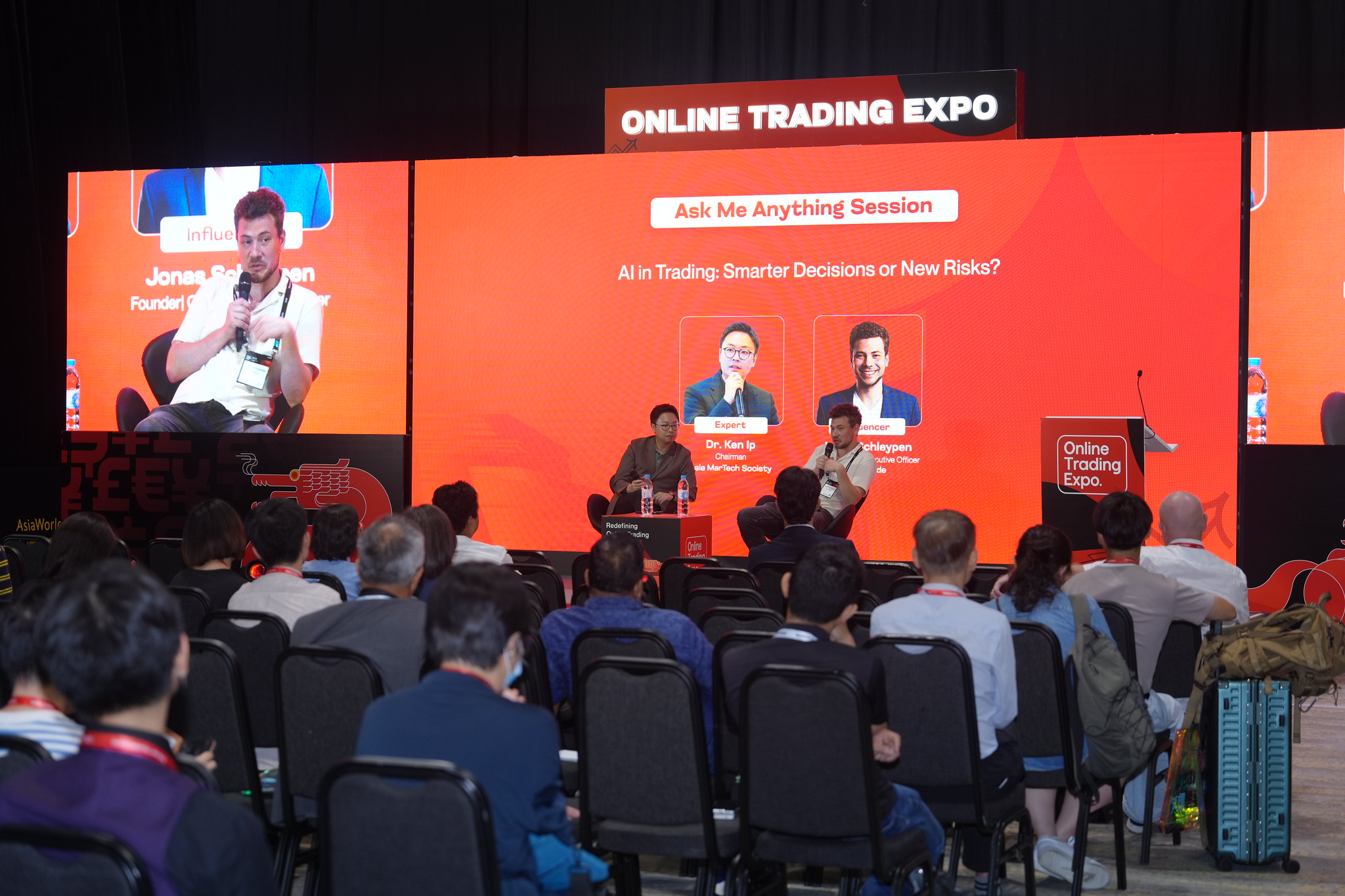
It's a conversation I've been part of from different angles over the past two years: as a Top 10 finalist at SuperAI 2024, a Global Fast Track finalist at Hong Kong Fintech Week 2024, and a speaker at iFX Asia Expo in Bangkok. Each time, the discussion around AI in financial markets has shifted. Two years ago, the question was whether AI belonged in trading at all. Today, nobody questions that. The question now is whether we're building it responsibly.
What struck me most about this particular session was not the questions we covered on stage, but the one we ran out of time for: the role of AI in understanding trader behavior. That gap is what I want to explore in this article, alongside the key takeaways from the conversation with Dr. Ip.
What did the AI trading conversation actually cover?
We had five pre-planned questions spanning the full spectrum of AI in financial markets, from what it means for a market to be "AI-driven" versus simply automated, to whether AI tools are genuinely helping traders or creating a dangerous dependency. Two topics dominated the conversation and drew the strongest audience reactions: the regulatory challenge of opaque AI systems, and the systemic risks that come with increasingly autonomous trading algorithms.
Can regulators keep up with AI trading systems?
The "black box" problem in AI trading is well documented. Deep learning models can process millions of data points and execute trades in microseconds, but explaining why a specific trade was made is often impossible, even for the developers who built the system. This creates a fundamental tension with regulators who need transparency and auditability.
Dr. Ip's position was clearly pro-innovation, but not at the expense of oversight. His argument was that regulators and the industry need to work together rather than operate as adversaries. The technology is moving too fast for regulators to play catch-up reactively. Instead, the industry should be proactively involved in shaping frameworks that protect market integrity without stifling development.
This resonated with me. In the fintech space broadly, and in trading technology specifically, I've seen both extremes play out: jurisdictions where regulation is so tight that innovation moves elsewhere, and environments where the absence of guardrails leads to real harm. The middle ground, where the people building the technology help define the boundaries, seems like the only sustainable path.

Could AI cause the next flash crash?
This was where the conversation got heated, in the best way. When AI moves from simple order execution to autonomous, real-time strategy adjustments, the risk profile of financial markets changes fundamentally. Multiple AI systems trained on similar data, reacting to similar signals, making similar decisions at machine speed: that is a recipe for synchronized behavior that could amplify volatility instead of smoothing it.
The audience drove this part of the discussion as much as we did on stage. Several attendees raised concerns about correlated AI strategies creating cascading failures, where one system's sell signal triggers another's risk management protocol, which triggers the next, and so on. Dr. Ip acknowledged these dangers directly and stressed the importance of building guardrails into AI systems as a regulatory priority, not an afterthought.
What made this exchange valuable was its honesty. Nobody on stage or in the audience claimed that AI in trading is safe by default. The consensus was that the technology is powerful, the risks are real, and the guardrails need to be built into the systems themselves, not bolted on later.
Why is behavioral AI the missing piece in this conversation?
The question we didn't get to, and the one I wish we had more time for, was about whether AI tools are genuinely helping human traders make better decisions or turning them into passive observers. It's a critical question because almost every conversation about AI in trading focuses on the same thing: prediction. Can AI predict the next price move? Can it find alpha? Can it beat the market?
That framing misses something fundamental. Most traders don't lose money because they lack a predictive edge. They lose because of how they behave: re-entering the market too quickly after a loss, cutting profitable trades too early, spreading themselves across too many positions, ignoring their own rules under stress. These are behavioral patterns, not information gaps, and they're measurable.
The psychology behind these behaviors is well studied. Loss aversion drives traders to hold losing positions far longer than they should. The gambler's fallacy convinces them the next trade will make up for the last. And blind spot bias means most traders can't see these patterns in themselves, even when they're obvious to everyone else. The question is no longer whether these behaviors exist. It's whether technology can detect and quantify them at scale.
This is what we build at Hoc-Trade. TradeMedic™ AI analyzes trading data from over 500,000 accounts to detect and quantify more than 60 behavioral patterns. Not to predict where the market is going, but to show traders where their own behavior is costing them money. The patterns are specific and measurable: how much a particular behavior costs in dollars, how prevalent it is across different trader types, and how it correlates with other behaviors.
When we talk about AI creating "smarter decisions" for traders, this is the angle that gets overlooked. A model that predicts price direction with 52% accuracy is interesting but fragile. A system that can tell you, with data from hundreds of thousands of real accounts, that your habit of revenge trading after losses costs you an average of $1,917 over your account life: that's actionable. One is a bet. The other is a mirror.
What should the trading industry focus on next with AI?
The Online Trading Expo session reinforced something I've believed for a while. The industry's obsession with AI as a prediction engine is a distraction from where AI can deliver the most reliable value. Prediction is hard, fragile, and increasingly commoditized as everyone accesses the same models and data. Understanding behavior is neither of those things.
Dr. Ip's points about regulation and guardrails apply just as much to the behavioral side. If the industry is going to build AI systems that influence how people trade, those systems should be explainable, auditable, and designed to help, not to exploit. The regulatory frameworks being discussed for predictive AI need to extend to any AI that touches trading decisions, including tools that analyze and influence trader behavior.
The flash crash risk is real and worth taking seriously. But there's an equally important and less discussed risk: millions of retail traders relying on AI tools they don't understand, building dependencies on systems that may or may not have their interests at heart. That's the conversation I hope to continue at future events.
If you're a trader wondering whether AI can actually help you, start by looking inward before looking at the market. The patterns in your own data are more actionable than any price prediction. You can connect your trading account to TradeMedic™ AI for free and see what your data reveals about your trading behavior.
Frequently asked questions
What are the biggest risks of AI in trading?
The two most discussed risks are the "black box" problem, where even developers cannot fully explain why an AI made a specific trading decision, and systemic risk from synchronized AI behavior that could trigger flash crashes. As AI moves from simple execution to autonomous strategy adjustments, regulators and the industry need to work together to build guardrails into these systems.
Can AI help retail traders make better decisions?
AI can help traders in two distinct ways: predictive analytics that attempt to forecast price movements, and behavioral analytics that detect patterns in a trader's own data. Behavioral AI, which identifies costly habits like revenge trading or cutting winners too early, often delivers more reliable and actionable value than price prediction models.
What is behavioral trading analytics?
Behavioral trading analytics uses AI to analyze a trader's own historical data and detect patterns in their behavior that affect performance. Unlike predictive AI that tries to forecast market direction, behavioral analytics identifies measurable habits, such as how a trader reacts to losses, how they size positions, or when they exit trades. TradeMedic™ AI detects over 60 such patterns across a dataset of 500,000+ trader accounts.
How should AI trading systems be regulated?
According to Dr. Ken Ip, Chairman of the Asia MarTech Society, the industry and regulators need to collaborate rather than operate as adversaries. Guardrails should be built into AI trading systems from the start, not added after problems emerge. This applies to any AI that influences trading decisions, including predictive tools and behavioral analysis platforms.
Could AI trigger the next stock market flash crash?
The risk is real. When multiple AI systems trained on similar data react to similar market signals simultaneously, they can create cascading sell-offs that amplify volatility rather than reduce it. This concern was a major discussion point at the Online Trading Expo Hong Kong 2026, where both industry experts and traders stressed the need for built-in guardrails to prevent correlated AI behavior from destabilizing markets.