
Case Studies
A collection of 10 posts
See how behavioral insights translate into measurable results through real-world trading data. Dive into our finding on the direct impact of psychological adjustments and data-driven habits have on long-term growth.
Case Studies
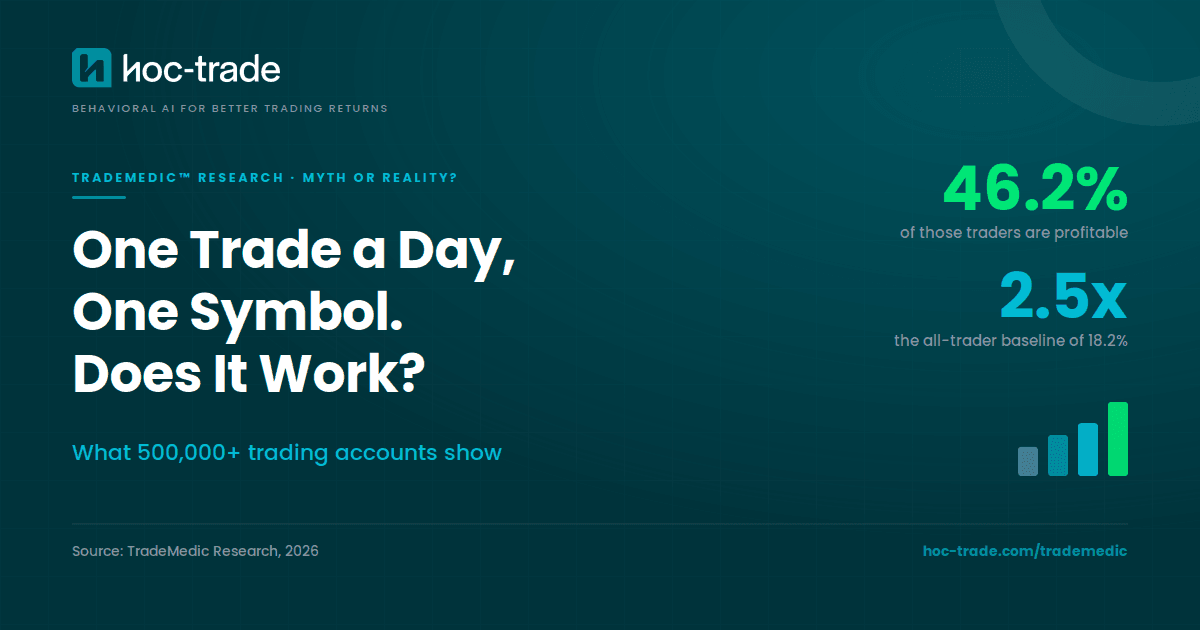
One Trade a Day in One Symbol: Myth or Reality? What 500,000+ Accounts Show
Trading coaches teach it and nobody has tested it. Single-symbol focus lifts the profitable share to 25.6%, fewer than two trades a day to 33.0%, and doing both reaches 46.2%, 2.5 times the baseline. Most of that group still lose money.
Jonas Schleypen
Case Studies

The Average Retail Trading Account Lives About 100 Days. Better Feedback Adds 40 to 45 of Them.
Trades free of behavioural issues perform 63% better, and traders receiving the analysis stay active 40 to 45 days longer.
Agnes Mutiara
Case Studies

Trading Fees by Instrument: What a Spread Really Costs Once You Measure It Properly
A one-pip spread and a two-point spread cannot be compared until you measure them against how far each instrument moves. Do that, and the cheapest-looking markets turn out to be the most expensive, which changes who profits and who does not.
Jonas Schleypen
Case Studies

Best Timeframe to Trade Gold? What 500,000+ Accounts Show About XAUUSD
Gold guides all recommend the same timeframes without showing whether they work. Across 500,000+ trading accounts, gold is the one instrument where slowing down barely helps, and that explains why the most popular market delivers average results.
Jonas Schleypen
Case Studies

Best Forex Pair to Trade? What 500,000+ Trading Accounts Show
Most guides rank currency pairs by spread and liquidity. We ranked them by outcome. Across 500,000+ trading accounts, one pair returns more than double the population baseline, and the most popular instrument lands below average.
Jonas Schleypen
Case Studies

Forex vs Indices: Which Is More Profitable? Evidence From 500,000+ Accounts
Existing comparisons of forex and indices contradict each other on volatility and skip the question that matters. Across 500,000+ trading accounts, index traders finish net profitable at 12.3% against 19.6% for major currency pair traders.
Jonas Schleypen
Case Studies

AI Trading Analysis Tools in 2026: Coaches, Mentors, and the Behavioral Analytics Difference
AI trading tools split into two camps: ones that teach you strategy and ones that read how you really trade. Backed by 500,000+ trader accounts, this guide maps coaches, mentors, and behavioral analytics so you can pick the type that fits you.
Agnes Mutiara
Case Studies

Day Trading vs Swing Trading: Which Is More Profitable?
Day trading vs swing trading, settled with 500,000+ accounts. Swing traders are net profitable 27.5% of the time against 17.3% for day traders. Trading fees and revenge trading (42% of day traders, 10% of swing traders) explain much of the gap.
Jonas Schleypen
Case Studies
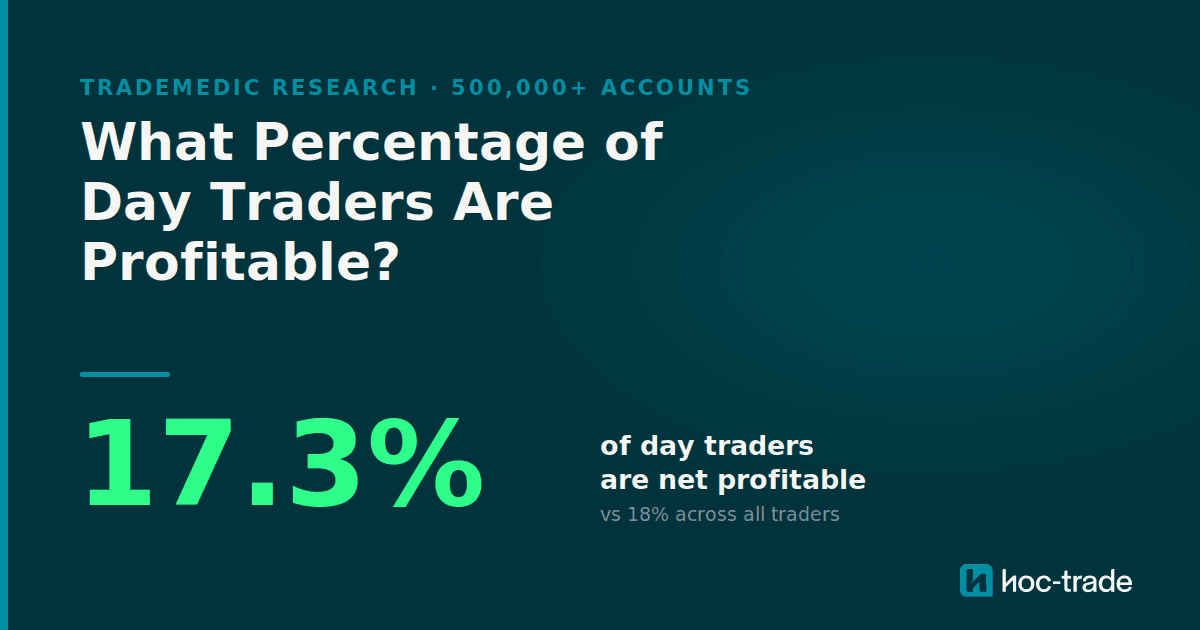
What Percentage of Day Traders Are Profitable? 500,000 Accounts Analysis
The famous claim that 3% of traders are profitable comes from small, decades-old studies. We analyzed 500,000+ accounts: 17.3% of day traders are net profitable. Here is the real rate and what separates the traders who make money.
Jonas Schleypen
<
1
2
>